
Section 1: The Biogeography of Sri Lanka's Ramsar Wetlands: Bundala, Kumana & The Central Asian Flyway
Situated along the sun-drenched southeastern coastline of Sri Lanka, where the turbulent waves of the Indian Ocean meet tranquil coastal lagoons, brackish marshes, and shifting sand dune barriers, lies one of the most critical avian crossroads on planet Earth. Designated as Sri Lanka’s first wetland of international importance under the Ramsar Convention on December 28, 1990, and subsequently declared a UNESCO Biosphere Reserve in 2005, Bundala National Park encompasses 6,216 hectares (24 square miles) of coastal wilderness that serves as the ultimate terminal wintering haven for the Central Asian Flyway.
The Central Asian Flyway (CAF) spans a vast geographical corridor extending from the Arctic breeding tundras of Siberia, northern Russia, and Central Asia, southward across the towering, frozen barrier of the Himalayas, over the plains of India, and terminating at the southern tip of the Indian subcontinent on the island of Sri Lanka. For millions of migratory shorebirds, waders, and waterfowl, Sri Lanka is the end of the line — there is no landmass south of this island until the ice sheets of Antarctica, 5,000 miles away. As autumn descends across the northern hemisphere, freezing freshwater lakes and burying foraging grounds under snow, hundreds of thousands of birds embark on epic trans-continental migrations of 4,000 to 7,000 kilometers, converging upon the nutrient-rich coastal wetlands of Bundala, Kumana, and the lagoons of Greater Yala.
Topographically, Bundala is characterized by an interconnected series of five shallow coastal lagoons: 1. **Malala Lagoon (650 ha):** A brackish inland waterbody fed by seasonal stream inflows, famous for immense congregations of wading storks and pelicans. 2. **Embilikala Lagoon (430 ha):** A highly productive lagoon system with fluctuating salinity, providing rich feeding grounds for migratory ducks and terns. 3. **Bundala Lagoon (520 ha):** Hypersaline lagoon adjacent to commercial salt pans, the traditional focal feeding ground for thousands of Greater Flamingos. 4. **Koholankala Lagoon (390 ha):** A coastal basin surrounded by sand dunes, heavily utilized by small sandpipers and plovers. 5. **Mahalewaya Lagoon (260 ha):** The westernmost wetland basin, rich in submerged aquatic vegetation and macro-invertebrates.
Coupled with Kumana National Park (historically known as Yala East) located 60 kilometers to the northeast — which boasts a magnificent 200-hectare mangrove swamp (*Kumana Villu*) that functions as Asia's premier waterbird breeding heronry — Southern Sri Lanka represents an ornithological wonderland of global significance, supporting over 230 recorded bird species, including 58 migratory shorebird species and several critically endangered residents.
Section 2: The Greater Flamingo Phenomenon: Ecology, Biochemistry & Migration Cycles
Among all the ornithological spectacles of South Asia, few sights rival the breathtaking arrival of the Greater Flamingo (*Phoenicopterus roseus*) in the coastal lagoons of Bundala. Standing up to 1.5 meters (5 feet) tall with slender, stilt-like legs, elongated sinuous necks, and plumage that shades from snowy white to vivid coral-pink and crimson, these regal birds transform the blue waters of the lagoons into living pink seas.
1. Inverted Filter-Feeding Biomechanics: The feeding mechanics of the Greater Flamingo represent one of the most remarkable evolutionary adaptations in avian anatomy: - **The Inverted Bill:** Unlike typical birds whose upper bill moves over a fixed lower mandible, a flamingo’s bill is bent downward at a sharp, 45-degree angle. When feeding, the bird submerges its head completely upside-down in the shallow, hypersaline water, so that the bill points backward between its legs. - **The Piston Tongue:** The flamingo’s large, fleshy tongue moves rapidly back and forth within the mouth cavity like a high-speed mechanical piston, drawing water and mud in through the front of the bill and expelling it through the sides up to four times per second. - **Lamellar Filter Sieves:** The interior edges of the upper and lower mandibles are lined with thousands of delicate, comb-like keratin structures called *lamellae*. As water is forced outward across these lamellae, macroscopic food items — microscopic brine shrimp (*Artemia salina*), blue-green cyanobacteria (*Spirulina*), small mollusks, and insect larvae — are trapped and swallowed whole, while sand and salty water are ejected.
2. The Biochemistry of Pink Pigmentation: Flamingos are not born pink; freshly hatched chicks possess drab, dull grey down feathers. The vibrant pink and crimson coloration of adult plumage is entirely dietary in origin: - The hypersaline waters of Bundala and the adjacent Hambantota salt pans are rich in microscopic algae and brine shrimp that synthesize high concentrations of **carotenoid pigments** (primarily *canthaxanthin*, *astaxanthin*, and *beta-carotene*). - When a flamingo ingests these carotenoids, enzymes in its liver metabolize the pigments into lipid-soluble red compounds, which are transported through the bloodstream and deposited directly into the growing feather follicles, skin, and leg scales. - If a flamingo experiences dietary deficiency or disease, its newly molted feathers emerge pale white or gray. Consequently, the depth and intensity of a flamingo's pink plumage functions as a direct honest signal of physical health and genetic vigor during courtship displays.
3. Migration Dynamics from the Rann of Kutch: The flamingos that winter in Bundala do not breed in Sri Lanka. Rather, they belong to the breeding populations of the Great Rann of Kutch in Gujarat, northwest India, and the coastal wetlands of Iran. Following the end of the breeding season in the Rann of Kutch (typically between September and October), tens of thousands of birds fly southward along the western coast of India, crossing the Gulf of Mannar to establish winter residence in Bundala. Flocks numbering between 1,000 and 3,500 individuals remain in Bundala throughout the winter months, departing northward in March and April as spring warms their northern breeding grounds.
Section 3: The Complete Avian Taxonomic Survey of Southern Sri Lanka
The avian diversity of Bundala, Kumana, and Greater Yala spans multiple orders and families, each adapted to distinct ecological niches:
1. Pelomedusae, Pelicans & Cormorants: - **Spot-billed Pelican (*Pelecanus philippensis*):** A globally near-threatened giant with a wingspan exceeding 2.5 meters. In Bundala, flocks of hundreds swim in coordinated V-formations, driving shoals of fish into shallow water before scooping them up in their massive, mottled pink gular pouches. - **Little Cormorant (*Microcarbo niger*), Indian Cormorant (*Phalacrocorax fuscicollis*), & Great Cormorant (*Phalacrocorax carbo*):** Expert underwater pursuit divers that forage in both freshwater wewas and saline lagoons, frequently observed perching on dead stumps with outstretched wings to dry their plumage. - **Oriental Darter (*Anhinga melanogaster*):** Known as the "Snakebird" due to its long, slender neck that projects above the surface while swimming submerged. Possesses a specialized neck vertebra hinge that allows it to spear fish with lightning speed.
2. The Ibises and Spoonbills: - **Eurasian Spoonbill (*Platalea leucorodia*):** Possesses a distinctive, spatulate bill shaped like a wide spoon. Wades through shallow lagoon waters swinging its bill from side to side in continuous semicircles, snapping shut on shrimp and water beetles upon tactile contact. - **Black-headed Ibis (*Threskiornis melanocephalus*):** An elegant white waterbird with a naked black head, neck, and down-curved decurved bill, probing muddy margins alongside painted storks. - **Glossy Ibis (*Plegadis falcinellus*):** A small, dark migratory ibis whose plumage gleams with iridescent bottle-green and bronze reflections in direct morning sunlight.
Section 4: The Palearctic Waders: The Miraculous Flight from Siberian Tundras
For sheer endurance and navigational mastery, nothing compares to the migratory waders (Order Charadriiformes) that winter in Bundala. These birds, often weighing no more than a few ounces, perform non-stop migratory journeys across continents that push the outer boundaries of biological physics.
1. The Physiological Miracle of Hyperphagia: Prior to embarking on their southward journey from their Arctic breeding grounds, waders enter a state of **hyperphagia** — insatiable, non-stop feeding. In the span of two weeks, a bird will **double its body mass**, packing its abdominal cavity with energy-dense subcutaneous fat. Simultaneously, the bird's internal organs undergo miraculous temporary transformations: the digestive tract and liver shrink to reduce flight payload weight, while the pectoral flight muscles and heart enlarge to maximize aerobic flight endurance.
Section 5: The Stork Guild of Ruhuna: Giants of the Marshes
The stork family (*Ciconiidae*) in Southern Sri Lanka represents some of the most imposing, architecturally magnificent birds in the tropics:
1. Painted Stork (*Mycteria leucocephala*): The most ubiquitous and visually striking stork of Bundala and Yala. Standing nearly a meter tall, it features a heavy, yellow decurved bill, a featherless orange-yellow facial mask, and beautiful black-and-white wing coverts tipped with delicate rose-pink tertial plumes. - **Tactile Feeding:** Painted storks feed primarily by tactile grope-foraging. They wade slowly through murky shallows with their bills held open and submerged 10 centimeters beneath the surface, using one foot to stir up mud and flush fish into their waiting mandibles. When a fish brushes against the sensitive inner bill surface, the beak snaps shut with a reflexive response time of less than 25 milliseconds — one of the fastest neuromuscular reflexes in the animal kingdom.
2. Black-Necked Stork (*Ephippiorhynchus asiaticus*): Sri Lanka’s rarest and most magnificent breeding resident stork. Standing 1.4 meters tall with an iridescent glossy black neck, dazzling white body plumage, massive chisel-shaped black bill, and towering coral-red legs, the Black-necked Stork is on the precipice of national extinction, with an estimated population of **fewer than 20 to 30 breeding pairs** remaining in the entire country. The coastal lagoons of Yala Block 1 (particularly Buthawa and Pilinnawa) and Kumana represent the absolute core breeding territory for this majestic species.
3. Lesser Adjutant (*Leptoptilos javanicus*): A massive, prehistoric-looking scavenger stork with a naked, yellowish head and neck, dark slate-grey wings, and a massive wedge-shaped bill. Frequently sighted stalking solitary along drying mud banks, feeding on stranded fish, frogs, snakes, and carrion alongside mugger crocodiles.
4. Asian Openbill (*Anastomus oscitans*): A highly specialized greyish-white stork characterized by an arched gap between its upper and lower mandibles when closed. This structural gap is an evolutionary adaptation for handling its primary prey: large freshwater apple snails (*Pila globosa*). The pointed tip of the lower bill is inserted into the snail's shell opening to sever the muscular operculum, extracting the succulent snail meat in seconds without cracking the shell.
Section 6: Raptors and Birds of Prey: Apex Aerial Hunters of the Coastal Scrub
The skies and treetops of Bundala and Greater Yala are dominated by an impressive guild of diurnal raptors (Order Accipitriformes):
1. White-Bellied Sea Eagle (*Haliaeetus leucogaster*): The monarch of the coastline, boasting a wingspan of over 2.2 meters (7.2 feet). Dressed in snow-white body plumage contrasted against dark slate-grey wings and a wedge-shaped tail, this magnificent eagle patrols coastal lagoons and the open ocean. Soaring on upswept wings in thermal updrafts, it spots sea snakes and large fish from hundreds of feet in the air, diving with talons outstretched to strike the water's surface with explosive force.
2. Crested Serpent Eagle (*Spilornis cheela*): The quintessential forest raptor of Sri Lanka's dry zone. Perched motionless on mid-canopy branches overlooking forest trails, its large, forward-facing yellow eyes scan the leaf litter for snakes, lizards, and frogs. When excited, it raises its rounded black-and-white occipital crest, accompanied by a piercing, musical three-note whistle (*"Kluee-wip-wip!"*).
3. Changeable Hawk-Eagle (*Nisaetus cirrhatus*): A powerful, polymorphic apex predator capable of taking down prey as large as adult Indian peafowl, hare, and small monkeys. Possessing acute binocular vision and long, needle-sharp talons, it launches lightning-fast ambushes from high perches, maneuvering through dense thorn scrub with astonishing agility.
4. Grey-Headed Fish Eagle (*Haliaeetus ichthyaetus*): A dedicated freshwater angler with an ash-grey head, white belly, and dark brown wings, perched high on dead Kumbuk trees overlooking ancient reservoirs like Buthawa and Tissa Wewa, plunging into the water to catch tilapia and walking catfish.
Section 7: Kingfishers and Bee-eaters: Jewel-Toned Hunters of the Waterway
Along every canal, riverbank, and lagoon margin in Bundala, vibrant jewel-toned plumage adds breathtaking flashes of color to the landscape:
1. The Kingfisher Guild (Family Alcedinidae): - **Pied Kingfisher (*Ceryle rudis*):** Famous for its extraordinary aerial hunting technique. Unlike other kingfishers that hunt from perches, the Pied Kingfisher flies out over open lagoon waters and hovers completely motionless in mid-air 30 feet above the water, its wings beating in a rapid blur while its head remains locked in space, before diving vertically like an arrow to strike underwater fish. - **Common Kingfisher (*Alcedo atthis*):** A tiny, iridescent sapphire-and-orange jewel darting along reed margins like a blue laser. - **White-Throated Kingfisher (*Halcyon smyrnensis*):** A bold, terrestrial hunter with a brilliant turquoise-blue back, chocolate-brown head, bright white throat, and coral-red bill, feeding not only on fish but on grasshoppers, lizards, and small mice. - **Stork-Billed Kingfisher (*Pelargopsis capensis*):** The giant of the family, measuring 35 centimeters with an immense, heavy red bill, stalking crabs and frogs in shaded mangrove creeks.
2. The Bee-eater Guild (Family Meropidae): - **Little Green Bee-eater (*Merops orientalis*):** Ubiquitous along sand roads, perching on low fences and launching acrobatic aerial sorties to catch dragonflies and bees in mid-air. - **Blue-Tailed Bee-eater (*Merops philippinus*):** A seasonal winter migrant with a brilliant blue rump and chestnut throat, hunting in loose flocks over lagoon waters. - **Chestnut-Headed Bee-eater (*Merops leschenaulti*):** A forest resident with a rich chestnut crown and bright yellow throat, nesting in colonial burrows excavated into sandy riverbanks.
Section 8: Night Avians: Owls and Nightjars of Bundala & Yala
When the sun sets over the coastal lagoons, an entirely different community of avian predators awakens:
1. Brown Fish Owl (*Ketupa zeylonensis*): The dominant nocturnal predator along freshwater tanks and riverbanks. Measuring up to 55 centimeters with prominent, drooping horizontal ear tufts and fiery yellow eyes, this massive owl possesses naked, unfeathered legs and rough spiny scales (*spicules*) on the soles of its feet designed to grip slippery, thrashing fish and freshwater crabs plucked from the water at dusk.
2. Spot-Bellied Eagle-Owl (*Bubo nipalensis*): Known in ancient Sri Lankan folklore as the terrifying **Ulama** or "Devil Bird," this massive forest eagle-owl is feared for its chilling, human-like wailing cry that echoes across the jungle at midnight. It is a formidable predator capable of killing adult barking deer, civets, and peafowl.
3. Jerdon's Nightjar (*Caprimulgus atripennis*): Masters of camouflage, nightjars spend the daylight hours roosting flat against the leaf litter, their mottled brown-and-grey plumage rendering them completely indistinguishable from dry bark. At dusk, they take flight, performing silent acrobatic loops over sand roads to scoop flying beetles and moths into their enormous, bristle-fringed mouths.
Section 9: An Hour-by-Hour Ornithologist's Field Journal in Bundala
Below is an authentic field chronicle from an intensive full-day ornithological survey conducted across Bundala National Park:
05:45 AM – 07:15 AM: Dawn Arrival at Malala Lagoon We arrive at the park entrance as dawn breaks in shades of violet and pale gold. Driving south toward Malala Lagoon, the air is alive with birdsong. On the telephone wires flanking the entrance road, dozens of Little Green Bee-eaters and Indian Rollers perform their morning stretches. At the water’s edge, the morning mist lifts to reveal over four hundred Spot-billed Pelicans paddling in unison across the calm water, herding thousands of schooling tilapia into a shallow cove.
09:30 AM – 12:00 PM: The Siberian Wader Flats at Koholankala Moving east to the tidal mudflats of Koholankala Lagoon, we set up our optical tripods to survey migratory shorebirds. The exposed mud is carpeted with thousands of feeding waders: Bar-tailed Godwits, Curlew Sandpipers, Pacific Golden Plovers, Marsh Sandpipers, and Greater Sand Plovers. A Peregrine Falcon (*Falco peregrinus*) suddenly stoops out of the clouds at 200 miles per hour, scattering the waders into a synchronized, undulating silver cloud across the sky.
12:00 PM – 02:30 PM: Midday Wetland Shade & Mangrove Creek Patrol During the intense midday heat, we retreat to the shaded scrub and mangrove corridors near the visitor center. Beneath the cooling canopy of *Salvadora persica* (Mustard Tree), we spot a pair of rare Sirkeer Malkohas and a Blue-faced Malkoha hopping through the thorny branches with long, graduated tails.
02:30 PM – 05:00 PM: The Stork Rookery at Embilikala By mid-afternoon, we position our vehicle along the western shore of Embilikala Lagoon. Over three hundred Painted Storks, seventy Asian Openbills, and twenty Eurasian Spoonbills are actively feeding in the shallows. In the center of the lagoon, our guide spots the holy grail of Sri Lankan birding: a solitary adult **Black-Necked Stork**, its coral-red legs glowing in the afternoon light as it tosses a foot-long mud catfish into the air and swallows it whole.
05:00 PM – 06:15 PM: Twilight Flight at the Dunes As the sun sinks toward the horizon, flocks of hundreds of Painted Storks and White Ibises take flight, their silhouettes stark against the burning orange sunset sky as they head toward their nocturnal roosting trees in the interior wewas. We depart Bundala at 06:15 PM with our field checklist recording an astounding **112 distinct avian species** identified in a single day.
Section 10: Avian Photography Masterclass: Shutter Speeds, Glare & Optics
Photographing birds in the intense coastal environment of Bundala presents severe optical and technical challenges:
1. Managing Blinding Salt Pan & Water Glare: The white salt crusts and reflective water surfaces of Bundala create extreme contrast that will fool camera exposure meters into severe underexposure: - **Circular Polarizing Filter (CPL):** A high-transmission CPL filter is indispensable for cutting surface water glare, revealing submerged feeding behavior and restoring deep saturation to bird plumage. - **Highlight Metering Mode:** Use Highlight-Weighted Metering or dial in **+0.7 to +1.3 EV exposure compensation** when shooting pale waders against bright water to prevent shadows on the bird's underbelly from turning muddy black.
2. Shutter Speeds for In-Flight Action: - **Large Storks & Pelicans in Flight:** Set shutter speed to **1/2000s** at f/6.3 or f/8. - **Fast-Flying Terns & Swallows:** Increase shutter speed to **1/3200s or 1/4000s** to completely freeze rapid wingtip blur. - **Autofocus Configuration:** Use **Continuous Autofocus (AF-C / AI Servo)** with Bird Eye-Detection AF enabled and tracking sensitivity set to responsive.
3. Focal Length Requirements: Because many waders feed in the middle of wide, shallow lagoons where vehicles cannot approach closely, a focal length of **at least 500mm to 800mm** (or a 400mm lens paired with a high-grade 1.4x or 2.0x teleconverter) is essential for capturing detailed, frame-filling portraits without causing bird disturbance.
Section 11: Kumana Mangrove Swamp (Yala East): Asia’s Greatest Heronry
Located 60 kilometers northeast of Bundala, Kumana National Park (historically known as Yala East) is the nesting counterpart to Bundala's feeding grounds. The heart of the park is **Kumana Villu** — a 200-hectare mangrove swamp fed by the Kumbukkan Oya river.
1. The Mass Nesting Spectacle (May to July): During the summer months, Kumana Villu becomes the largest colonial waterbird nesting colony in Sri Lanka. Tens of thousands of birds build densely packed stick nests in the branches of half-submerged mangrove trees (*Sonneratia caseolaris*): - Thousands of pairs of Painted Storks, Spot-billed Pelicans, Eurasian Spoonbills, Asian Openbills, Black-crowned Night Herons, and Grey Herons nest side by side. - The air is thick with the continuous clamor of thousands of hungry chicks begging for regurgitated fish, while parent birds fly non-stop shuttle flights between the ocean and the swamp. - Below the nests, massive mugger crocodiles patrol the murky waters, waiting for clumsy chicks that slip from overhanging branches.
Section 12: Endemic Avian Treasures of Sri Lanka's Dry Zone
While Bundala is famed for migrants, the surrounding dry forests of Ruhuna harbor several of Sri Lanka’s celebrated endemic species: 1. **Sri Lanka Junglefowl (*Gallus lafayettii*):** The national bird of Sri Lanka. The male is a vision of fiery beauty, sporting a golden crown, deep orange-red mantle, iridescent violet-black breast, and a yellow-centered red fleshy comb. 2. **Sri Lanka Grey Hornbill (*Ocyceros gingalensis*):** A forest frugivore with a long, decurved bill and white-tipped tail feathers, famous for its unique nesting behavior where the female seals herself inside a tree hollow with mud during incubation. 3. **Sri Lanka Woodpigeon (*Columba torringtoniae*):** Occasionally sighted in dense riverine gallery forests along the Menik Ganga. 4. **Crimson-Fronted Barbet (*Psilopogon rubricapillus*):** A tiny green barbet with a brilliant crimson forehead that emits a rhythmic, metronomic popping call (*"Took-took-took!"*) from the canopy.
Section 13: Wetland Hydrology, Salinity Dynamics & Invertebrate Ecology
- Freshwater Inflow: Streams like the Kirindi Oya and Malala Oya deliver freshwater and nutrient-rich silt during the monsoon.
- Evaporative Salinity Concentration: During the dry season (June–September), intense solar evaporation causes salinity in Bundala Lagoon to spike to over 70 to 120 parts per thousand (ppt) — more than triple the salinity of the open ocean (35 ppt).
- Zonation of Bird Species:
- Greater Flamingos and Red-necked Phalaropes.
- godwits, plovers, and sandpipers.
- pelicans, cormorants, darters, and kingfishers.
Section 14: Month-by-Month Bird Migration Calendar for Southern Sri Lanka
| Month & Season | Avian Activity & Migration Status | Primary Species Highlights | Recommended Photographic Target |
|---|---|---|---|
| September | First migratory arrivals begin crossing from India. | Early waders: Curlew Sandpipers, Little Stints, Pacific Golden Plovers. | Fresh non-breeding plumage waders. |
| October | Migration reaches full flood; mass arrivals daily. | Influx of duck flocks (Garganey, Pintail); Blue-tailed Bee-eaters arrive. | Arrival flocks on lagoon flats. |
| November | **Peak Migratory Density.** Over 20,000 birds present. | Stork populations surge; raptor hunting activity intensifies. | Action raptor hunting sequences. |
| December – January | **The Flamingo Zenith.** Stable winter populations. | **Mass flamingo gatherings** (1,000+ birds); peak waterfowl counts. | Flamingos in morning golden hour. |
| February | Birds begin molting into vivid breeding plumage. | Black-tailed Godwits, Curlew Sandpipers turning rich chestnut-red. | Colorful pre-breeding plumage waders. |
| March | High feeding activity; birds doubling fat reserves. | Intensive hyperphagia; farewell flight murmurations. | Dense shorebird murmurations. |
| April | Northward departure back toward Siberia and Himalayas. | Resident species begin courtship displays; peacocks dancing. | Resident breeding displays. |
| May – July | **Kumana Heronry Peak.** Colonial nesting season. | Mass nesting of storks, pelicans, and spoonbills at Kumana Villu. | Nesting chicks and parent flights. |
| August | Late dry season; resident waterbird concentrations. | Local movements around shrinking waterholes in Yala and Bundala. | Waterhole predator-prey dynamics. |
Section 15: Conservation Challenges: Invasive Weeds & Coastal Management
Preserving Bundala's fragile wetland ecosystems requires constant scientific vigilance: 1. **The Invasive Mesquite Threat (*Prosopis juliflora*):** Introduced in the 1950s as a windbreak plant, this thorny South American shrub (*Katu Andara*) has aggressively invaded over 40% of Bundala’s sand dunes and lagoon shores, outcompeting native grasses and choking open foraging flats needed by wading birds. The DWC conducts ongoing mechanical eradication programs. 2. **Cattle Overgrazing:** Feral domestic water buffaloes and cattle grazing inside the park trample ground-nesting bird sites and alter natural soil salinity. 3. **Prawn Aquaculture Runoff:** Discharges of antibiotic-treated wastewater from commercial shrimp farms outside park boundaries must be strictly monitored to prevent toxic algal blooms in coastal lagoons.
Section 16: Indigenous Folklore & Avian Symbolism in Ancient Ruhuna
- The Sacred Peacock (*Mayura*): In Kataragama, the sacred forest sanctuary bordering Yala, the peacock is venerated as the divine vehicle (*Vahana*) of Lord Murugan (God Kataragama), representing eternal beauty and the conquest of malevolence.
- Ancient Stork Inscriptions: Carvings of painted storks and herons adorn ancient 2nd-century BCE irrigation sluice gates (*Sorowwa*) throughout Ruhuna, symbolizing water abundance, agricultural fertility, and cosmic harmony.
Section 17: Comprehensive Checklist of Key Avian Species in Bundala & Kumana
Resident Waterbirds & Waders: Spot-billed Pelican, Painted Stork, Asian Openbill, Lesser Adjutant, Woolly-necked Stork, Black-necked Stork, Eurasian Spoonbill, Black-headed Ibis, Glossy Ibis, Little Cormorant, Indian Cormorant, Great Cormorant, Oriental Darter, Grey Heron, Purple Heron, Great Egret, Intermediate Egret, Little Egret, Cattle Egret, Indian Pond Heron, Striated Heron, Black-crowned Night Heron, Yellow Bittern, Black Bittern, Pheasant-tailed Jacana, Black-winged Stilt, Great Thick-knee, Indian Stone-curlew, Red-wattled Lapwing, Yellow-wattled Lapwing.
Migratory Shorebirds & Waterfowl: Greater Flamingo, Garganey, Northern Pintail, Northern Shoveler, Eurasian Wigeon, Common Teal, Bar-tailed Godwit, Black-tailed Godwit, Whimbrel, Eurasian Curlew, Common Redshank, Marsh Sandpiper, Common Greenshank, Green Sandpiper, Wood Sandpiper, Terek Sandpiper, Common Sandpiper, Ruddy Turnstone, Great Knot, Red Knot, Sanderling, Little Stint, Red-necked Stint, Temminck's Stint, Curlew Sandpiper, Broad-billed Sandpiper, Ruff, Red-necked Phalarope, Pacific Golden Plover, Grey Plover, Little Ringed Plover, Kentish Plover, Lesser Sand Plover, Greater Sand Plover.
Terns, Gulls & Seabirds: Caspian Tern, Greater Crested Tern, Lesser Crested Tern, Sandwich Tern, Gull-billed Tern, Roseate Tern, Common Tern, Little Tern, Whiskered Tern, White-winged Tern, Brown-headed Gull, Black-headed Gull, Slender-billed Gull.
Section 18: Master Ornithologist Glossary of Field Terminology
- *Flyway*: An established geographic flight path used by migratory birds between breeding and wintering grounds.
- *Hyperphagia*: A biological state of insatiable feeding preceding migration, allowing birds to double lipid energy reserves.
- *Lamellae*: Microscopic comb-like keratin filter plates lining the interior mandibles of flamingos and ducks.
- *Gular Pouch*: The distensible, bare skin sac beneath the lower bill of pelicans used to scoop schooling fish.
- *Heronry / Rookery*: A dense communal breeding colony of storks, herons, and egrets nesting together in trees.
- *Carotenoid*: Organic red and yellow lipid pigments synthesized by algae that produce the pink color of flamingo plumage.
- *Inverted Bill*: Downward-curved bill structure adapted for upside-down filter-feeding in shallow water.
Section 19: Ethical Birding Code of Conduct & Photography Protocol
1. **Mandatory 40-Meter Buffer from Wader Flats:** Shorebirds in Bundala are expending critical energy reserves; driving or walking too close forces them into flight, burning precious calories needed for trans-continental migration. 2. **Strict Ban on Audio Playback:** Using recorded bird calls to lure secretive species out of reed beds is strictly forbidden under park rules, as it disrupts natural territorial and breeding behaviors. 3. **No Drones Permitted:** Drones resemble aerial raptors and cause catastrophic panic, scattering thousands of nesting birds and causing chicks to fall from nests. 4. **Remain Inside Vehicles Along Dunes:** Utilizing the vehicle as a mobile photographic blind prevents birds from perceiving a human silhouette.
Section 20: Frequently Asked Questions by Birdwatchers
Q1: When is the absolute best month for birdwatching in Bundala? **Answer:** **December through February**. During this peak winter window, all migratory shorebirds and waders have arrived in maximum numbers, and the Greater Flamingo flocks are at their highest density.
Q2: How far is Bundala from Yala National Park? **Answer:** Bundala is located approximately **35 to 45 minutes (30 kilometers)** west of Yala Block 1. Many guests combine an early morning birding safari in Bundala with an afternoon leopard game drive in Yala.
Q3: What optical gear should I bring? **Answer:** High-quality 8x42 or 10x42 waterproof binoculars are essential. For photography, a telephoto lens of at least 400mm to 600mm paired with a circular polarizing filter will deliver spectacular results across open lagoon flats.
---
Section 21: The Naturalist's Wetland Covenant & Epilogue
To stand upon the coastal sand dunes of Bundala as dawn breaks, watching a flock of two thousand Greater Flamingos lift off in a synchronized flash of scarlet and black against the backdrop of the Indian Ocean surf, is to touch the pulse of global planetary migration. These delicate wetlands remind us that nature recognizes no human borders; a bird that nested on the Siberian tundra in July spends its Christmas feeding in the warm coastal shallows of Sri Lanka.
When you journey with Yala Wild Safari, your expedition directly finances local wetland ranger patrols, community education programs, and invasive weed eradication initiatives. We invite you to join our licensed master naturalists, raise your binoculars to the sky, and witness the unforgettable avian symphony of Bundala and Kumana.
Section 22: Aerodynamic Bioenergetics: The Trans-Himalayan Crossing
The migration of birds along the Central Asian Flyway into Sri Lanka involves some of the most extreme physiological feats in the animal kingdom. To reach the warm coastal lagoons of Bundala and Kumana, millions of birds must cross the highest mountain range on Earth: the Himalayas.
1. High-Altitude Flight Physiology: Species such as the Bar-headed Goose (*Anser indicus*) and various shorebirds regularly fly at altitudes between 6,000 and 8,500 meters (20,000 to 28,000 feet) above sea level: - **Hypoxia Tolerance:** At 8,000 meters, atmospheric oxygen levels are less than half those at sea level. Migratory birds possess specialized hemoglobin with extraordinarily high oxygen-binding affinity, allowing them to extract oxygen from thin air far more efficiently than mammals. - **Hyperventilation without Alkalosis:** Birds can increase their breathing rate fivefold without suffering from fatal respiratory alkalosis (blood pH changes), supported by their continuous, unidirectional avian air-sac respiratory system. - **Mitochondrial Density:** Flight muscle fibers (*pectoralis major*) are packed with an exceptionally dense matrix of mitochondria and extensive capillary beds, facilitating continuous aerobic metabolism over dozens of hours of non-stop flapping flight.
2. Energetics of Formation and Soaring Flight: - **V-Formation Aerodynamics:** Large waterbirds like pelicans, flamingos, and storks fly in synchronized V-formations. Each bird flies slightly above and behind the wingtip of the bird ahead, riding the upward vortex of air (*upwash*) created by the leading bird's wing. Aerodynamic studies prove that flying in V-formation reduces energy expenditure by **up to 20% to 30%**, allowing flocks to fly hundreds of miles further on the same fat reserves. - **Thermal Updraft Soaring:** Raptors such as the Crested Serpent Eagle and White-bellied Sea Eagle utilize thermal columns — rising bubbles of warm air generated by solar heating over dry scrub and granite inselbergs. By circling within these columns, raptors gain thousands of feet of altitude without flapping their wings once, and then glide down toward distant lagoons with minimal metabolic effort.
---
Section 23: The Avian Acoustic Landscape of Bundala: Soundscape Ecology
The soundscape of Bundala’s wetlands is not a chaotic jumble of noise; it is an intricately structured bioacoustic ecosystem where different species partition acoustic space (*frequency niching*) to avoid jamming one another’s signals:
1. Spectral and Temporal Frequency Niching: - **Low-Frequency Channels (<1,000 Hz):** Dominated by the deep, resonant booming of Great Bitterns, the low grunt of Spot-billed Pelicans, and the distant infrasound rumbles of passing Asian elephants. - **Mid-Frequency Channels (1,500 – 4,000 Hz):** The territory of larger waders, storks, and ducks. The metallic clinking calls of Black-winged Stilts (*"Kik-kik-kik!"*) and the piping whistles of plovers occupy this clear acoustic band. - **High-Frequency Channels (>5,000 Hz):** Reserved for small passerines and reed warblers (such as the Clamorous Reed Warbler and Blyth's Reed Warbler) singing in dense cattail marshes (*Typha angustifolia*), where high-frequency whistles penetrate dense foliage with minimal acoustic reverberation.
2. The Dawn Acoustic Symphony (05:30 AM – 06:45 AM): The morning chorus in Bundala follows a strict temporal timetable. The earliest vocalists are nocturnal nightjars and owls calling in the fading starlight. As the first grey light touches the eastern horizon, Indian Robins and White-browed Fantails begin singing, followed immediately by the raucous, clattering calls of Sri Lanka Junglefowl and the bugling trumpets of roosting Indian Peafowl. By 06:30 AM, when the sun clears the tree line, the soundscape transitions into the aerial calls of bee-eaters, terns, and whistling ducks taking flight across the open water.
---
Section 24: Ancient Hydraulic Architecture: Wewas as Ancient Man-Made Ramsar Wetlands
One of the most extraordinary ecological truths of Sri Lanka is that many of its premier "natural" bird habitats are actually ancient human-engineered hydraulic monuments:
1. The Cascade Reservoir System (*Ellangawa*): Beginning in the 3rd century BCE, ancient Sinhalese kings and hydraulic engineers developed the **cascade tank system** — an interconnected network of thousands of earthen reservoirs (*wewas*) that captured every drop of seasonal monsoon rain flowing down from the central highlands to the sea. Reservoirs like **Tissa Wewa**, **Yoda Wewa**, **Debarawewa**, and **Wirawila Wewa** bordering Yala and Bundala have existed continuously for over 2,200 years. Over two millennia of ecological succession, these artificial lakes evolved into mature, self-sustaining wetland ecosystems virtually indistinguishable from natural lakes: - Dense floating mats of *Nymphaea* (water lilies) and *Nelumbo* (lotus) provide nesting platforms for Pheasant-tailed Jacanas and Purple Swamphens. - Ancient mud bunds lined with colossal Kumbuk trees provide secure colonial nesting heronries for hundreds of pairs of egrets, cormorants, and night herons. - Shallow, silted margins provide permanent dry-season feeding grounds for migratory waders when natural coastal lagoons dry up.
---
Section 25: Shorebird Molting Physiology & Plumage Cycles
For dedicated field ornithologists, understanding avian molting cycles is the key to identifying confusing waders in the field:
1. The Molt Calendar: - **Basic (Non-Breeding) Plumage (September – January):** Migratory waders arrive in Sri Lanka in dull, camouflage-optimized basic plumage: soft greys, buffs, and whites that blend into mudflats and sand dunes. At this stage, subtle structural cues (bill curvature, leg length, and primary feather projection) are vital for species identification. - **Pre-Alternate (Breeding) Molt (February – April):** Triggered by increasing day length and hormonal surges, birds undergo a rapid partial molt, replacing head, breast, and mantle feathers with vibrant, high-contrast breeding colors: - Curlew Sandpipers transform from plain gray into stunning deep brick-red. - Black-tailed Godwits develop fiery orange-buff necks and bold black breast barring. - Pacific Golden Plovers develop jet-black faces and bellies framed by brilliant white margins and glittering gold-spangled mantles.
2. Feather Wear and Flight Efficiency: Feathers are dead keratin structures that wear down over thousands of miles of flight through wind, salt spray, and abrasive sand. Field researchers examine the primary flight feathers of captured waders to calculate **feather wear scores** (0 = fresh, 5 = heavily frayed). Healthy waders will molt their primaries sequentially, replacing one or two feathers at a time so they never lose the ability to fly.
---
Section 26: Trophic Cascades in Brackish Coastal Lagoons
The extraordinary density of avian life in Bundala is supported by an intricate, multi-tiered food web:
- Tier 1 (Primary Producers): Equatorial Sunlight & Nutrient-Rich Silt support Phytoplankton & Benthic Cyanobacteria (*Spirulina*).
- Tier 2 (Primary Consumers): Zooplankton, Brine Shrimp (*Artemia*), and Rotifers filter algae, directly supporting Greater Flamingos.
- Tier 3 (Benthic Fauna): Invertebrates, Polychaete Worms, and Mud Snails feed wading shorebirds.
- Tier 4 (Secondary Consumers): Small Estuarine Fishes (Tilapia, Mullet, Gobies) sustain piscivorous storks, pelicans, and kingfishers.
- Tier 5 (Apex Aerial Predators): White-Bellied Sea Eagles, Peregrine Falcons, and Changeable Hawk-Eagles hunt from above.
Every tier of this food web is dependent upon the seasonal inflow of freshwater and marine seawater exchanges. If the narrow coastal sandbars separating the lagoons from the Indian Ocean are artificially breached or permanently blocked, salinity balances collapse, wiping out benthic worms and triggering a cascade that starves thousands of migratory shorebirds.
---
Section 27: The Complete Optical Guide for Birders: Scopes, Digiscoping & Tripods
To extract maximum observational joy and scientific accuracy from an expedition to Bundala, having the right optical equipment is critical:
1. Binoculars: 8x42 vs. 10x42: - **8x42 Binoculars:** The preferred choice for forest birding and scanning from a moving 4x4 safari vehicle. The 8x magnification provides a wider field of view (approx. 130–140 meters at 1,000m) and a massive 5.25mm exit pupil, delivering bright, shake-free images in low-light dawn and dusk conditions. - **10x42 Binoculars:** Superior for open-water lagoon scanning and identifying distant, tiny waders on mudflats where extra reach is needed.
2. Spotting Scopes (The Essential Lagoon Tool): Because flamingos and waders often feed 200 to 500 meters out in the middle of wide lagoons where vehicles cannot drive, a high-quality angled spotting scope (such as a Swarovski ATX 85, Leica APO-Televid, or Zeiss Harpia) mounted on a heavy-duty carbon fiber tripod is indispensable. A 20-60x zoom eyepiece allows birders to read individual alphanumeric leg bands placed on migratory birds by researchers thousands of miles away in Siberia.
3. Digiscoping Mastery: By attaching a smartphone or mirrorless camera body to the eyepiece of a spotting scope using an engineered adapter, birders can capture high-resolution documentary photographs at focal lengths exceeding 1,500mm to 3,000mm, recording rare vagrants without disturbing bird flocks.
---
Section 28: Bird Banding & Satellite Telemetry Research in Sri Lanka
In collaboration with the Ceylon Bird Club (CBC) and the Field Ornithology Group of Sri Lanka (FOGSL), international researchers conduct ongoing scientific monitoring programs:
1. Ringing and Leg-Flagging: Captured waders are fitted with lightweight aluminum rings inscribed with a unique serial number, alongside color-coded plastic leg flags that denote the country of banding (Sri Lanka utilizes green-over-white or yellow-over-black flags under the East Asian-Australasian and Central Asian Flyway partnerships). When a bird banded in Bundala is photographed five months later on a lake in Kazakhstan, researchers gain invaluable data on exact migratory waypoints and stopover durations.
How does a 25-gram Curlew Sandpiper, hatched only three months earlier on the frozen tundra of the Taymyr Peninsula in Arctic Siberia, navigate across 7,000 kilometers of featureless oceans and mountain ranges to land on the exact same sandbar in Bundala Lagoon year after year?
1. Quantum Magnetoreception via Retinal Cryptochromes: Recent breakthroughs in biophysics and sensory biology have solved one of nature's greatest mysteries. Migratory birds possess specialized blue-light-activated photopigment proteins called **cryptochromes (specifically Cry4)** located in the photoreceptor cells of their retinas: - When blue ambient light strikes Cry4 molecules at dawn and dusk, it triggers a quantum electron transfer, creating a pair of entangled radical electrons. - The quantum spin states of these entangled radical pairs are exquisitely sensitive to the subtle angle and intensity of the Earth’s geomagnetic dipole field. - In effect, birds do not merely "feel" magnetic north; they literally **see magnetic field lines superimposed as bright or dark patterns across their visual field**, creating a living heads-up flight compass.
---
Section 30: Coastal Marine Dynamics: Sand Dunes & Sea Turtle Intersections
Bundala’s ecological value extends beyond its lagoons into its dramatic marine littoral interface:
1. The Dynamic Barrier Dune System: Separating the lagoons from the Indian Ocean are towering coastal sand dunes that rise up to 15 meters in height. These dunes are stabilized by specialized psammophytic (sand-loving) vegetation: - **Spinifex littoreus (Coastal Sand Dune Grass):** Possesses prickly, spherical female seed heads that detach and roll across the beach like tumbleweeds in the ocean breeze, anchoring shifting sand. - **Ipomoea pes-caprae (Beach Morning Glory):** Sprawling, salt-tolerant creeping vines with purple bell-shaped flowers that weave dense fibrous carpets across the sand, preventing monsoon wave erosion.
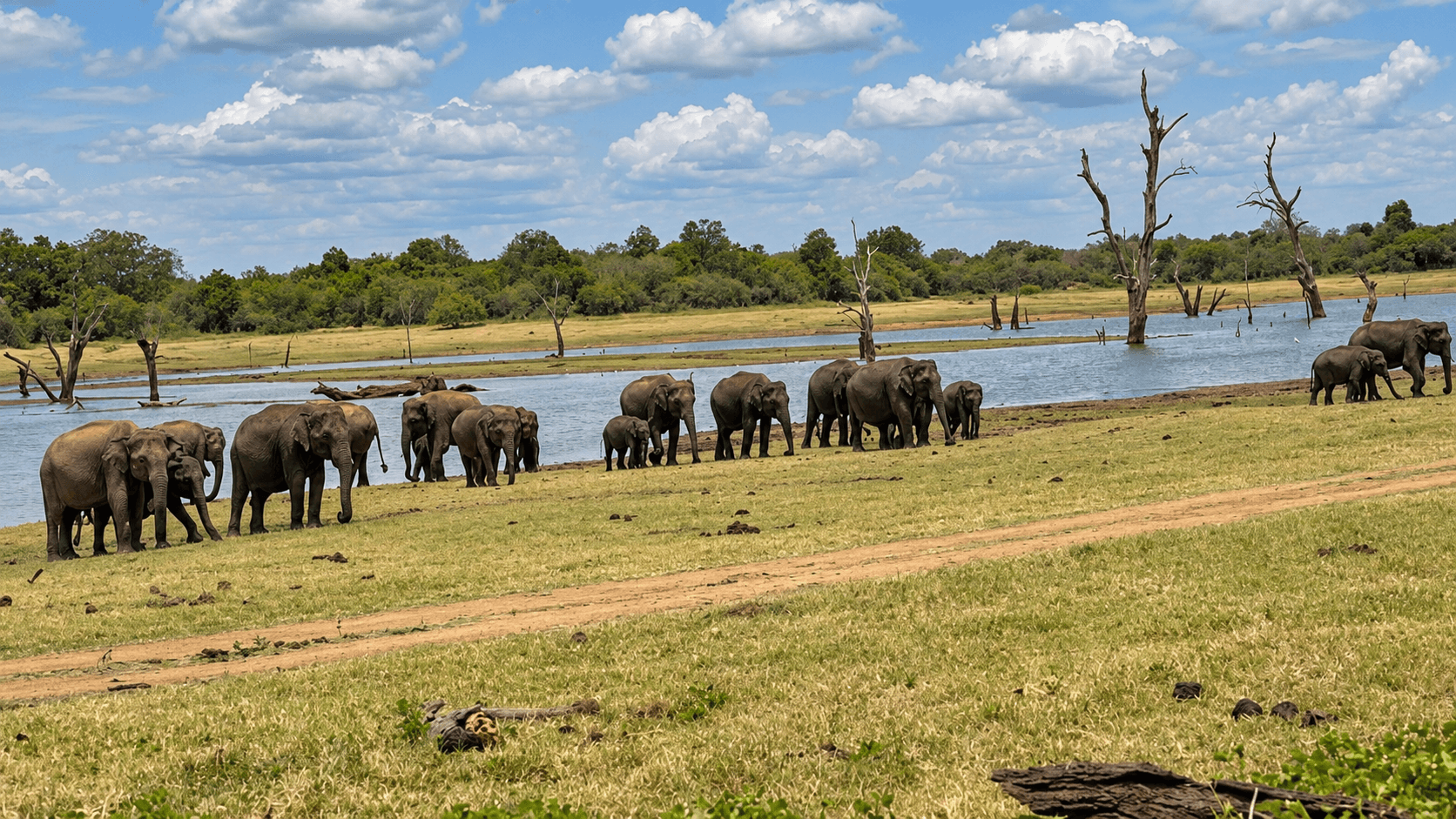
2. Marine Turtle Nesting Grounds: The pristine sand beaches of Bundala represent one of the few places in the world where **all five species of global marine turtles** that visit Sri Lanka come ashore to nest: - Olive Ridley Turtle (*Lepidochelys olivacea*) - Green Turtle (*Chelonia mydas*) - Leatherback Turtle (*Dermochelys coriacea* — the world’s largest marine reptile) - Hawksbill Turtle (*Eretmochelys imbricata*) - Loggerhead Turtle (*Caretta caretta*)
At night, female turtles drag their heavy carapaces up the beach to excavate deep nesting chambers in the warm sand, laying clutches of 80 to 120 soft-shelled eggs. Wading birds, jackals, and monitors patrol the strandline at dawn, creating a dynamic ecological intersection between terrestrial, wetland, and pelagic marine ecosystems.
---
Section 31: The Master Wetland Expedition Packing & Optics Protocol
To ensure a seamless, high-yield birding expedition in Bundala and Kumana, our senior ornithologists recommend the following field preparation:
1. Essential Optics & Support Systems: - **Spotting Scope:** 20-60x angled scope with a minimum 80mm objective lens for high light-gathering power across shimmering lagoon flats. - **Tripod:** Heavy-gauge carbon fiber tripod with a fluid video head or gimbal head, providing rock-solid vibration damping against stiff coastal ocean breezes. - **Binoculars:** 8x42 or 10x42 waterproof, nitrogen-purged roof prism binoculars with dielectric prism coatings for maximum color fidelity when assessing subtle shorebird wing-bar patterns.
2. Protective Apparel & Wetland Comfort: - **Muted Safari Garments:** Lightweight, quick-drying UPF 50+ sun shirts in muted neutral tones (khaki, pale olive, stone). Bright red, yellow, or white shirts startle timid waders and send flocks into flight from 200 meters away. - **Polarized Sunglasses:** Category 3 polarized lenses with hydrophobic coatings to cut blinding lagoon water reflection. - **Footwear:** Breathable trail sandals with neoprene straps or water shoes for walking along coastal dune margins.
Section 32: Avian Pathology & Epidemiology: Wetland Surveillance
Because Bundala is the terminal nexus for birds flying from across Eurasia, it serves as an indispensable sentinel monitoring station for global avian epidemiological surveillance:
1. Avian Influenza (HPAI) Monitoring: Veterinarians from the Department of Wildlife Conservation and the University of Peradeniya routinely collect non-invasive fecal swabs and water samples across the five lagoons to screen for wild strains of Avian Paramyxovirus and Highly Pathogenic Avian Influenza (HPAI). Because wild migratory ducks (such as Garganey and Pintail) carry low-pathogenic strains without clinical symptoms, monitoring ensures that dangerous mutations are detected long before they can affect domestic poultry or wild breeding colonies.
2. Botulism & Water Quality Parameters: During intense dry seasons when water levels drop and temperatures exceed 35°C, anaerobic conditions can occasionally trigger localized outbreaks of *Clostridium botulinum* type C in shallow stagnant pools. Park rangers manage water levels by opening seasonal sluice gates, flushing hypersaline pools with freshwater to keep botulism spores dormant.
---
Section 33: Citizen Science & eBird: Global Big Day Records in Bundala
- Over 2,400 comprehensive eBird checklists have been submitted for Bundala National Park, documenting real-time arrival and departure dates for 232 species over three decades.
- Global Big Day held each May and October, Sri Lankan birding teams routinely record over 140 species in a single 24-hour period across the Bundala-Yala corridor, placing Sri Lanka among the top birding nations in Asia per square kilometer.
- Traveling birders contribute directly to global conservation science by logging their sightings on eBird while on safari with our guides, creating open-access data used by international researchers to track climate-induced shifts in flyway timing.
Section 34: Courtship Ethology: The Ritualized Mating Displays of Ruhuna
During the post-monsoon transition (January through April), Bundala and Yala become living theaters of intricate avian courtship:
1. The Peacock's Train Physics (*Pavo cristatus*): The extravagant courtship display of the Indian Peafowl is one of nature's greatest evolutionary marvels. The male’s "tail" is not actually tail feathers, but elongated upper tail coverts supported by 20 stiff underlying rectrices: - **Structural Nanophotonics:** The iridescent blues, greens, and coppers of the peacock's eye-spots (*ocelli*) are produced not by pigments, but by two-dimensional photonic crystal nanostructures made of keratin and melanin rods that reflect specific wavelengths of light. - **Resonant Bioacoustic Shivering:** When a peacock fans his train, he vibrates the feathers at **25 to 28 Hz** (just at the lower edge of human hearing). This acoustic vibration produces a low-frequency hum that females feel through their crest feathers, while making the iridescent ocelli appear completely stationary against a shimmering metallic background.
2. Painted Stork Bill-Clattering Duets: At colonial nesting trees in Kumana and Bundala, mated pairs of Painted Storks perform synchronized greeting rituals: - The birds throw their heads backward onto their spines, spread their wings wide, and vigorously clatter their heavy wooden bills together (*"Tak-tak-tak-tak!"*), accompanied by deep bowing motions that reinforce the lifelong pair bond.
---
Section 35: Acoustic Identification Key: Decoding Avian Audio Signatures
- Sri Lanka Junglefowl: Sharp, explosive crowing (*"George Joyce!"* or *"Klok-klok-chiek!"*).
- Crested Serpent Eagle: Piercing high-pitched triple whistle (*"Kluee-wip-wip... Kluee-wip-wip!"*).
- White-bellied Sea Eagle: Deep, resonant goose-like honking duet (*"Ahng-ahng-ahng!"*) echoing over open water.
- Indian Roller: Harsh, grating, crow-like screech emitted during acrobatic rolling territorial flights.
- Brown Fish Owl: Deep, hollow double-hoot (*"Boom-boom... Boom-boom!"*) resonating across wewas at dusk.
- Pied Kingfisher: High-pitched, metallic chittering (*"Chirr-ik... Chirr-ik!"*) emitted while hovering over open lagoon water.
- Great Thick-knee: Eerie, wailing nocturnal piping whistling (*"Klee-ur... Klee-ur!"*) echoing across the salt pans under the full moon.
Learning to decode these distinct acoustic markers allows our naturalist guides to pinpoint rare birds hidden in dense reedbeds long before they can be seen through binoculars.
---
Final Field Summary: The Avian Sanctuary of Ruhuna
Bundala National Park remains an irreplaceable jewel of global biodiversity. In an era where wild wetlands are vanishing worldwide, Bundala stands as a testament to the power of conservation, ecological balance, and human reverence for the natural world. Whether you are observing a flaming pink flock of Greater Flamingos wading across salt pans, watching a solitary Black-necked Stork stalk across a remote lagoon, or listening to the whistle of thousands of Siberian waders taking flight at sunset, an expedition guided by true master naturalists transforms a simple vacation into an unforgettable lifelong connection with the natural world.
Species Covered in this Monograph:
Track the wildlife mentioned in this guide. Check off species you hope to encounter during your game drive: