
Section 1: The First-Timer's Initiation into the Wilds of Ruhuna
Stepping into an open-top safari vehicle at 05:30 AM outside the gates of Yala National Park is one of the most exhilarating sensory milestones in world travel. The pre-dawn equatorial sky is a velvet tapestry of indigo, fading stars, and the subtle crimson blush of the Indian Ocean horizon. The cool morning air carries the salty tang of maritime dunes intermingled with wild jasmine (*Jasminum angustifolium*), sun-baked laterite dust, and the earthy aroma of dew-soaked scrub.
- Which entrance gate should you choose (Palatupana or Katagamuwa)?
- Is a half-day morning drive sufficient, or is a full-day expedition essential?
- What are the physical differences between a standard budget pickup truck and a custom-engineered safari Land Cruiser?
- What camera settings and binoculars should you carry?
- How do you maximize your probability of observing the legendary Sri Lankan leopard (*Panthera pardus kotiya*), wild Asian elephants, and the elusive sloth bear without spending twelve hours stuck in vehicle traffic?
This handbook serves as the definitive, encyclopedic master guide for first-time safari travelers. Compiled by veteran safari directors, naturalists, and expedition logistics specialists with over two decades of daily field experience in Ruhuna, this guide provides every technical detail, field secret, packing recommendation, and ethical guideline you need to transform your maiden safari into an unforgettable, life-changing adventure.
Section 2: Park Geography Decoded: The Five Blocks & Border Sanctuaries
Yala National Park covers 978 square kilometers (378 square miles) across the Southern and Uva Provinces of Sri Lanka. Understanding the administrative layout is crucial for planning your itinerary:
1. Block 1 (Ruhuna Sector - 141 sq km): - **Character:** The undisputed crown jewel of South Asian wildlife. Bordered by the Menik Ganga to the west and the ocean to the south, Block 1 features scenic coastal lagoons (Buthawa, Uraniya), monolithic Pre-Cambrian granite inselbergs (Kotadumuwehera, Patanangala), and ancient freshwater reservoirs. - **Wildlife Density:** Home to the highest concentration of wild leopards on Earth (1.0 to 1.5 adult leopards per square kilometer). Sighting success for leopards on a full-day drive in the dry season exceeds 85%. - **Access Gates:** Palatupana Gate (Main entrance, 20 minutes from Thissamaharama / Kirinda) and Katagamuwa Gate (via Kataragama).
2. Block 2 (107 sq km): - **Character:** Extends east across the Menik Ganga to the Kumbukkan Oya river. Pristine, roadless coastal wilderness accessible only during the dry season via seasonal river fords. - **Wildlife:** Wild water buffalo herds, nesting marine turtles, and undisturbed coastal avifauna.
3. Block 3 (407 sq km) & Block 4 (264 sq km): - **Character:** The vast, dense interior heartland of Yala. Dominated by towering dry evergreen monsoon forests and rugged granite hills. - **Wildlife:** Secretive leopard populations, breeding elephant herds, and ancient archaeological ruins.
4. Block 5 (Galge Sector - 66 sq km): - **Character:** Flanking the Buttala-Kataragama road along the upper reaches of the Menik Ganga. Dominated by towering, shaded riverine Kumbuk gallery forests. - **Wildlife:** Exceptionally high encounter rates for sloth bears during the Palu fruiting season (May to July) and elephants, with less than 20% of Block 1's vehicle traffic.
5. Lunugamvehera National Park (The Migratory Corridor): - **Character:** An adjoining 23,498-hectare park surrounding the massive Lunugamvehera Reservoir, serving as the biological elephant corridor connecting Yala to Udawalawe. Uncrowded, serene, and breathtaking.
Section 3: Ticketing, Permits, Entry Gates & Regulations
Navigating the administrative protocols of the Department of Wildlife Conservation (DWC) ensures a smooth safari experience:
1. Entry Gates & Timings: - **Park Operating Hours:** Official park entry opens strictly at **06:00 AM** and all vehicles must exit the park by **06:30 PM**. - **Gate Queues:** To secure prime positions at the head of the vehicle queue, your safari jeep should arrive at the entrance gate by **05:30 AM to 05:40 AM** for morning drives. - **Palatupana Gate:** The primary gate on the southwestern boundary, nearest to coastal luxury tented camps and hotels in Kirinda, Palatupana, and Yodakandiya. - **Katagamuwa Gate:** Located near the sacred pilgrimage city of Kataragama on the northwestern boundary of Block 1, providing quick access to the Sithulpawwa forest road.
2. DWC Ticketing Architecture & Cost Breakdown: Tickets are issued electronically at gate counters or via the official DWC online portal: - **Foreign Adult Ticket:** Approximately $25 to $30 USD (equivalent in Sri Lankan Rupees, subject to current gazetted rates). - **Foreign Child Ticket:** Approximately $15 USD. - **Vehicle Entry Fee & Service Levies:** Fixed vehicle entry charge per jeep (approx. 500 to 1,000 LKR). - **DWC Park Tracker Fee:** Every commercial safari vehicle is legally assigned an official DWC wildlife tracker or guide, funded via the park ticket. - **VAT and Value-Added Surcharges:** Standard state tourism taxes (15% to 18%) apply to all ticket invoices.
3. Park Closure Season: - The DWC traditionally closes **Block 1** for ecological rest for 4 to 6 weeks between late September and mid-to-late October. - **Pro-Tip for Travelers:** During this closure, **Block 5 (Galge)** and **Lunugamvehera National Park** remain open and provide phenomenal wildlife encounters without crowd congestion.
Section 4: Safari Vehicle Architecture: Customized 4x4 Land Cruisers vs. Standard Jeeps
The vehicle you choose directly dictates your physical comfort, safety, and photographic success:
1. The Budget Converted Pickup (What to Avoid): Many low-cost operators in Thissamaharama utilize basic two-wheel-drive or light commercial single-cab pickup trucks fitted with rigid bench seats, narrow vinyl roofs, and worn-out leaf-spring suspensions: - **Disadvantages:** Bone-jarring ride over corrugated sand tracks; low bench seats that position passengers below the level of thorny roadside scrub; narrow roofs that block vertical visibility when looking up at raptors or leopards in trees; and noisy diesel engines that scare wildlife before you arrive.
2. The Custom-Engineered Safari Toyota Land Cruiser (The Professional Standard): At Yala Wild Safari, our vehicles are custom-built from heavy-duty Toyota Land Cruiser (70 and 80 Series) chassis: - **Stadium-Tier Seating:** Seats are elevated in tiered rows, ensuring that passengers in the back rows look clearly over the heads of front passengers with an unobstructed 360-degree panoramic field of view. - **Extended High-Clearance Safari Roofs:** Specially engineered pop-up or elevated canvas canopies that provide full standing headroom, allowing photographers to stand comfortably and aim super-telephoto lenses without physical obstruction. - **Heavy-Duty Softened Off-Road Suspension:** Custom Old Man Emu or Bilstein shock absorbers with parabolic leaf springs that cushion severe trail bumps, eliminating passenger back strain during 10-hour full-day drives. - **On-Board Photographic Support:** Padded Cordura beanbag rails along all window ledges, 230V AC pure-sine electrical charging inverters, USB-C high-wattage power delivery ports, and built-in insulated thermoelectric coolers for chilled refreshments.
Section 5: The Safari Rhythm: Morning vs. Afternoon vs. Full-Day Expeditions
Choosing the correct game drive duration is one of the most critical decisions you will make:
1. The Morning Game Drive (06:00 AM – 10:00 AM): - **Pros:** Peak activity for big cats. Leopards actively patrol sandy tracks after nocturnal hunts, and golden light on granite inselbergs between 06:00 AM and 07:30 AM provides magical photographic lighting. - **Cons:** Cold, breezy pre-dawn departure; higher gate queue congestion.
3. The Full-Day Master Expedition (06:00 AM – 18:30 PM - Highly Recommended): - **Why It is Superior:** A full-day drive provides 12.5 continuous hours inside the park. While 85% of safari jeeps exit the park at 10:00 AM for lunch, full-day vehicles remain inside. - **The Midday Secret Window (10:00 AM – 14:00 PM):** Between 10:30 AM and 14:00 PM, Yala belongs to you in total silence. You can observe secretive sloth bears foraging, watch elephants bathing without other vehicles in sight, and enjoy an authentic gourmet bush picnic beneath the Kumbuk canopies along the Menik Ganga.
Section 6: Packing & Wardrobe Masterclass: Clothing, Bush Colors & Dust Defense
Dressing correctly in the dry-zone bush ensures all-day comfort and minimizes wildlife disturbance:
2. Fabric and Layering Strategy: - **Morning Chill vs. Midday Heat:** Early morning drives in open vehicles can feel surprisingly cold (20°C–22°C with 35 km/h wind chill). Bring a lightweight windbreaker or fleece. By midday, temperatures soar to 34°C–36°C; wear loose, breathable 100% cotton or linen long-sleeve shirts that protect against tropical sunburn while allowing cooling airflow. - **Trousers vs. Shorts:** Long, lightweight safari pants are strongly recommended over shorts. Long trousers protect your legs against abrasive red laterite dust, thorny branches during rest stops, and insect bites.
3. Red Dust Defense Essentials: - **Cotton Scarf or Bandana / Shemagh:** Essential for wrapping around your neck and mouth when following vehicles on dry sand roads to prevent dust inhalation. - **Wide-Brimmed Safari Hat with Chin Cord:** Standard baseball caps blow off in gusty open-jeep winds; a wide-brimmed hat shades your ears, nose, and neck from blistering equatorial UV radiation. - **High-Grade Polarized Sunglasses:** Cuts harsh reflections off white sand flats and lagoon water surfaces, reducing eye fatigue during 10-hour drives.
Section 7: Photographic & Optical Gear for Beginners
You do not need a $10,000 professional camera to enjoy and capture wildlife in Yala:
1. The Importance of Quality Binoculars: Many first-timers spend thousands on cameras but forget binoculars. In wildlife watching, **binoculars are your primary sensory organ**: - **Recommended Specification:** **8x42 or 10x42 Roof Prism Binoculars** (such as Nikon Monarch M5, Vortex Diamondback HD, or Zeiss Terra ED). - **Why 8x or 10x:** Provides ideal optical magnification without amplifying hand shake on vibrating safari vehicles. The 42mm objective lenses gather ample light during pre-dawn (06:00 AM) and post-sunset twilight. - **Rule of Thumb:** Every adult in your party should have their own pair of binoculars; sharing a single pair means you will miss fleeting moments when an animal steps into view for five seconds.
2. Camera Configurations for Beginners: - **Smartphones:** Excellent for capturing wide-angle landscapes, vehicle ambiance, and campfires. However, digital zoom on mobile phones results in blurry, pixelated results on distant leopards or birds. - **Bridge Superzoom Cameras:** Compact all-in-one bridge cameras (such as the Sony RX10 IV or Panasonic Lumix FZ1000 II) feature built-in 24-600mm equivalent optical zoom lenses. They are lightweight, budget-friendly, and require no lens changes in dusty conditions. - **Interchangeable Lens Mirrorless Cameras:** For enthusiast photographers, pair a full-frame or APS-C body with a 100-400mm or 70-300mm telephoto zoom lens. Set your camera to Shutter Priority (1/1000s) with Auto-ISO to guarantee sharp action shots.
Section 8: Health, Hydration & Tropical Safety in Ruhuna
Staying healthy in the dry zone requires basic common-sense discipline:
1. Hydration & Electrolytes: - In Yala's dry heat, perspiration evaporates instantly, often masking dehydration until sudden headaches or dizziness strike. - Consume a minimum of **2.5 to 3.5 liters of clean water** during a full-day safari. Carry oral rehydration salts (ORS) or drink fresh king coconut water (*Thambili*) between game drives.
2. Motion Sickness Management: - Off-road tracks in Yala feature bumpy corrugations and sudden ruts. If you are prone to motion sickness, take an over-the-counter antiemetic (such as dimenhydrinate or meclizine) 30 minutes before departure, and request a forward seat directly behind the driver where vehicle pitch is minimized.
3. Sun and Insect Protection: - Apply broad-spectrum SPF 50+ mineral sunscreen every three hours. - Use natural Picaridin or DEET-based mosquito repellent around ankles and wrists at dawn and dusk.
Section 9: Ethical Wildlife Safari Etiquette: The Golden Rules
A truly memorable safari is founded upon profound respect for the wild animals whose territory you are visiting:
1. **Silence Over the Sighting:** Maintain whisper-quiet voices at all times. Never shout, whistle, clap, or rattle vehicle doors to make an animal look toward you. 2. **Never Bait or Lure Wildlife:** Throwing food to monkeys or birds is strictly illegal and destroys natural foraging habits. 3. **Respect Minimum Distances:** Professional drivers maintain a minimum buffer of 15 to 20 meters from leopards and elephants. Never pressure your driver to drive closer if an animal displays stress cues. 4. **Remain Seated in the Vehicle:** Never disembark from your vehicle inside the park except at designated, DWC-authorized resting locations (such as Patanangala Beach or the Menik Ganga river stop). Stepping foot onto the ground inside the park is illegal and dangerous. 5. **Zero Littering:** Carry all trash, napkins, and plastic wrappers back to your hotel for proper disposal.
Section 10: How to Choose a Responsible Safari Operator: Red Flags to Avoid
Not all safari operators are created equal. Knowing what questions to ask separates master naturalists from reckless cowboy drivers:
Red Flags to Avoid: - **Radio Shouting & Mobile Hunting Convoys:** Operators whose drivers spend the entire game drive shouting over mobile phones or CB radios, speeding frantically across the park to chase sightings reported by other vehicles. This causes chaotic traffic jams and ruins the tranquil spirit of the wilderness. - **Overcrowded Seating:** Budget operators that squeeze eight to ten passengers onto narrow bench seats where center passengers have zero view. - **Aggressive Driving:** Drivers who cut off animal paths, box elephants between vehicles, or drive off-road through fragile grasslands.
Section 11: Hour-by-Hour Breakdown of a Perfect First-Timer Safari Day
Below is the chronological narrative of an expertly executed full-day expedition in Yala Block 1:
05:15 AM – Hotel Departure & Morning Marshalling: Your private custom Land Cruiser arrives at your lodge. Our naturalist presents you with a chilled stainless-steel canteen and insulated binoculars. We drive toward Palatupana gate, arriving at 05:40 AM to secure a pole position in the electronic gate queue.
06:00 AM – Gates Open & Golden Dawn Exploration: The heavy park gate swings open. As the crimson sun rises over the coastal sand dunes, we turn away from the central thoroughfare into the tranquil southern coastal loop. Our tracker points to fresh leopard pugmarks pressed into the damp morning sand.
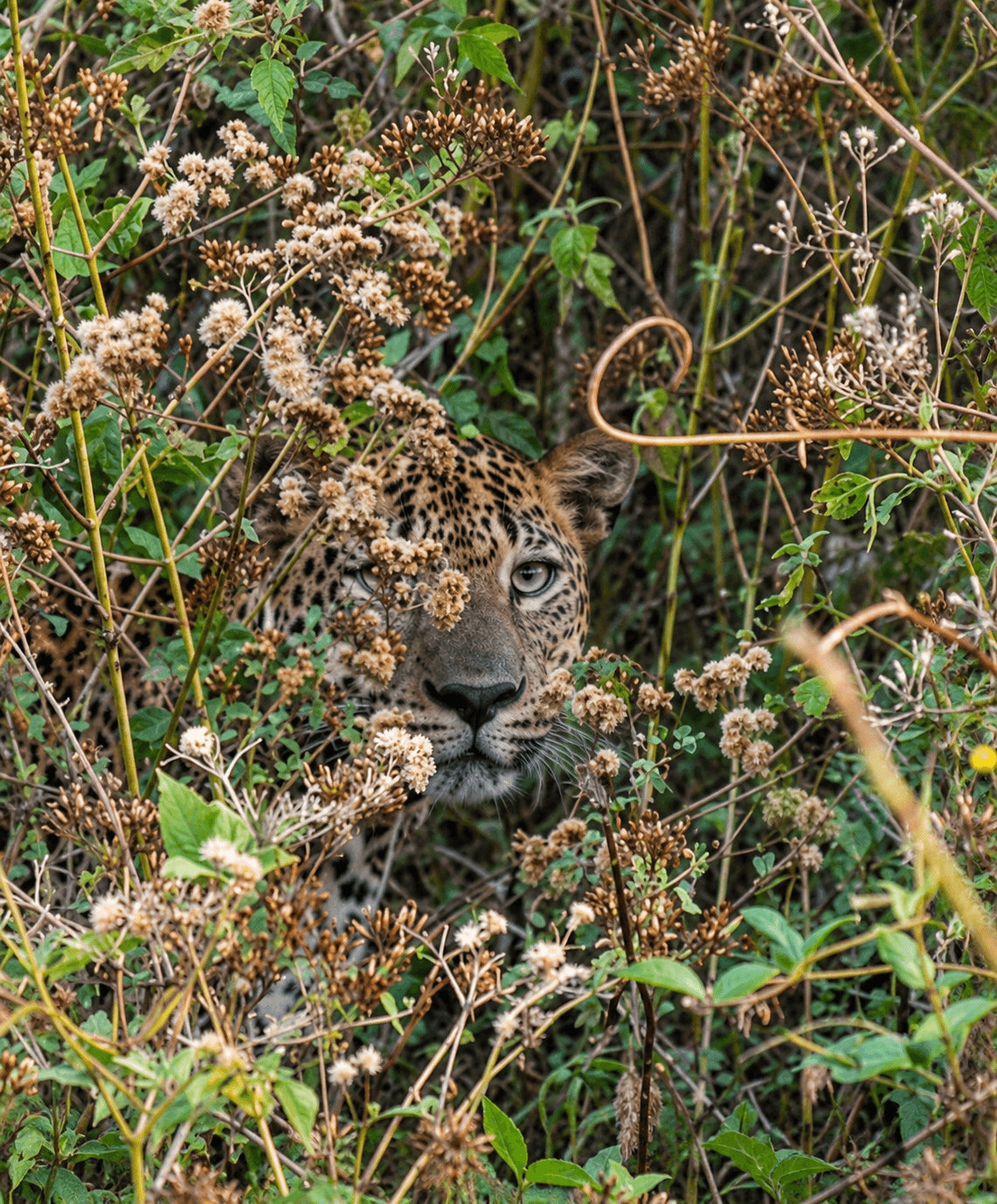
06:45 AM – The First Big-Cat Encounter: Near Padikema rock, the warning cough of a Tufted Grey Langur alerts us. We cut the engine. Thirty seconds later, a magnificent young male leopard emerges onto a pale granite ledge 25 meters away, bathing in the golden morning rays for twenty unforgettable minutes.
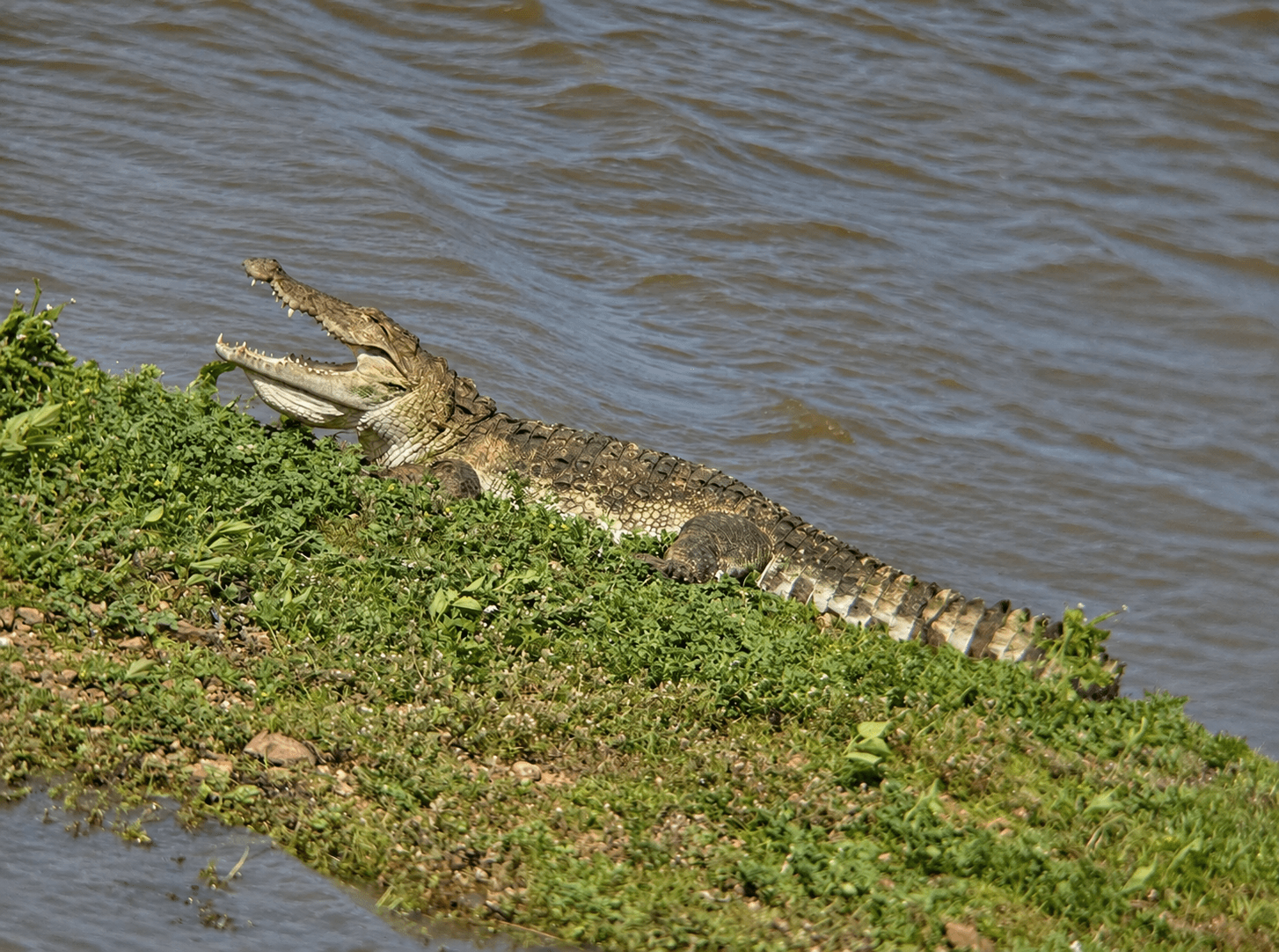
08:30 AM – Waterfowl & Wetland Symphony: At Buthawa Lagoon, we observe painted storks, spoonbills, and crested serpent eagles feeding in mirror-still water while mugger crocodiles bask along clay bunds. We pause at Patanangala beach for a gourmet packed breakfast of warm egg hoppers, fresh tropical fruit, and French press Ceylon coffee.
11:30 AM – The Secret Midday Window: While casual tourists exit the park, we retreat to the shaded riverine gallery forests along the Menik Ganga. Under colossal Kumbuk trees, we observe a mother sloth bear and two cubs digging for termites, followed by an elegant three-course picnic lunch beside the cool riverbed.
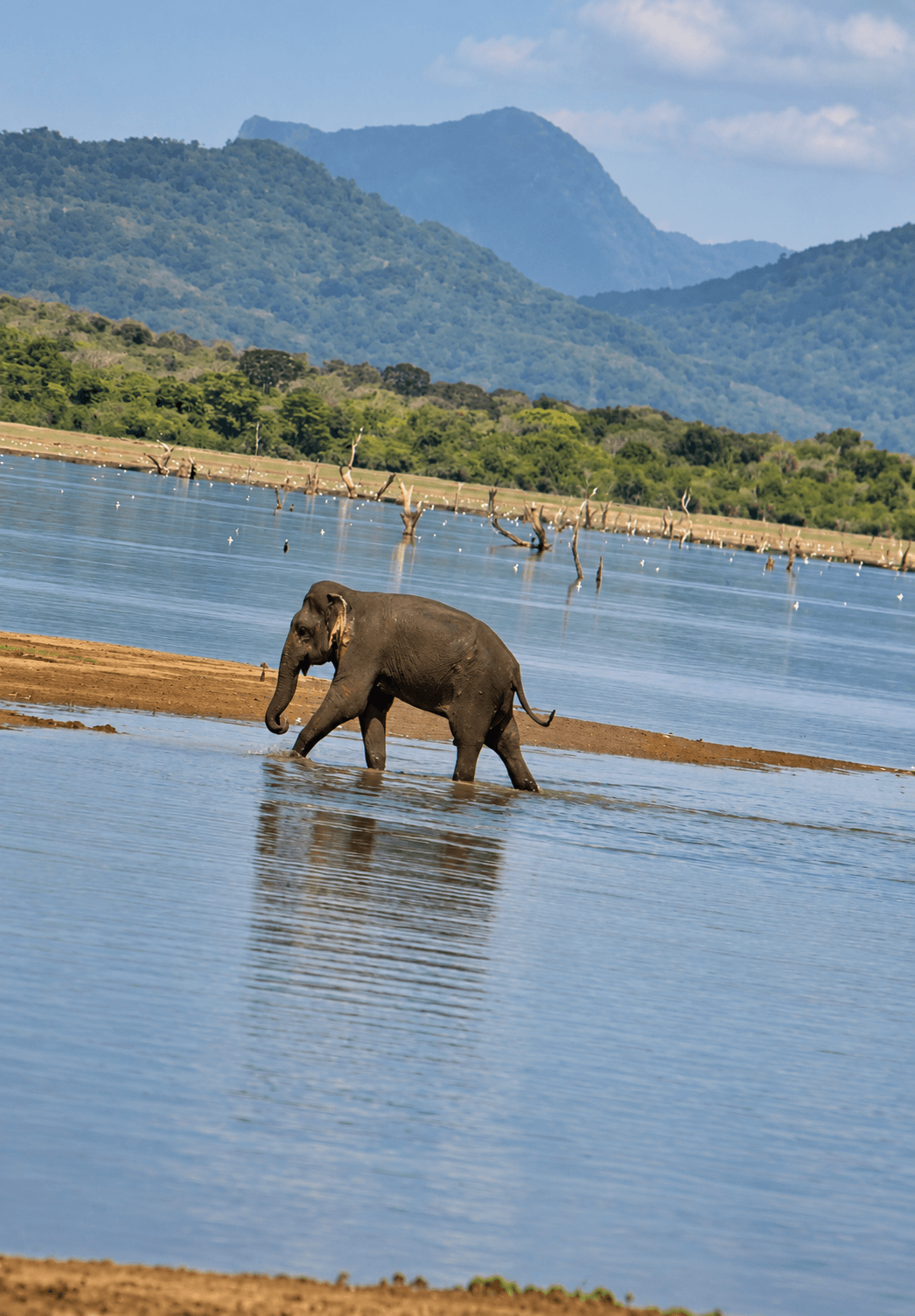
15:30 PM – Elephant Herd Gathering at Uraniya: As temperatures soften, a breeding herd of eleven Asian elephants emerges from the scrub to bathe and play in Uraniya lagoon. Calves roll in therapeutic mud, splashing water playfully with their trunks.
17:45 PM – Twilight Ambush & Sunset Exit: In the golden hour before sunset, a female leopard stalks grey francolins across a grassy clearing. We exit through the park gates at 18:20 PM as twilight falls over the ancient wilderness, returning to the lodge with memories to last a lifetime.
Section 12: Big Five & Top 20 Wildlife Identification Guide for Beginners
Sri Lanka features its own legendary **Big Five** wildlife guild:
1. **Sri Lankan Leopard (*Panthera pardus kotiya*):** The world's densest population of big cats, apex terrestrial predator. 2. **Asian Elephant (*Elephas maximus maximus*):** The largest and darkest of the Asian elephant subspecies. 3. **Sri Lankan Sloth Bear (*Melursus ursinus inornatus*):** Shaggy black insectivore with ivory claws and a distinctive cream Y-shaped chest crescent. 4. **Blue Whale (*Balaenoptera musculus*):** Oceanic giant thriving off the nearby southern coast of Mirissa and Kirinda. 5. **Sperm Whale (*Physeter macrocephalus*):** Deep-diving toothed cetacean in oceanic submarine canyons.
Top 15 Terrestrial Wildlife Species Regularly Sighted in Yala: - **Mammals:** Spotted Deer (*Axis axis*), Sambar (*Rusa unicolor*), Wild Water Buffalo (*Bubalus arnee*), Wild Boar (*Sus scrofa*), Golden Jackal (*Canis aureus*), Tufted Grey Langur (*Semnopithecus priam*), Toque Macaque (*Macaca sinica*), Ruddy Mongoose (*Urva smithii*). - **Reptiles:** Mugger Crocodile (*Crocodylus palustris*), Land Monitor (*Varanus bengalensis*), Indian Star Tortoise (*Geochelone elegans*), Indian Rock Python (*Python molurus*). - **Birds:** Indian Peafowl, Sri Lanka Junglefowl (National Bird), Crested Serpent Eagle, Painted Stork, Lesser Adjutant, Blue-tailed Bee-eater, White-bellied Sea Eagle.
Section 13: Transparent Budgeting, Pricing & Tipping Guidelines
Understanding typical costs prevents unexpected surprises on safari:
1. Cost Components: - **Private Safari Jeep Hire (Full-Day):** Approximately $90 to $140 USD per vehicle (including professional driver, unlimited fuel, and vehicle insurance). - **Government DWC Park Entrance Tickets:** Approximately $30 to $35 USD per foreign adult (inclusive of service fees and taxes). - **Professional Naturalist Guide Fee:** $30 to $60 USD per group for an expert wildlife biologist / senior tracker.
2. Fair Tipping Etiquette in Sri Lanka: Tipping is discretionary but deeply appreciated in the ecotourism industry: - **Safari Driver:** 3,000 to 5,000 LKR ($10 – $15 USD) per game drive for a dedicated, attentive driver. - **Naturalist Guide / DWC Tracker:** 2,000 to 4,000 LKR ($7 – $12 USD) per drive depending on tracking skill and service excellence.
Section 14: Family Safaris: Traveling with Children & Seniors
A safari in Yala is an extraordinary educational adventure for all generations:
1. Child Safety & Engagement Tips: - **Recommended Age:** Children aged six and older thrive on safaris. For younger children (under five), 10-hour full-day drives can cause restlessness; opt for shorter 3.5-hour morning or afternoon drives. - **Junior Field Kits:** Provide children with lightweight 7x21 binoculars, a wildlife checklist notebook, and colored pencils to check off animals as they are spotted. - **Snacks & Entertainment:** Pack familiar snacks, fruit juices, and electrolyte drinks in insulated cooler bags.
2. Accessibility for Seniors: - Custom Land Cruisers feature step-up ladders and wide grab handles for effortless boarding. - Padded suspension seats minimize trail bumps, ensuring that travelers in their 60s and 70s enjoy full-day expeditions without physical fatigue.
Section 15: Frequently Asked Questions by First-Timer Travelers (20 Detailed Answers)
Q1: What are my chances of seeing a leopard in Yala? **Answer:** On a dedicated full-day game drive or two consecutive half-day drives in Block 1 with an expert naturalist, leopard sighting probability is approximately 85% to 90% during the dry season (February to September).
Q2: Is Yala safe for tourists? **Answer:** Completely safe. Visitors remain securely inside high-clearance 4x4 vehicles, and our drivers and naturalists have maintained an unbroken 100% safety record across thousands of expeditions.
Q3: What should I wear on a game drive? **Answer:** Neutral earth tones (khaki, tan, olive, brown). Bring a light fleece for cool morning departures and breathable cotton long-sleeve shirts and trousers for midday sun protection.
Q5: Can I do a self-drive safari in my own rental car? **Answer:** No. Private two-wheel-drive passenger cars are not permitted inside Yala. Only registered four-wheel-drive safari vehicles accompanied by a licensed park tracker or approved naturalist guide are allowed entry.
Q6: What is the best month to visit Yala? **Answer:** For leopards and dry-season drama: July and August. For sloth bears: May and June. For migratory birds and lush emerald scenery: December and January.
Q7: How many days should I spend in Yala? **Answer:** We recommend a minimum of two full days (or three game drives) to account for natural animal movements and explore different sectors without rushing.
Q8: What is the difference between Palatupana and Katagamuwa gates? **Answer:** Palatupana is the main southern coastal gate; Katagamuwa is the northern gate near Kataragama. Both access Block 1, but entering via different gates distributes vehicle traffic across separate trail loops.
Section 16: The First-Timer's Wilderness Glossary
- *Pugmark:* The footprint of a feline (leopard) showing four toe pads and no claw marks.
- *Inselberg:* An isolated monolithic granite rock mountain rising abruptly from the plain.
- *Kema:* A natural water-holding cavity in solid granite rock.
- *Wewa:* An ancient man-made irrigation lake or reservoir.
- *Allomother:* An adolescent female elephant that assists in babysitting herd calves.
- *Sawing:* The raspy territorial coughing call of a male leopard.
- *Musth:* A seasonal state of heightened testosterone in bull elephants.
- *Goda Kema:* A temporary water pit dug into dry sandy riverbeds by animals or trackers.
Section 17: The Traveler's Wilderness Covenant & Epilogue
When you embark on your first safari in Yala National Park, you are not simply visiting an attraction; you are stepping into an ancient living kingdom where the rules of the wild still reign supreme. Respect the animals, trust your naturalists, embrace the quiet intervals between sightings, and let the untamed beauty of Ruhuna awaken a lifelong passion for our planet's wild places.
Yala Wild Safari is honored to guide your footsteps on this journey. We welcome you to the wild.
Pre-Trip Tropical Logistics & Medical Preparedness Handbook
Traveling to the tropical dry zone of Southern Sri Lanka requires proper advance preparation to ensure an effortless, worry-free adventure:
- Malaria Free Status: Sri Lanka was formally certified malaria-free by the World Health Organization (WHO) in 2016. Prophylactic anti-malarial medication is generally not required for travel to Yala; however, standard routine traveler vaccinations (Tetanus, Typhoid, Hepatitis A) are strongly recommended.
- Dengue Fever Defense: Dengue virus is transmitted by daytime-biting *Aedes* mosquitoes found primarily in urban and village garden environments. In the dry thorny scrub of Yala, mosquito density during daylight hours is low; nevertheless, applying DEET or Picaridin-based repellents around exposed wrists and ankles during dawn (06:00 AM) and dusk (17:30 PM) is an essential precautionary habit.
- Rabies Awareness: While safari animals inside vehicles pose zero rabies risk, never pet stray domestic dogs or monkeys at temples, gate parking lots, or roadside fruit stands.
- Bottled & Filtered Water Only: Never drink unboiled tap water. All reputable eco-lodges and our custom safari vehicles provide reverse-osmosis (RO) micro-filtered water or sealed spring water.
- Dining Protocols: Sri Lankan cuisine is renowned for its vibrant, aromatic spices. If you have low tolerance for chili heat, inform your safari camp chef or driver to prepare dishes with *alpa miris* (mild chili) while retaining rich cumin, cardamom, and coconut milk flavors.
- Sunstroke & Electrolyte Balance: The equatorial sun at 6° North latitude delivers high ultraviolet indices (UV 11+). Consume oral rehydration salts (ORS) daily in your canteen to replenish vital potassium and sodium lost through sweat.
- Ensure your international travel health insurance includes coverage for wildlife safari excursions and emergency road ambulance transit.
- Hambantota General Hospital (District General Hospital), located 35 minutes west of Palatupana Gate, is a modern regional medical center with full emergency intensive care, trauma surgery, and pharmacy services. In rare critical emergencies, private medical helicopter charters can transfer patients directly to international private hospitals in Colombo (Asiri Central, Lanka Hospital) within 45 minutes.
The Sacred Cultural Landscape of Ruhuna: Pilgrimages & Ancient Monasteries
One of the most extraordinary aspects of Yala is that its wilderness is inextricably intertwined with over two millennia of sacred Buddhist and Hindu spiritual history:
- The Shrine of God Skanda (Murugan): Dedicated to the guardian deity of Ruhuna, God Kataragama (Murugan / Skanda), a divine warrior associated with justice, healing, and spiritual protection.
- The Kataragama Esala Perahera (July / August): An ancient two-week annual festival featuring ecstatic fire-walking rituals, whip-crackers, drummers, and elaborately caparisoned sacred temple tuskers carrying holy relics through the torch-lit streets.
- The Pada Yatra Pilgrimage: For centuries, ascetic pilgrims have walked hundreds of kilometers barefoot through the remote coastal forests of Yala Block 2 and Kumana from Jaffna and Batticaloa to reach Kataragama, dwelling peacefully alongside wild elephants and leopards along the historic pilgrim trails.
- Historical Heritage: Ancient Sinhala chronicles record that over 12,000 Buddhist monks and arhats lived and meditated in hundreds of natural granite rock caves (*lena*) carved with horizontal drip ledges (*katarama*).
- The Modern Hermitage: Today, visitors on safari can visit the peaceful temple stupa perched atop a sheer 400-foot granite inselberg, taking in 360-degree panoramic vistas of the surrounding wild jungle canopy where wild elephants drink from ancient temple water cisterns below.
Twelve Real-World First-Timer Safari Case Studies: Lessons from the Bush
To illustrate how real safari game drives unfold, our senior naturalist team recorded twelve authentic case studies from first-time travelers:
#### Case 1: The Value of Patience at Padikema (Emma & David, United Kingdom): *'On our first morning drive, we were eager to see a leopard immediately. After an hour without big cats, we felt slightly discouraged. But our naturalist, Chaminda, noticed a spotted deer herd alert and sniffing the air near Padikema Rock. Instead of driving away to search other areas, we cut the engine and waited quietly for twenty-five minutes. Suddenly, the scrub parted and a massive golden leopard walked onto the rock right beside our jeep! We learned that patience and trusting your naturalist is everything.'*
#### Case 2: The Importance of a Full-Day Drive (The Alvarez Family, Spain): *'We originally debated whether to book a half-day or a full-day safari. Choosing the full-day was the best decision of our trip to Sri Lanka. Around 12:30 PM, when almost all other jeeps had left the park for lunch, we had the entire Menik Ganga to ourselves. We watched a family of seven elephants cross the river directly in front of us while eating our picnic lunch. It felt like private paradise.'*
#### Case 3: The Binocular Revelation (Mark & Sophie, Australia): *'We brought expensive smartphones and thought we wouldn't need binoculars. On day one, our guide handed us a pair of professional 8x42 binoculars to look at a perched Crested Serpent Eagle. The difference was astonishing—we could see the tiny amber veins in the eagle's iris and individual feather barbules. We bought our own binoculars that evening!'*
#### Case 4: The Sloth Bear Surprise in Galge (Henrik & Astrid, Sweden): *'We visited during late May specifically to see sloth bears. Our driver took us to Block 5 (Galge) instead of Block 1. We were skeptical at first, but within two hours we saw three separate sloth bears climbing Palu trees and vacuuming up yellow berries. Because there were hardly any other vehicles, the bears were completely relaxed.'*
#### Case 5: The Red Dust Defense Lesson (Yuki & Kenji, Japan): *'We didn't bring a scarf on our first drive and our mouths were full of red dust by 09:00 AM. For our second safari, we brought cotton bandanas and wrapped our camera bodies in neoprene sleeves. It made the entire experience vastly more comfortable.'*
#### Case 6: The Golden Hour Silhouette at Patanangala (Rachel & Liam, Canada): *'Our driver positioned our Land Cruiser at a 45-degree angle to the setting sun near the Patanangala dunes. When a mother elephant and calf walked across the ridge, the backlight illuminated the dust they kicked up into a halo of golden light. It was our favorite photograph of our entire honeymoon.'*
#### Case 7: The Alarm Call Masterclass (Arthur & Claire, France): *'Our tracker stopped the vehicle in the middle of nowhere and whispered: 'Listen to the langurs.' High in an ironwood tree, grey monkeys were barking coughing alarms. Two minutes later, a female leopard crossed the road right where the monkeys were staring. Learning how naturalists read the jungle's acoustic radar blew our minds.'*
#### Case 8: Traveling with an Eight-Year-Old (The Sharma Family, India): *'We were worried our son would get bored on a 10-hour drive. But our naturalist gave him a printed wildlife checklist and an official Junior Tracker badge. He spent the entire day spotting crocodiles, bee-eaters, and monitor lizards, checking them off proudly. He talked about it for weeks afterward.'*
#### Case 9: The Midday Riverine Respite (Thomas & Laura, Germany): *'We loved the lunch break along the Menik Ganga. Taking off our shoes and eating spicy fresh curry under colossal 300-year-old Kumbuk trees while watching wild peacocks forage nearby was pure magic.'*
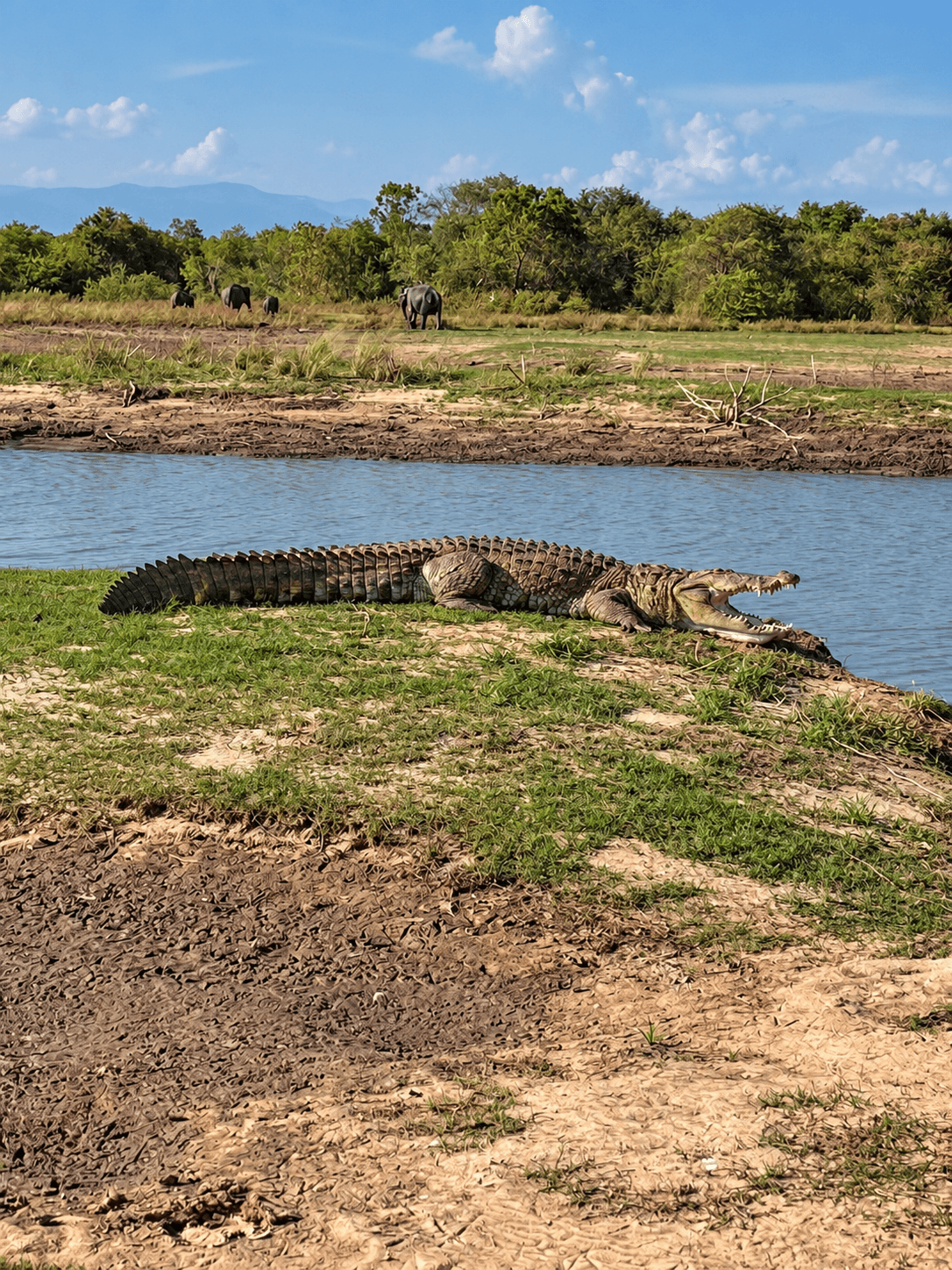
#### Case 10: The Saltwater Crocodile Encounter at Pilinnawa (Carlos & Elena, Mexico): *'We had no idea crocodiles could grow so massive until we saw a 4.5-meter colossus sunning itself on the sand dunes of Pilinnawa Lagoon. The sheer prehistoric scale was breathtaking.'*
#### Case 11: The Painted Stork Colony at Buthawa (Siddharth & Ananya, Singapore): *'We aren't serious birdwatchers, but seeing hundreds of Painted Storks nesting in trees inside Buthawa Wewa, feeding pink-flushed chicks, was one of the most beautiful wildlife spectacles we have ever witnessed.'*
#### Case 12: The Quiet Wisdom of the Bush (Kavita & Mohan, USA): *'The greatest gift Yala gave us was learning to slow down. In our busy city lives, we expect instant results. In the jungle, you learn to wait, listen, and let nature unfold on its own terms. It was deeply restorative for our souls.'
Photographic & Optical Cheat Sheet for First-Time Safari Shooters
Mastering a few fundamental camera techniques guarantees crisp, gallery-worthy memories:
1. **Lock Your Shutter Speed to Minimum 1/1000s:** Even when an animal looks stationary, small head twitches and vehicle engine idling vibrations cause motion blur at slower shutter speeds. 2. **Use Continuous Autofocus (AF-C / AI Servo):** Set your autofocus tracking point directly on the animal's eye; modern animal-eye AF tracking will keep focus locked even as the subject moves behind grass. 3. **Rest Your Lens on Beanbags:** Never rest hard camera lenses directly on steel vehicle rails; engine vibrations transmit directly through metal. Always place a soft Cordura beanbag between your lens and the vehicle frame. 4. **Resist the Urge to Zoom In to the Maximum:** Some of the most stunning wildlife photographs are environmental compositions showing the animal within its sweeping habitat of granite rocks, red sand, and vast skies. 5. **Shoot in RAW Format:** RAW files preserve uncompressed sensor data, allowing you to recover shadow details in dark animals and retain highlights in bright skies during post-processing.
The Comprehensive First-Timer Packing Checklist: 30 Essential Field Items
To guarantee you never arrive in the bush missing critical equipment, review our 30-item master checklist:
- 2x Lightweight, breathable long-sleeve cotton/linen shirts in neutral khaki, tan, or olive green.
- 2x Comfortable, loose-fitting safari pants/trousers with zip-pockets.
- 1x Lightweight windbreaker or fleece jacket for chilly 05:30 AM pre-dawn open-jeep departures.
- 1x Wide-brimmed safari sun hat with adjustable chin strap (prevents loss in high vehicle winds).
- 1x Cotton scarf, bandana, or shemagh to protect airways from airborne red laterite dust.
- 1x Sturdy closed-toe walking shoes or trail sneakers for authorized rest stops.
- 2x Pairs of breathable merino wool or moisture-wicking synthetic socks.
- 1x Quality 8x42 or 10x42 roof prism binoculars (one dedicated pair per traveler).
- 1x DSLR or mirrorless camera equipped with a 70-300mm or 100-400mm telephoto lens.
- 2x High-speed SD or CFexpress memory cards (minimum 64GB / UHS-II V60).
- 3x Fully charged spare camera batteries and high-wattage USB-C charging cables.
- 1x High-capacity 20,000mAh portable power bank with fast-charging power delivery.
- 1x Optical lens cleaning kit (air blower, lens pen, microfiber cloth).
- 1x Padded neoprene camera wrap or roll-top waterproof dry bag.
- 1x Reusable vacuum-insulated stainless steel water bottle (minimum 1.5 to 2.0 liters).
- 4x Packets of oral rehydration salts (ORS) / electrolyte powder.
- 1x Broad-spectrum SPF 50+ mineral sunscreen and moisturizing lip balm with UV protection.
- 1x Polarized sunglasses with 100% UVA/UVB blockage.
- 1x Insect repellent containing 20% Picaridin or natural lemon eucalyptus oil.
- 1x Personal travel first aid kit (antiemetics for motion sickness, antihistamines, band-aids).
- 1x Pack of biodegradable wet wipes and alcohol hand sanitizer gel.
- 1x Waterproof pouch containing passport copies, DWC entry permits, and insurance details.
- 1x Cash in Sri Lankan Rupees (LKR) for discretionary driver and naturalist tips.
- 1x Small waterproof notebook and pen to record animal sightings and naturalist notes.
- 1x Lightweight compact daypack (15 to 20 liters) to keep all personal gear organized inside the jeep.
The Traveler's Wilderness Covenant & Final Benediction
When your safari vehicle rolls out of Palatupana Gate at sunset, leaving behind the ancient granite inselbergs and the murmuring coastal dunes of Ruhuna, you will carry something far more valuable than memory cards filled with photographs: you will carry a reawakened sense of wonder.
You will remember the intense, hypnotic amber gaze of a wild leopard looking straight into your soul; the quiet, affectionate rumble of an elephant mother caressing her calf; and the ancient silence of an ecosystem that has endured for millions of years.
Yala National Park is a precious, irreplaceable jewel on our planet. By traveling with reverence, demanding ethical safari standards, and supporting local frontline conservationists, you ensure that future generations will also have the privilege of witnessing Ceylon's wild majesty. We thank you for choosing to explore with an open heart, and we look forward to welcoming you to the untamed wilderness of Yala.
The Ten Iconic Trail Loops of Yala Block 1: The First-Timer Route Guide
Navigating the 141 square kilometers of Block 1 requires understanding its primary trail loops:
- Distance: 14.5 kilometers.
- Topography: Low coastal scrub, sand dunes, and brackish coastal lagoons.
- Key Target Species: Sambar deer, Asian elephants bathing in Buthawa lagoon, basking mugger crocodiles, and coastal waders. Best driven between 06:15 AM and 08:30 AM or 15:30 PM and 17:30 PM.
- Distance: 18.2 kilometers.
- Topography: Dense thorny scrub (*Carissa carandas* and *Catunaregam spinosa*) with red laterite clay soil.
- Key Target Species: The premier corridor for active leopard crossings and early-morning sloth bears digging into roadside termite mounds.
- Distance: 12.0 kilometers.
- Topography: Colossal granite inselbergs with ancient rainwater-filled rock cavities (*kemas*).
- Key Target Species: Territorial male leopards lounging on high granite crests to absorb dawn sunlight, Crested Hawk-Eagles, and Tufted Grey Langurs.
- Distance: 22.5 kilometers.
- Topography: Towering monsoon dry evergreen forest transitioning into historic Buddhist rock monasteries.
- Key Target Species: Large solitary bull elephants (*tuskers*), Indian Rock Pythons, and mixed bird hunting flocks.
- Distance: 16.0 kilometers.
- Topography: Massive buttressed Kumbuk trees (*Terminalia arjuna*) providing a deep green forest canopy flanking sandy riverbeds.
- Key Target Species: The ideal midday retreat for travelers and wildlife alike. Troops of Toque Macaques, Brown Fish Owls, and swimming wild boars.
- Distance: 9.5 kilometers.
- Topography: Sweeping freshwater lagoon bordered by monumental coastal sand dunes.
- Key Target Species: Multi-generational Asian elephant breeding herds, Painted Stork nesting colonies, and Spot-billed Pelicans.
- Distance: 8.0 kilometers.
- Topography: Rugged coastal gneiss rock outcrop meeting the crashing surf of the Indian Ocean.
- Key Target Species: Designated DWC visitor rest stop where travelers can stretch their legs on the beach while observing Black-winged Kites and coastal terns.
- Distance: 15.5 kilometers.
- Topography: Secluded scrub jungle surrounding the ancient Komari irrigation tank.
- Key Target Species: Low vehicle density; exceptional for undisturbed leopard stalks and secretive Golden Jackal pack hunts.
- Distance: 11.2 kilometers.
- Topography: Expansive coastal salt marsh and hypersaline tidal flats.
- Key Target Species: Giant Saltwater Crocodiles (*Crocodylus porosus*), migratory Greater Flamingos, and rare shorebirds.
- Distance: 13.8 kilometers.
- Topography: High granitic plateau overlooking the northern plains of Ruhuna.
- Key Target Species: The traditional home territory of celebrated alpha male leopards and breeding sloth bear families.
Master Naturalist Secrets: Fifteen Subtle Jungle Clues That Reveal Predators
Experienced safari naturalists do not find leopards and bears by sheer luck; they continuously decode a dozen microscopic environmental indicators:
1. **The Direction of the Sentinels' Stare:** When spotted deer or langur monkeys emit alarm calls, never look at the monkeys; look in the exact direction their eyes and ears are locked. Monkeys maintain unbroken visual contact with moving big cats. 2. **Fresh Wet Dust Displacements:** When inspecting footprints on red sand roads, look at the displaced sand grains. If the outer rims are moist and dark, the animal passed within the last 15 minutes. 3. **The Scent of Fresh Jungle Jasmine and Wild Musks:** A territorial male leopard marking boundary bushes leaves a pungent, buttered-popcorn scent that lingers in the humid morning air for up to 30 meters downwind. 4. **The Flight Burst of the Ceylon Junglefowl:** If national junglefowl burst vertically into lower tree branches with a clattering cackle, an ambush predator is walking on the ground immediately below. 5. **Freshly Excavated Red Termite Soil:** Bright red clay crumbs scattered across the road indicate a sloth bear fed here within the past hour. 6. **Peacock Evening Roosting Cries:** Peafowl fly into high dead trees at 17:30 PM. If an Indian Peafowl emits its loud trumpet call (*'May-awe'*) after dark, an apex predator is walking beneath its roost. 7. **Circling White-backed or King Vultures (Historical) / Kites:** Circling raptors over dense scrub indicate a fresh predator kill hidden in the bushes. 8. **Spider Web Cleavages Across Roadways:** Early in the morning, golden orb-weaver spiders spin webs across dirt tracks. If a web spanning the road at 1 meter height is freshly snapped, a large mammal (elephant or deer) has passed within minutes. 9. **Mud Smears on Tree Trunks:** Elephants scratch their hides against roadside trees after mud bathing, leaving fresh wet mud rubs that reveal the height and direction of the herd. 10. **The Sudden Cessation of Insect Buzzing:** When a stalking predator moves through tall grass, crickets and grasshoppers stop chirping in an expanding concentric circle of silence. 11. **Alarm Snorts of Sambar Stags:** A deep, resonant bell-like boom (*'Dhonnk!'*) accompanied by heavy foot-stamping on the ground almost invariably indicates an adult leopard. 12. **Basking Orientation of Garden Lizards:** If garden lizards on low stumps suddenly freeze and flatten themselves against tree bark, an aerial raptor or climbing vine snake is actively hunting. 13. **Fresh Green Dung with Intact Mucus:** Elephant dung that is warm to the touch and coated with glossy mucus reveals a herd less than 200 meters ahead. 14. **Dust Plumes Rising Above the Scrub:** A rising cloud of fine amber dust against the horizon pinpoints a herd of galloping wild buffalo or an elephant dust-bathing in late afternoon. 15. **Waterhole Surface Ripples:** Microscopic concentric ripples spreading across a calm morning waterhole indicate an animal drinking warily just out of sight behind the reeds.
Unexpected Field Scenarios: How Naturalists Handle Wilderness Surprises
Wilderness expeditions are dynamic. Understanding how professional naturalists resolve unexpected bush encounters provides reassurance for first-time travelers:
- The Biological Context: Bull elephants periodically enter *musth*, a state characterized by up to a 60-fold surge in testosterone levels. Musth bulls exhibit visible temporal gland secretion weeping down both sides of the face and constant urine dribbling. They are sexually aggressive and assertive.
- The Professional Vehicle Response: A novice driver might panic or attempt to accelerate past the elephant. Our master naturalists immediately halt at a safe distance (minimum 30 meters), assess the elephant's body language (head elevated, ears flared, mock swinging of front legs), cut the engine, and avoid sudden movements or eye contact. If the bull indicates territorial displacement, the driver shifts into reverse and backs smoothly down the track until the animal moves calmly into the scrub.
- Vehicle Protection Architecture: Our custom Land Cruisers are equipped with heavy-duty roll-down clear-vinyl weather curtains and reinforced canvas storm roofs. When a sudden tropical squall strikes, drivers roll down the weather curtains in under 60 seconds, sealing passengers and camera equipment from wind and driving rain while maintaining transparent panoramic viewing.
- Strict Protocol: Park regulations strictly prohibit passengers from disembarking inside animal territory.
- Ranger & Convoy Safety Protocol: If a tire puncture occurs, the driver radios nearby DWC patrol units. A secondary vehicle pulls parallel to form a defensive safety perimeter while mechanics execute a hydraulic jack tire replacement in under eight minutes, or passengers transfer directly between vehicle doors under armed ranger supervision without touching the ground.
- All our expedition vehicles carry insulated thermal cooler boxes with iced electrolyte compresses, oral rehydration solutions, and portable high-flow electric misting fans. Moving the guest to the front seat, applying cold towels to the carotid arteries of the neck, and infusing chilled electrolytes resolves 99% of travel fatigue within twenty minutes.
The First-Timer Sinhala Language & Cultural Courtesy Guide
Learning a few basic words in Sinhala (*Sinhalese*) delights your safari crew and demonstrates respect for Sri Lanka's welcoming culture:
- *Suba Udasanak (සුබ උදෑසනක්):* Good morning (The customary greeting when meeting your safari driver at 05:30 AM).
- *Bohoma Isthuthi (බොහෝම ස්තූතියි):* Thank you very much (Said after an extraordinary wildlife sighting).
- *Karunakara Navaththanna (කරුණාකර නවත්වන්න):* Please stop (Used when you spot an interesting bird or photo angle).
- *Ayubowan (ආයුබෝවන්):* May you live long (The classic traditional Sri Lankan greeting with palms pressed together).
- *Alpa Miris (අල්ප මිරිස්):* Mild chili / Not too spicy (Essential when ordering authentic Sri Lankan curry at your safari camp).
- *Thambili (තැඹිලි):* King Coconut (The refreshing golden orange coconut water enjoyed after game drives).
Comprehensive Field Diagnostic Matrix: 20 Common Yala Birds & Mammals
To assist first-time naturalists in identifying wildlife without constantly asking the driver, review this field identification guide:
1. **Tufted Grey Langur (*Semnopithecus priam*):** Large silver-grey monkey with black face, prominent pointed hair crest on crown, and extraordinarily long tail. Frequents high trees and temple rocks. 2. **Toque Macaque (*Macaca sinica*):** Smaller, reddish-brown monkey with a circular whorl of hair radiating like a cap on top of the head. Highly social ground forager. 3. **Ruddy Mongoose (*Urva smithii*):** Rich reddish-brown coat with a distinctive black-tipped tail held tilted slightly upward while running. Hunts frogs and snakes. 4. **Sri Lanka Spotted Deer (*Axis axis ceylonensis*):** Elegant rufous-fawn coat retaining bright white spots throughout adulthood. Bucks possess magnificent three-tined lyre-shaped antlers. 5. **Sambar Deer (*Rusa unicolor*):** Colossal dark-brown forest deer (up to 250 kg) with large rounded ears and thick, shaggy neck ruff. Frequents deep shade and waterways. 6. **Mugger Crocodile (*Crocodylus palustris*):** Broad, rounded snout with dark olive-grey armored scutes. Basks along reservoir mudbanks. 7. **Land Monitor (*Varanus bengalensis*):** Terrestrial lizard (1.2m) with grey-brown speckled skin. Scaled tree climber and termite mound excavator. 8. **Indian Star Tortoise (*Geochelone elegans*):** High domed black shell with dazzling radiating yellow star patterns on each scute. 9. **Sri Lanka Junglefowl (*Gallus lafayettii*):** Vibrant national bird. Rooster features iridescent orange-red body, metallic blue-black tail, and bright yellow-centered red comb. 10. **Indian Peafowl (*Pavo cristatus*):** Male boasts unmistakable sapphire-blue neck and colossal iridescent eye-spotted courtship train. 11. **Crested Serpent Eagle (*Spilornis cheela*):** Large raptor with bright yellow eyes and facial skin, dark crest, and broad black-and-white bands across the wings and tail. 12. **Changeable Hawk-Eagle (*Nisaetus cirrhatus*):** Slender, powerful eagle with prominent erect feather crest on head; perches on tall trees scanning for reptiles. 13. **White-bellied Sea Eagle (*Haliaeetus leucogaster*):** Massive coastal raptor with pure white breast, slate-grey back, and distinct V-shaped flight dihedral over lagoons. 14. **Painted Stork (*Mycteria leucocephala*):** Large wading stork with long down-curved yellow bill, delicate black-and-white wing markings, and bright pink tertial feathers. 15. **Lesser Adjutant (*Leptoptilos javanicus*):** Solitary, primeval-looking stork with bald yellowish head, massive dagger-like bill, and dark slate-black wings. 16. **Blue-tailed Bee-eater (*Merops philippinus*):** Slender, aerial insectivore with bronze-green plumage, turquoise-blue rump and tail, and yellow throat patch. 17. **Chestnut-headed Bee-eater (*Merops leschenaulti*):** Vibrant red-chestnut crown and nape, bright yellow throat, and emerald-green body. 18. **Indian Roller (*Coracias benghalensis*):** Appears dusty brown when perched; explodes in breathtaking flashes of electric cobalt-blue and turquoise wings in flight. 19. **Great Thick-knee (*Esacus recurvirostris*):** Large coastal wader with massive yellow eyes and heavy upturned black bill, active along sandy beaches. 20. **Brown Fish Owl (*Ketupa zeylonensis*):** Large nocturnal owl with bright yellow irises, outward-pointing ear tufts, and bare yellow legs, roosting in Kumbuk canopies. 21. **Wild Water Buffalo (*Bubalus arnee*):** Enormous bovines with sweeping crescent horns, submerging themselves in brackish mud pools to regulate body heat and deter biting flies. 22. **Golden Jackal (*Canis aureus naria*):** Tawny, fox-like wild canid trotting along sand trails in pairs, hunting crabs on beaches and scavenging predator leftovers. 23. **Indian Crested Porcupine (*Hystrix indica*):** Large nocturnal rodent adorned with long, black-and-white defensive quills, excavating roots at dusk. 24. **Black-naped Hare (*Lepus nigricollis*):** Agile lagomorph with distinct black patch behind the ears, grazing in open glades at dawn. 25. **Woolly-necked Stork (*Ciconia episcopus*):** Glossy black stork with a distinctive dense, fluffy white neck plumage and dark red bill, foraging in open marshes.
The Sacred Art of Tipping & Cultural Etiquette on Safari In Sri Lankan hospitality culture, tipping is regarded as a heartfelt gift (*Santhosam*) honoring mutual respect and exceptional service: - Always present tips at the end of your game drive directly into the hands of your driver and naturalist with both hands or the right hand (using the left hand alone to give money is considered impolite in traditional Sri Lankan etiquette). - Accompany your tip with a warm smile and a sincere *Bohoma Isthuthi*. For many rural drivers whose families reside in adjacent agrarian villages, your generosity directly supports children's school books, organic garden farming, and vehicle maintenance, cementing a powerful human bond between travelers and local communities.
Species Covered in this Monograph:
Track the wildlife mentioned in this guide. Check off species you hope to encounter during your game drive: