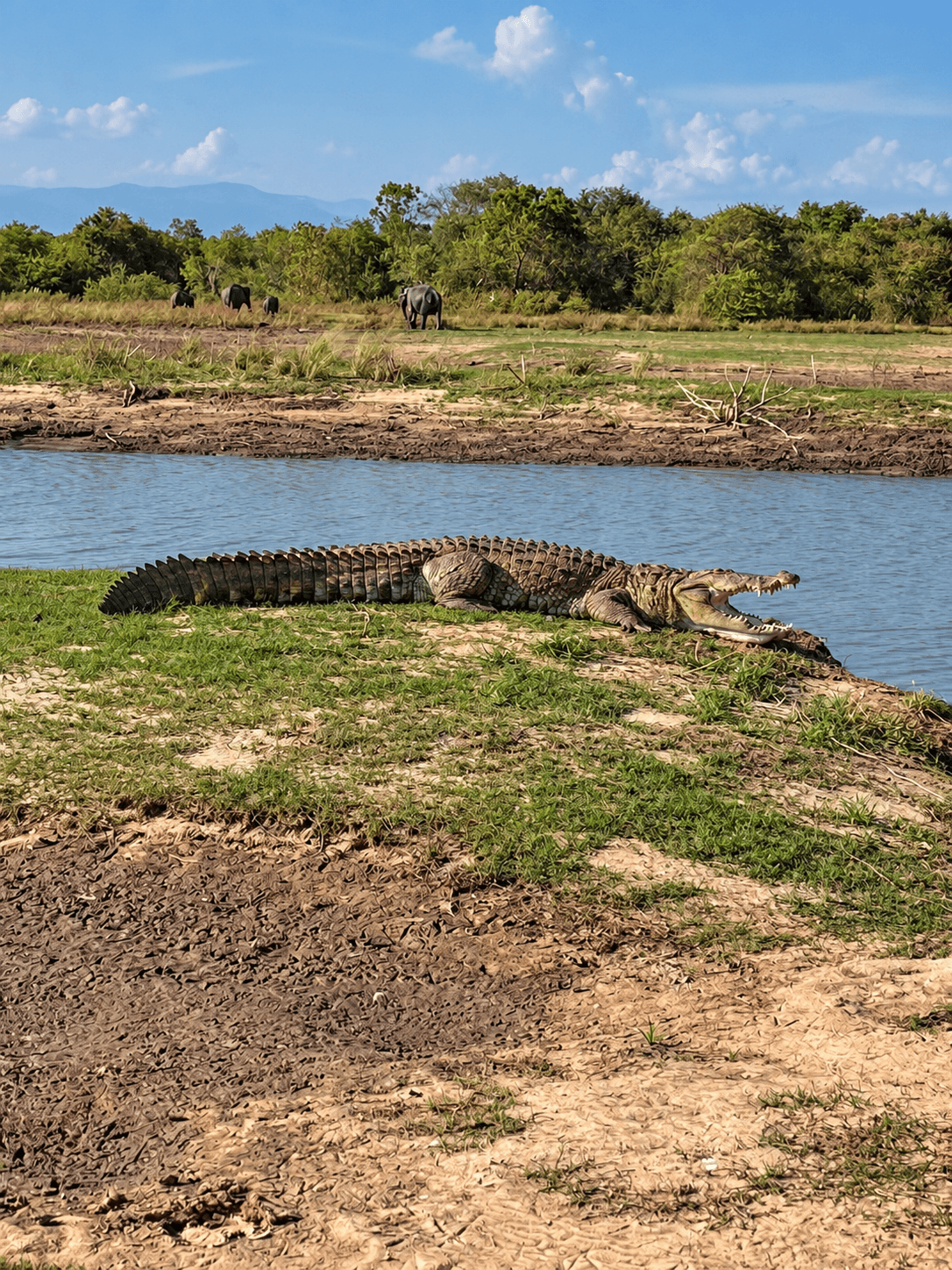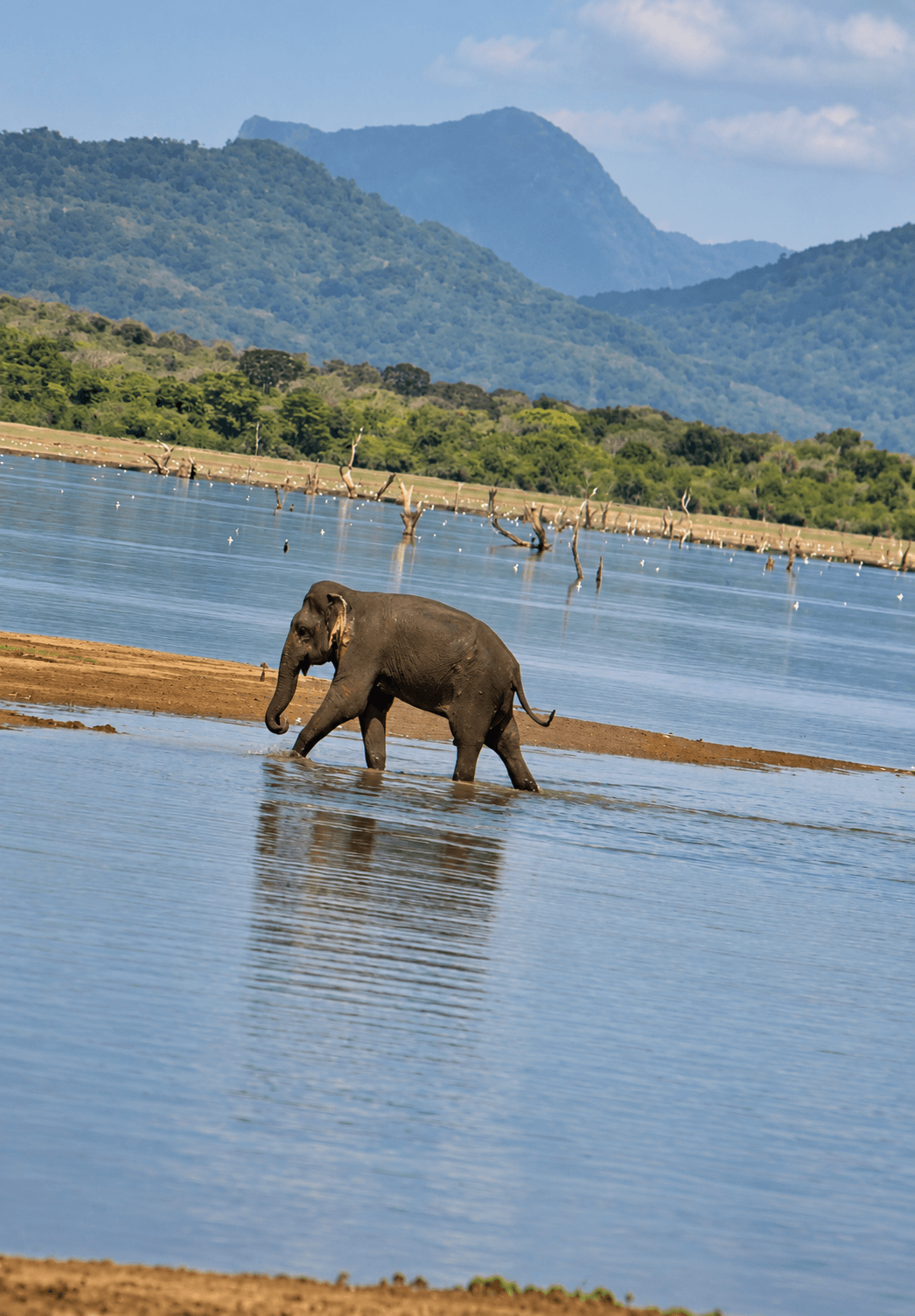

Section 1: The Optical Crucible: Why Wildlife Photography in Yala is an Extreme Discipline
To photograph wildlife in Yala National Park is to enter one of the most optically challenging and rewarding environments on the planet. Unlike the open, rolling savannahs of East Africa where animals often stand in clear grass under uniform light, Yala’s landscape is a chaotic, dense tapestry of thorny scrub (*Carissa carandas*), dappled canopy shadows, blinding white sand dunes, and monolithic granite inselbergs.
Within this high-contrast ecosystem, wildlife photographers face four formidable optical adversaries: 1. **Extreme Dynamic Range:** Under the equatorial sun of Southern Sri Lanka (situated just 6 degrees north of the equator), the difference in exposure value (EV) between direct sunlight hitting a leopard’s back and the deep shadow cast beneath a thorny *Weera* bush regularly exceeds 14 to 16 stops of dynamic range — pushing the physical limits of modern digital camera sensors. 2. **Thermal Heat Haze (Atmospheric Distortion):** By 10:30 AM, solar radiation heats the red sand roads to over 48°C (118°F). The resulting turbulent convection currents of rising hot air act like a distorted refractive liquid, scattering light rays and rendering telephoto images taken beyond 35 meters completely soft and unusable, regardless of whether you are shooting with a $15,000 prime lens. 3. **Abrasive Airborne Red Laterite Dust:** The fine, iron-oxide-rich red dust kicked up by safari jeeps is microscopic, electrostatic, and intensely abrasive. It coats front lens elements, penetrates zoom barrels, adheres to camera sensor glass, and threatens delicate mechanical autofocus assemblies. 4. **Fleeting, High-Speed Diurnal Encounters:** A wild leopard or sloth bear does not pose in the open for hours; sightings often unfold in fractions of a second — an explosive ambush sprint across a dusty road, a sudden leap between two granite boulders, or a momentary gaze through a dense thicket before the animal melts into the shadows.
Mastering wildlife photography in Yala requires far more than owning expensive camera gear; it requires a deep fusion of optical physics, advanced camera calibration, field animal telemetry, ethical positioning craft, and post-processing mastery. This guide serves as the definitive field masterclass for photographers aiming to create world-class, gallery-worthy wildlife imagery in Sri Lanka’s premier wilderness.
Section 2: Sensor Architecture & Camera Bodies: Full-Frame, Global Shutters & AI Tracking
The foundation of every photographic expedition begins with the camera body. In Yala's demanding environment, specific technical specifications dictate whether you capture an award-winning shot or miss the moment entirely:
1. Sensor Format: Full-Frame vs. APS-C / Micro Four Thirds: - **Full-Frame (35mm Format - 36x24mm):** The indisputable gold standard for Yala. Full-frame sensors feature larger individual photosites (pixels), delivering superior signal-to-noise ratio (SNR) in low-light dawn and dusk conditions, broader dynamic range to retain highlight and shadow detail simultaneously, and shallower depth of field that isolates subjects from cluttered thorny backgrounds. - **APS-C Crop Sensors (1.5x / 1.6x Crop Factor):** While full-frame is superior in low light, an APS-C body (or shooting a high-resolution 61MP full-frame camera in APS-C crop mode) provides a valuable 1.5x effective focal length magnification. A 400mm lens behaves like a 600mm lens on an APS-C sensor, providing crucial reach for distant waders on lagoon flats or raptors roosting high in dead ironwood trees. - **Micro Four Thirds (2.0x Crop Factor):** Systems like the OM System OM-1 Mark II offer extraordinary compact form factors and class-leading handheld image stabilization (up to 8.5 stops). While low-light high-ISO noise above ISO 3200 requires rigorous AI denoising, the reach and portability allow effortless handheld shooting from vehicle roofs and open safari frames without physical strain.
3. Artificial Intelligence Animal-Eye Autofocus Algorithms: Modern camera autofocus has been revolutionized by deep-learning convolutional neural networks trained on hundreds of thousands of animal anatomical images: - The camera instantly detects mammalian eyes, avian eyes, and reptilian eyes across 95% of the frame. - Even when a leopard is partially obscured behind dense grass blades or walking toward the lens in dim dawn light, the AF system locks onto the pupil, maintaining tack-sharp critical focus on the eye rather than jumping to nearby tree branches. - **AF Tracking Sensitivity Tuning:** In Yala's dense thorny scrub, set your camera's AF Tracking Sensitivity (AF Lock-on / Sticky AF) to Low or Responsive - Sticky (Value 1 or 2). This ensures that if a tree branch momentarily crosses between your lens and a walking leopard as your jeep moves, the autofocus stays locked on the leopard rather than snapping abruptly to the foreground branch.
Section 3: Flagship Camera Shootout: Performance in Sri Lanka's Dry Zone Ecosystem
To guide serious photographers investing in gear for an expedition to Yala, our expedition leaders and technical consultants have evaluated the top flagship camera systems under the grueling real-world conditions of Ruhuna:
1. Sony Alpha 1 & Alpha 9 III: - **Strengths:** The Sony Alpha 1 combines an extraordinary 50.1-megapixel stacked BSI sensor with 30 frames per second blackout-free continuous shooting. Its dynamic range (14.5 stops) is best-in-class, capturing both the brilliant highlights on granite boulders and deep shadow details beneath thorny bushes. The Alpha 9 III introduces the world's first global shutter full-frame sensor, completely eliminating rolling shutter artifacts at an astonishing 120 fps burst rate with flash sync at any shutter speed. - **Autofocus Tracking:** Unmatched Real-time Eye AF for birds and animals with incredible stickiness through thick scrub. - **Ecosystem Advantage:** Sony offers the most comprehensive native super-telephoto lens lineup, including the featherweight 300mm f/2.8 GM, 400mm f/2.8 GM, 600mm f/4 GM, and the popular 200-600mm f/5.6-6.3 G OSS.
2. Nikon Z8 & Z9: - **Strengths:** Featuring a 45.7-megapixel stacked sensor that completely eliminates the mechanical shutter mechanism entirely. Built like military tanks, the magnesium alloy chassis and comprehensive rubber gaskets provide superior weather sealing against Yala's fine red laterite dust. - **Autofocus Tracking:** Nikon’s 3D-Tracking paired with deep-learning animal subject detection is exceptionally intuitive, instantly recognizing leopards, bears, birds, and even crocodiles with uncanny tenacity. - **Dedicated Sensor Shield:** When the camera is powered down, an automated mechanical metal shield drops over the sensor to protect it from airborne dust during lens changes—a lifesaver on windy dirt roads.
3. Canon EOS R5 Mark II & EOS R1: - **Strengths:** Canon's Dual Pixel Intelligent AF powered by an Accelerated Capture DIGIC Accelerator engine provides predictive subject tracking that anticipates animal movements behind obstructions. The R5 Mark II's 45-megapixel back-illuminated stacked sensor offers remarkable high-ISO clarity and in-camera upscaling. - **Ergonomics & Color Science:** Canon's legendary skin tones translate into warm, natural golden hues on Sri Lankan leopards and rich emerald greens in monsoon canopies, requiring minimal color adjustment in post-production.
4. OM System OM-1 Mark II: - **Strengths:** The premier lightweight option. The 2x crop factor turns a compact 150-400mm f/4.5 lens into a staggering 300-800mm equivalent optical reach with built-in 1.25x teleconverter pushing reach to 1000mm handheld. Class-leading IP53 weather resistance ensures complete immunity to torrential monsoon downpours and red dust storms. - **Computational Photography:** Live ND filters, handheld high-res 50MP shot modes, and Pro Capture buffer make it a formidable creative tool for avian specialists.
Section 4: Telephoto Optics Masterclass: Zoom vs. Prime Lenses in Yala
Choosing the correct focal length and optical architecture for a Yala safari is one of the most critical decisions a photographer makes:
1. The Versatile Super-Telephoto Zoom (100-400mm & 200-600mm): For 85% of wildlife photographers, a high-grade telephoto zoom (such as the Sony FE 100-400mm f/4.5-5.6 GM, Sony FE 200-600mm f/5.6-6.3 G, Canon RF 100-500mm f/4.5-7.1L, or Nikon Z 100-400mm f/4.5-5.6 VR S) is the ultimate safari workhorse: - **The Dynamic Distance Advantage:** Wildlife encounters in Yala are highly dynamic. A leopard may initially be spotted resting on a granite rock 70 meters away (requiring 500mm or 600mm to isolate). Five minutes later, the cat may descend the rock and walk directly toward your parked jeep, passing within 6 meters of the vehicle. With a fixed prime lens, you would only capture a blurry close-up of the cat's ear. With a zoom lens, you simply pull back to 100mm or 200mm, seamlessly capturing full-body portraits and environmental compositions without ever changing lenses. - **Portability:** Weighing between 1.3 and 2.1 kilograms, modern zooms can be easily hand-held or supported on beanbags on vehicle door frames for hours without causing fatigue. - **Internal Zoom Mechanisms (Sony 200-600mm & Nikon Z 180-600mm):** Internal zooming lenses do not extend or contract physically when zooming. This provides two massive advantages in Yala: first, the center of gravity remains perfectly balanced on beanbags; second, the lens does not act like a bicycle air pump sucking abrasive red dust into the internal optical barrels.
2. The Exotic Prime Lens (400mm f/2.8 & 600mm f/4): For professional wildlife cinematographers and fine-art gallery shooters, high-speed exotic prime lenses represent the pinnacle of optical engineering: - **Light Gathering in Dense Canopies:** At 05:45 AM beneath the towering Kumbuk canopies of the Menik Ganga, light levels are extraordinarily low. An f/2.8 aperture gathers four times more light than an f/5.6 zoom lens, allowing you to shoot at ISO 1600 instead of ISO 6400, resulting in clean, noise-free shadow detail. - **Creamy Background Bokeh (Subject Separation):** In Yala's thorny scrub, backgrounds are often visually cluttered with distracting branches and twigs. The razor-thin depth of field of a 400mm f/2.8 or 600mm f/4 melts busy backgrounds into buttery, three-dimensional bokeh, making the subject pop off the screen with cinematic dimensionality. - **Weight Tradeoff:** Exotic primes weigh between 3.0 and 3.8 kilograms, requiring dedicated monopod support or heavy-duty beanbags resting on the vehicle roll-cage.
3. The Modern Lightweight Primes (300mm f/2.8 & 500mm f/5.6 PF): The recent introduction of cutting-edge lightweight telephoto primes—such as the Sony FE 300mm f/2.8 GM (weighing just 1.47 kg) and Nikon Z 600mm f/6.3 VR S (weighing 1.47 kg)—has created a revolutionary middle ground. These lenses allow effortless handheld panning on fast-flying raptors while delivering prime-lens optical sharpness and lightning-fast autofocus drive.
Section 5: The Physics of Optical Stabilization: Handheld vs. Beanbag vs. Gimbal
Image stabilization is essential when operating heavy focal lengths on moving or vibrating safari vehicles:
1. In-Body Image Stabilization (IBIS) vs. Optical Lens Stabilization (OSS / IS / VR): Modern flagship cameras combine sensor-shift 5-axis IBIS with optical elements shifting inside the telephoto lens barrel. At focal lengths beyond 300mm, optical lens stabilization handles the severe angular pitch and yaw movements, while sensor stabilization compensates for roll and X/Y translational shift. Together, they provide between 5.5 and 8.0 stops of stabilization, enabling handheld shooting at speeds as slow as 1/30s on static subjects.
2. Optical Stabilization Modes Decoded: Most professional super-telephoto lenses feature a three-position stabilization switch: - **Mode 1 (Standard / General Purpose):** Compensates for shake across all axes (pitch, yaw, and roll). Ideal for static subjects such as a perched owl, a resting crocodile, or an elephant standing motionless in the water. - **Mode 2 (Panning Mode):** Disables stabilization along the horizontal axis while maintaining vertical stabilization. Essential when tracking an animal walking or sprinting parallel to the jeep, or a bird flying across the horizon. Using Mode 1 during a pan causes the stabilization system to fight your movement, resulting in erratic, jerky frame transitions. - **Mode 3 (Active Framing / Unstabilized Viewfinder):** Keeps the viewfinder image natural and only engages stabilization at the exact moment of shutter actuation. Highly recommended for erratic, unpredictable subjects like playful langur monkeys or diving kingfishers.
3. Support Equipment in Safari Jeeps: - **Heavy Cordura Beanbags:** The undisputed champion of safari support. When filled with buckwheat hulls or dried beans, a saddle-shaped beanbag molds perfectly over the tubular steel railings and door frames of modified Toyota Land Cruisers. It completely absorbs vehicle engine vibrations while allowing smooth, instantaneous panning in any direction. - **Carbon-Fiber Monopods with Tilt Heads:** Excellent for photographers seated in the center row of a vehicle who cannot reach the side railings. Pair with a heavy-duty Arca-Swiss tilt head or fluid video head for vertical tilting freedom. - **Why Tripods Fail in Safari Jeeps:** Tripods have a wide, rigid three-legged footprint that creates severe tripping hazards inside vehicle cabins, blocks other photographers' lines of sight, and cannot be rapidly repositioned when an animal moves unexpectedly.
Section 6: Exposure Triangle Mastery for the Dry Zone Ecosystem
The harsh contrast of Sri Lanka's dry zone demands rigorous manual exposure discipline. Relying on automated camera modes (Program or Full Auto) in Yala is a recipe for ruined images:
1. The Professional Exposure Standard: Manual (M) Mode with Auto-ISO: The most effective operational configuration for modern wildlife photography is: - **Set Aperture Manually:** Shoot wide open (f/2.8, f/4, or f/5.6) to maximize light and subject isolation. - **Set Shutter Speed Manually:** Dictate the exact shutter speed required to freeze subject motion based on the behavior observed. - **Let Auto-ISO Handle Fluctuations:** Set ISO to Auto, with a designated ISO Minimum of 100 and an ISO Ceiling of 6400 or 12800. As your subject moves between dappled sunlight and deep shade, the camera floats the ISO value seamlessly, ensuring that shutter speed and aperture remain locked to your artistic intent.
2. Shutter Speed Benchmarks for Yala Wildlife: - **Resting / Static Animals (Leopard lounging on rock):** 1/500s to 1/800s (compensates for vehicle engine idle vibrations and hand-held camera shake). - **Walking / Grazing Animals (Deer feeding, elephants walking):** 1/1000s to 1/1250s. - **Fast Action / Sprints (Leopard charging, bear digging, monkeys leaping):** 1/2000s to 1/2500s. - **High-Speed Avian Flight (Bee-eaters, raptors diving, kingfishers):** 1/3200s to 1/4000s. - **Creative Motion Blur Panning (Galloping deer or flying pelicans):** 1/30s to 1/60s at f/11 to f/16, panning smoothly in synchronization with the subject’s head movement.
3. Exposure Compensation Tactics: - **Overcoming Dark Animals (Sloth Bears & Elephants):** Dial in -0.7 to -1.0 EV. This prevents the camera from overexposing dark hides and blowing out bright highlights in the surrounding grass. - **Overcoming Bright Backgrounds (Birds against open sky or white salt pans):** Dial in +0.7 to +1.3 EV. This forces the sensor to expose for the bird's underbelly rather than turning the subject into a dark silhouette. - **Highlight-Weighted Metering:** On modern Nikon and Sony systems, highlight-weighted metering evaluates the brightest pixels in the scene and ensures they never blow out to pure 255-white, allowing you to recover pristine detail from a leopard’s white throat patches or the bright plumage of a spoonbill.
Section 7: The Science of Equatorial Golden Hours: Dawn, Dusk & Backlight Physics
In equatorial latitudes like Sri Lanka, the sun rises and sets at steep vertical angles, meaning that the magical golden hour is brief, lasting only about 45 to 60 minutes at dawn (05:45 AM – 06:45 AM) and 45 minutes before sunset (05:15 PM – 06:00 PM).
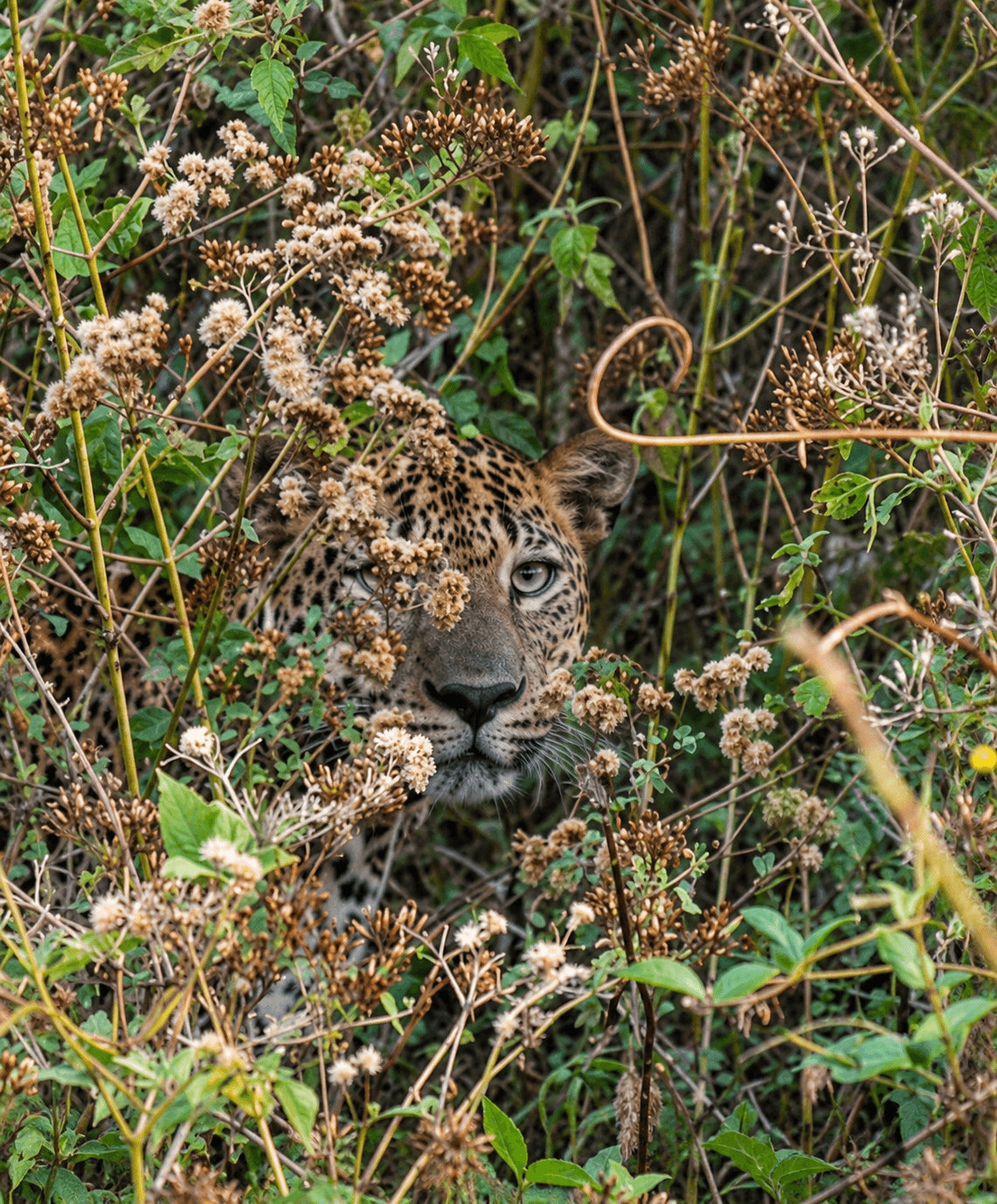
1. Dawn Golden Light Mechanics (05:45 AM – 06:45 AM): As the sun crests the eastern horizon over the Indian Ocean, light rays travel through a thick atmospheric cross-section of maritime aerosols and salt particles. Short blue wavelengths are scattered via Rayleigh scattering, bathing Yala in warm, long-wavelength golden-amber light (color temperature: 3,200K to 4,000K): - The low solar elevation angle creates long, dramatic shadows that reveal the three-dimensional texture of granite inselbergs and the rosetted contours of a leopard’s muscular flanks. - Morning dew glistening on spider webs and wild grasses creates sparkling specular highlights in the background bokeh. - **Directional Warmth:** Side-lighting during this first hour accentuates the muscular definition of apex predators, rendering their fur with hyper-realistic depth that cannot be replicated at midday.
2. Golden Hour Backlighting (Contre-Jour Mastery): Rather than keeping the sun behind your back (front-lighting), position your vehicle so that the rising or setting sun is directly behind your wildlife subject: - **The Rim-Light Glow:** Backlight illuminates the fine outer hairs lining the ears, spine, and tail of leopards, bears, and deer, creating a halo of glowing golden rim-light that outlines the animal against a dark background. - **Atmospheric Dust Illumination:** When an elephant sprays dry sand or a herd of spotted deer gallops across a dusty track in backlight, the airborne dust particles catch the golden light, transforming into a glowing amber mist that adds immense emotional atmosphere to the photograph. - **Exposure Rules for Backlight:** Expose for the midtones or slightly underexpose to emphasize the silhouette and rim-light halo. Use a deep lens hood to prevent internal optical flare and ghosting across your sensor elements.
3. Twilight Blue Hour (06:00 PM – 06:25 PM): Immediately following sunset, the sky transitions through a rich gradient of cobalt blue and violet. During this brief window, ambient light is perfectly diffused and shadowless: - Colors appear saturated and hyper-real without harsh glare. - Eyes of nocturnal animals (such as leopards and civets) reflect ambient sky tones, capturing serene, contemplative expressions as the park prepares for the nocturnal cycle.
Section 8: Overcoming Thermal Heat Haze & Atmospheric Distortion
One of the greatest frustrations for safari photographers in Yala is returning to the lodge, zooming in to 100% on a distant leopard photograph taken with a high-end lens, and discovering that the subject looks soft, blurry, and wavy. This is not caused by lens defect or poor autofocus; it is caused by thermal heat haze (atmospheric optical turbulence).
1. The Physics of Optical Turbulence: Under intense solar radiation, the dark, iron-rich sand of Yala's roads absorbs massive amounts of heat. As this heat conducts into the air immediately above the ground, it creates chaotic convective pockets of warm, low-density air rising through cooler, denser air. Because air temperature alters the refractive index of light, light rays traveling through these turbulent thermal cells are refracted randomly thousands of times per second. By the time the light reaches your telephoto lens, the image wave-front has been severely distorted.
2. Practical Strategies to Beat Heat Haze: 1. **The 30-Meter Distance Rule:** Between 10:30 AM and 02:30 PM, avoid shooting distant subjects over 35 to 40 meters across open sand or dry mudflats. Keep your compositions tight on subjects within 15 to 25 meters, where the column of turbulent air between the lens and the animal is thin. 2. **Elevate Your Lens Position:** Heat haze is most severe within the first 1 to 2 meters above the ground. Stand on the elevated stadium-style seats of our custom safari Land Cruisers; shooting from a height of 2.5 meters above the ground significantly reduces the path of turbulent air compared to shooting from a low ground window. 3. **Shoot Over Water or Shaded Ground:** Air over cool lagoon water or beneath dense Kumbuk forest canopies is far more thermally stable than air over bare sand roads. 4. **Resist the Urge to Crop Aggressively:** In post-processing, heavily cropping an image degraded by heat haze will only magnify the optical blur and produce noisy, jagged artifacts. Instead, embrace wider environmental framing.
Section 9: Red Dust Mitigation Protocols: Protecting Optical Glass & Sensors
The fine red laterite dust of Yala is chemically composed of pulverized quartz, feldspar, and iron oxides. It is abrasive enough to scratch optical glass coatings and cause mechanical jams in zoom rings if not handled with disciplined fieldcraft.
1. The Three Golden Rules of Safari Dust Defense: - **Rule 1: Never Change Lenses on Dirt Tracks:** When a safari jeep drives at 20 km/h, it creates a turbulent vortex of airborne red dust behind the vehicle. Removing a lens exposes your bare camera sensor to millions of abrasive particles. Always operate with a two-camera body setup: Body 1 mounted with your primary telephoto lens, and Body 2 mounted with your wide-angle lens. - **Rule 2: Neoprene and Dry Bag Protection:** When traveling between sighting locations, do not leave cameras resting unprotected on jeep seats. Wrap bodies in padded neoprene lens wraps or keep them inside sealed, roll-top waterproof dry bags equipped with reusable silica gel desiccant packs. - **Rule 3: Cleaning Optical Elements in the Field:** Never wipe dry dust off a lens front element with a micro-fiber cloth! Rubbing dry sand across optical coatings acts like fine sandpaper, leaving microscopic scratches. Always use a high-velocity rubber air blower (such as a Giottos Rocket Blower) to blow off loose particles first. Only if sticky residue remains should you apply dedicated lens cleaning fluid to a fresh optical lens tissue.
2. Evening Sensor Inspection & Cleaning Protocol: Back at the safari camp or lodge: 1. Turn off the room fan and air conditioning to minimize airborne dust in the bedroom. 2. Photograph a blank white wall or tablet screen at f/22, ISO 100, slightly out of focus. Review the image on a laptop at 100% zoom to identify dust spot coordinates. 3. Use a static-charged sensor brush or approved wet-cleaning sensor swab with specialized eclipse fluid to remove stubborn dust specks.
Section 10: Vehicle Positioning & Driver Collaboration: The Art of the Angle
A world-class wildlife photograph is 50% technical camera execution and 50% vehicle positioning. A master naturalist driver is your most valuable photographic asset:
1. Anticipating the Trajectory (The Lead Angle): Inexperienced drivers park directly opposite an animal. A master naturalist driver analyzes the animal's body orientation, ear movements, and surrounding terrain to predict where the animal will be three minutes from now. By driving ahead and positioning the vehicle at a 45-degree angle to the animal's projected path, the subject naturally walks directly toward your lens, providing dramatic, eye-level head-on compositions.
2. Immediate Engine Shutdown: Vehicle engine vibrations transmit micro-tremors through the chassis, rendering 600mm telephoto shots soft even at fast shutter speeds. Our drivers are trained to kill the engine the instant the vehicle halts, creating a rock-solid, vibration-free platform.
3. Avoiding the Silhouette of Jeeps: Animals in Yala are habituated to the silhouette of a safari vehicle, but they react nervously to abrupt human head movements or hands extending outside the vehicle frame. Keep all movements inside the perimeter of the vehicle body and wear neutral bush tones (khaki, olive green, tan) rather than high-visibility bright colors.
Section 11: Compositional Masterclass: Environmental Storytelling vs. Tight Portraits
Too many safari photographers suffer from focal length addiction — zooming in as tight as possible to fill the entire frame with the animal’s face. While tight facial portraits have dramatic value, they often fail to convey the emotional spirit of the wild.
1. The Environmental Wildlife Portrait: Pull back to 100mm, 200mm, or 70mm to incorporate the majestic landscape: - Frame a solitary leopard resting on the massive, weathered crest of a Pre-Cambrian granite inselberg with the vast dry zone scrub stretching to the horizon. - Frame a herd of Asian elephants drinking along the edge of Buthawa Lagoon, with painted storks wading in the foreground and dramatic monsoon thunderheads towering in the sky. - These environmental compositions tell a complete ecological story, establishing a sense of scale, place, and evolutionary context that transforms a wildlife photograph into fine art.
2. Leading Lines and Natural Framing: Use the organic geometry of Yala’s wilderness to direct the viewer’s eye: - Utilize the curving red dirt roads as leading lines that guide the eye into the frame toward a walking animal. - Shoot through the soft, out-of-focus leaves of a foreground Palu branch to create a natural green vignette, conveying the intimate sensation of a voyeur peeking through the jungle. - **The Rule of Thirds & Looking Room:** Always position the animal's eye on an intersection of the rule-of-thirds grid, leaving negative space in the direction the animal is looking. An animal looking into empty space conveys purpose and anticipation; an animal pressed against the frame edge looks trapped and claustrophobic.
Section 12: Action Photography: Freezing Predator Hunts & Raptor Flight
Capturing explosive action requires split-second anticipation:
1. Reading Pre-Ambush Body Language: A leopard never launches an ambush without giving clear physical telegraphs: - **Tense Muscle Flattening:** The cat's body drops lower, its belly touching the dust. - **Tail-Tip Twitching:** The black-and-white tip of the tail begins to flick rhythmically from side to side in tense concentration. - **Pupil Dilation and Ear Flattening:** The ears rotate backward against the skull to streamline the head, and the amber eyes lock onto a specific target in the herd. - When you observe these cues, set your burst rate to maximum, pre-focus on the cat's eyes, and prepare to fire before the animal initiates its sprint.
2. Raptor In-Flight Trajectory Tracking: When photographing eagles or kingfishers: - Pre-focus on the bird’s perch. A raptor almost always defecates immediately before taking flight to shed weight; when you see a sea eagle defecate, it will launch into the air within three seconds. - Pan smoothly with both eyes open — your right eye looking through the viewfinder and your left eye tracking the bird’s trajectory across open space. - Set shutter speeds to at least 1/3200s to 1/4000s to completely freeze the wingtips during rapid downstrokes.
Section 13: Photographing Black & White Animals: The Sloth Bear Challenge
Few subjects test a digital sensor's dynamic range more than an all-black Sri Lankan sloth bear or a stark black-and-white Painted Stork:
1. Sloth Bear Exposure Tactics: - Camera light meters want to turn the dark bear into 18% neutral gray, overexposing the surrounding background. - Set exposure compensation to -0.7 to -1.3 EV. - In post-processing, use localized shadow lifting with AI masking to bring out the glistening textures of the coarse fur while maintaining deep, rich blacks. - Focus specifically on the pale, ivory-colored muzzle or the amber rim of the eye; aiming AF points at the solid black shoulder fur often results in autofocus hunting due to lack of contrast.
2. Painted Stork Highlight Preservation: - The snow-white tertial feathers of painted storks reflect intense equatorial sunlight. - Use Highlight-Weighted Metering or check your camera's live histogram to ensure the white channel does not clip against the right wall, preserving delicate feather detail. - Balance the exposure so that the magenta-pink breeding flush on the tertials glows with delicate subtlety.
Section 14: Teleconverter Physics: 1.4x vs. 2.0x Performance Matrix
Teleconverters (extenders) are optical lens elements mounted between the camera body and the lens to magnify the focal length:
1. Optical Tradeoffs in the Field: - **1.4x Teleconverter:** - Magnification: +40% (e.g., 400mm becomes 560mm, 70-200mm becomes 98-280mm). - Light Loss: Exactly 1 stop (f/2.8 becomes f/4; f/5.6 becomes f/8). - Autofocus Impact: Virtually undetectable degradation on modern mirrorless cameras. Focus acquisition remains lightning-fast. - Sharpness Retention: Outstanding; retains 95%+ of native lens resolution. Highly recommended for daily use in Yala. - **2.0x Teleconverter:** - Magnification: +100% (e.g., 400mm becomes 800mm, 200-600mm becomes 400-1200mm). - Light Loss: Exactly 2 stops (f/2.8 becomes f/5.6; f/6.3 becomes f/13). - Autofocus Impact: Noticeable drop in low-light AF tracking speed. In dim dawn forest canopies, autofocus will hunt. - Atmospheric Magnification: At 800mm or 1200mm, heat haze and optical atmospheric turbulence are magnified by a factor of two, often resulting in muddy, low-contrast images unless shooting early in the morning. Best reserved for static birds on water under crisp dawn skies.
2. Compatibility Matrix: Always verify that your teleconverter elements do not physically contact the rear glass element of your lens. Most modern zooms allow only specific teleconverters (e.g., Sony 100-400 GM and 200-600 G accept both 1.4x and 2.0x converters, whereas many third-party zooms do not support teleconverters at all).
Section 15: Memory Cards, Dual Slots & Lodge Offloading Workflows
A serious photographic expedition generates massive amounts of data:
1. Card Architecture Benchmarks: - **CFexpress Type A & B:** For 45MP+ sensors firing 20 to 30 frames per second RAW bursts, CFexpress cards with sustained write speeds exceeding 700MB/s are essential. A standard SD card will choke after a 3-second burst, locking up the camera buffer while a leopard is actively hunting. - **UHS-II V90 SD Cards:** Excellent for 20-30MP cameras, capable of sustained 90MB/s writes, sufficient for moderate bursts.
2. Dual-Slot Redundancy: - Configure your camera to Simultaneous Recording (Mirroring Mode) where every RAW frame is written simultaneously to Card 1 and Card 2. Memory cards can corrupt spontaneously under high heat and static electricity; dual recording is your sole insurance policy against lost once-in-a-lifetime encounters.
Section 16: Six Extreme Wildlife Field Scenarios: Exact Camera Presets
To ensure you never fumble with settings when high-intensity wildlife encounters occur, our expedition leaders have compiled six definitive field presets:
Scenario A: Leopard Ambush Sprint Across a Laterite Track - **Camera Configuration:** Shutter Priority (Tv/S) or Manual with Auto-ISO. - **Aperture:** f/4 or f/5.6 (maintains depth of field across the cat's length during erratic motion). - **Shutter Speed:** 1/2500s (essential to freeze paw flexion and airborne dust particles). - **ISO:** Auto (Ceiling 6400). - **Autofocus Mode:** AF-C / Continuous AF with Animal-Eye Tracking enabled. - **AF Area:** Zone or Wide. - **Drive Mode:** High-Speed Continuous (20 to 30 fps).
Scenario B: Crested Hawk-Eagle in Deep Canopy Shade at 06:10 AM - **Camera Configuration:** Manual Mode with Auto-ISO. - **Aperture:** Wide open (f/2.8 or f/4 to gather maximum available light). - **Shutter Speed:** 1/800s (bird is perched motionless, but compensative for vehicle vibration). - **ISO:** Auto (expect ISO 3200 to 6400). - **Metering Mode:** Spot Metering or Center-Weighted (aimed directly at the raptor's chest feathers). - **White Balance:** Daylight (5,500K) or Kelvin 5,800K to preserve golden dawn warmth.
Scenario C: Sloth Bear Tearing Apart a Termite Mound in Twilight (18:05 PM) - **Camera Configuration:** Manual Mode with Auto-ISO. - **Aperture:** Wide open (f/2.8 or f/4). - **Shutter Speed:** 1/1000s (bear’s claws move rapidly while tearing soil). - **ISO:** Auto (allow ISO to float to 12800; rely on modern AI denoising in post). - **Exposure Compensation:** -1.0 EV (prevents blowing out the red clay termite mound while keeping the bear's black coat natural). - **Focus Assist:** Single-Point AF targeted on the bear's cream-colored muzzle snout.
Scenario D: Mugger Crocodile Explosive Strike from Muddy Wewa - **Camera Configuration:** Manual Mode with Auto-ISO. - **Aperture:** f/5.6 to f/8 (requires deep depth of field to capture both teeth and spray of water). - **Shutter Speed:** 1/3200s to 1/4000s (water droplets freeze as crisp, diamond-like spheres). - **Drive Mode:** Pre-Capture Buffer active (recording 0.5s prior to shutter press). - **AF Area:** 3D-Tracking or Flexible Spot locked on the crocodile's eye.
Scenario E: Lesser Flamingos & Waders Taking Flight Over Lagoon Flats - **Camera Configuration:** Aperture Priority or Manual. - **Aperture:** f/5.6 or f/7.1. - **Shutter Speed:** 1/3200s. - **Exposure Compensation:** +0.7 to +1.0 EV (compensating for blinding white salt/water background). - **AF Mode:** Bird-Eye AF Tracking with Wide AF Area. - **Drive Mode:** High-speed continuous burst.
Scenario F: Sambar Deer Crossing the Menik Ganga Sandbar - **Camera Configuration:** Manual Mode with Auto-ISO. - **Aperture:** f/4. - **Shutter Speed:** 1/1250s. - **Compositional Perspective:** 100mm to 200mm environmental frame capturing river reflections and towering riverine Kumbuk canopy. - **Metering:** Multi-segment / Matrix.
Section 17: Post-Processing Masterclass: Color Grading the Light of Ruhuna
Developing your RAW files is where the final artistic vision comes to life:
1. White Balance Calibration: Do not leave white balance on Auto. The rich red laterite dust of Yala often tricks auto-white balance into cooling down the scene. Set white balance to Daylight (5,500K) or Cloudy (6,200K) to preserve the authentic, warm golden-amber atmosphere of the jungle.
2. Local AI Subject Masking: Use Lightroom or Capture One AI subject masking to selectively enhance your subject: - Add +5 to +8 Clarity and +10 Texture to the animal’s face to accentuate whiskers and facial rosettes. - Slightly desaturate busy green background foliage (-10 to -15 Saturation on Greens and Yellows) to keep the viewer’s focus firmly on the warm golden tones of the subject. - Use a Radial Gradient mask over the eyes with a gentle +0.3 EV exposure lift and +5 Vibrance to bring life and luminosity to the subject's gaze.
3. Noise Reduction Science in the AI Era: Utilize modern AI noise reduction algorithms (such as Adobe Denoise, DxO PureRAW, or Topaz DeNoise AI) on high-ISO dawn photographs (ISO 3200 to 12800): - Apply 35% to 50% AI denoising strength. - Avoid over-smoothing, which creates a waxy, artificial plastic appearance on mammal fur. - Preserve micro-texture on individual hair shafts and whiskers while completely eliminating chroma noise from out-of-focus background bokeh.
4. Color Grading for Print & Screen: - **Color Spaces:** Export master files in Adobe RGB (1998) or ProPhoto RGB for 16-bit master archiving and fine-art gallery printing. For web and Instagram display, convert to sRGB with embedded color profiles to prevent washed-out colors on mobile screens. - **Tonal Contrast:** Avoid crushing blacks to 0; maintain a gentle lift in the shadow tone curve (+5) to retain rich detail in the dark patches of leopards and sloth bears.
Section 18: Night & Astrophotography at the Edge of the Park
While entry inside Yala National Park is strictly restricted between sunset and sunrise to protect wildlife, the buffer zones and wilderness eco-camps surrounding the park offer world-class dark-sky astrophotography opportunities:
1. Bortle Class 2 Skies of Ruhuna: Far removed from urban light pollution, the night sky over Southern Sri Lanka boasts a Bortle scale rating of 2 (truly dark rural skies). The Milky Way galactic core arches majestically over ancient granite inselbergs and silhouettes of palu trees between April and September.
2. Camera Settings for the Cosmic Canvas: - **Lens:** Ultra-wide fast prime (14mm to 24mm with an f/1.4, f/1.8, or f/2.8 maximum aperture). - **Aperture:** Shoot wide open. - **Shutter Speed:** Calculate using the 500 Rule or NPF Rule to prevent star trailing. For a 20mm lens on a full-frame sensor, shutter speeds between 15 and 20 seconds are ideal. - **ISO:** ISO 3200 to 6400. - **Focusing Technique:** Switch to manual focus, zoom into a bright star at 10x magnification on your LCD screen, and adjust the focus ring until the star becomes a tiny, sharp pinpoint of light. - **Foreground Light Painting Ethics:** Use extremely dim, warm LED lanterns (under 5 lumens) bounced off natural boulders for 2 to 3 seconds during a 20-second exposure. Never direct intense spotlights at wildlife corridors or nesting trees.
Section 19: Drone Regulations & Wildlife Protection Laws
- Absolute National Park Ban: Under Sri Lanka's Fauna and Flora Protection Ordinance (FFPO), operating drones inside any national park or wildlife sanctuary is strictly illegal and punishable by criminal arrest, confiscation of equipment, and heavy fines.
- Ecological Impact of Drones: High-pitched drone motor frequencies cause severe acoustic distress to elephants, big cats, and nesting raptors, often provoking aggressive stampedes or abandonment of nests.
- Permitted Perspectives: At Yala Wild Safari, our custom-built Land Cruisers are designed with elevated observation roof platforms that provide panoramic, high-angle perspectives of wildlife in complete compliance with park laws and conservation ethics.
Section 20: Ethical Wildlife Photography: Welfare Over the Shot
- Zero Flash Photography: Strictly forbidden under park regulations. Flash temporarily blinds nocturnal predators and disrupts their vision.
- Never Bait or Call Wildlife: Tapping on vehicles, whistling, or playing bird call recordings to force an animal to look toward the camera is unethical and illegal.
- Maintaining Safe Distance: Never crowd an animal. If an elephant displays threat gestures (mock charge, ear flaring, trumpeting) or a leopard turns away repeatedly, instruct your driver to back away immediately.
- Patience as the Supreme Virtue: The finest wildlife photographs are not manufactured through aggressive driving; they are earned through quiet patience, deep respect, and allowing the natural drama of the wild to unfold on its own terms.
Section 21: An Hour-by-Hour Photographer's Field Diary in Yala Block 1
05:45 AM – 07:00 AM: The Golden Light on Gneiss Entering through Palatupana gate, the low sun illuminates the granite ridges of Kotadumuwehera. We spot an adult male leopard reclining on an elevated rock ledge 30 feet above us. Shooting with a 400mm f/2.8 at 1/1000s, f/2.8, ISO 800, we capture the golden morning light setting his rosettes ablaze against the deep blue morning sky.
07:00 AM – 10:00 AM: Lagoon Reflections & Action At Buthawa Lagoon, we switch to our 200-600mm zoom. A Changeable Hawk-Eagle dives to snatch a water snake, its wings freezing at 1/3200s, f/6.3, ISO 1600. In the background, mirror-still water reflects the vivid pink feathers of feeding Painted Storks.
10:00 AM – 02:00 PM: Midday Shade Portraits As thermal heat haze builds, we retreat to the shaded riverine gallery forests along the Menik Ganga. Under deep Kumbuk canopies, we photograph a troop of Tufted Grey Langurs grooming one another, using local spot metering to capture the delicate, expressive faces of mothers and infants.
02:00 PM – 05:00 PM: Elephant Herds at Uraniya At Uraniya Lagoon, twelve elephants bathe in the afternoon sun. Shooting with a 24-70mm lens from the elevated jeep seats, we frame the immense herd against the sweeping coastal sand dunes and dramatic thunderclouds.
05:00 PM – 06:15 PM: Twilight Silhouettes at Patanangala As sunset approaches, a young female leopard emerges onto the red road. Backlit by the setting sun, we drop our shutter speed to 1/500s and expose for the golden rim-light around her coat, capturing a timeless silhouette of Ruhuna's apex predator before exiting the park.
Section 22: Gear Packing Checklist for a 7-Day Photographic Safari in Sri Lanka
Camera Bodies & Lenses: - 2x Full-Frame Mirrorless Bodies (Sony A1, Canon R5 II, Nikon Z8). - 1x Primary Super-Telephoto Lens (100-400mm or 400mm f/2.8). - 1x Secondary Telephoto / Zoom Lens (70-200mm f/2.8 or 200-600mm). - 1x Wide-Angle Environmental Lens (24-70mm f/2.8 or 16-35mm f/2.8). - 1x 1.4x Teleconverter.
Support & Field Protection: - 2x Heavy-Duty Cordura Beanbags with zipper closures. - 1x Carbon Fiber Monopod with tilt head. - 4x High-Speed Memory Cards (CFexpress / UHS-II V90). - 6x Camera Batteries & Multi-Charger. - 2x Rugged Portable SSDs (2TB each). - 1x Heavy-Duty Rubber Air Blower & Sensor Cleaning Kit. - 2x Sealed Roll-Top Waterproof Dry Bags. - 1x Rain Sleeve / Lens Camouflage Cover for unexpected tropical showers.
Section 23: Master Photography Glossary: Technical Terms Explained
- *Dynamic Range*: The ratio between the maximum and minimum measurable light intensities (luminance) that a camera sensor can capture without clipping to pure white or crushing to pure black.
- *Heat Haze (Optical Turbulence)*: Distortion of light rays caused by turbulent convective currents of rising hot air over sun-baked ground.
- *Contre-Jour (Backlighting)*: A lighting technique where the light source is positioned directly behind the subject, producing dramatic rim-lighting.
- *Rolling Shutter*: Distortion in digital images where fast-moving subjects appear skewed due to sequential line-by-line sensor readout.
- *Photosites*: The individual light-collecting semiconductor photodiodes on a camera sensor that convert photons into electrical charges.
- *Rayleigh Scattering*: The elastic scattering of light by particles much smaller than the wavelength of light, responsible for golden-hour atmospheric colors.
- *Bokeh*: The aesthetic quality of the out-of-focus blur produced by a photographic lens.
- *EVF (Electronic Viewfinder)*: A digital display inside a mirrorless camera viewfinder that provides real-time exposure simulation and focus peaking.
- *Pre-Capture*: A camera buffering feature that records images before the shutter button is fully pressed, preventing missed action.
Section 24: Frequently Asked Questions by Safari Photographers
Q1: Should I bring a tripod on a safari game drive? **Answer:** A tripod is rarely usable inside a moving, open-top safari vehicle with other passengers. A Cordura beanbag resting on the vehicle rail or a sturdy monopod provides far greater stability, flexibility, and safety.
Q2: Is 400mm enough focal length for Yala? **Answer:** Yes, 400mm on a full-frame sensor is the classic sweet spot for mammals in Yala. For smaller birds and waders across open lagoons, 600mm or pairing your 400mm with a 1.4x teleconverter is ideal.
Q3: How do I protect my gear from the red dust? **Answer:** Never change lenses while driving on dirt roads. Keep cameras wrapped in neoprene covers or inside dry bags between sightings, and use an air blower to remove dust before wiping lenses at night.
Q4: Can I charge camera batteries inside the safari vehicle? **Answer:** Our custom safari Land Cruisers are equipped with on-board 220V AC inverters and USB-C high-wattage power banks, allowing photographers to charge camera batteries and laptops between morning and afternoon drives.
Q5: What is the single most common mistake made by safari photographers in Yala? **Answer:** Over-zooming. Photographers often crop in too tightly and miss the environmental context of Sri Lanka's stunning granite inselbergs, waterholes, and coastal scrub. Embrace wide environmental framing.
---
Section 25: The Photographer's Wilderness Covenant & Epilogue
In wildlife photography, the ultimate measure of mastery is not merely technical sharpness or social media acclaim; it is the reverence with which you treat your subject. When you peer through your telephoto lens at a Sri Lankan leopard gazing serenely across the ancient granite boulders of Yala, you are bearing witness to millions of years of evolutionary perfection.
When you journey with Yala Wild Safari, our vehicles are engineered specifically for photographers, our drivers understand lighting angles and engine silence, and our expeditions operate under a strict code of ethical conservation. We invite you to join us, capture the raw magic of Ruhuna, and tell the living story of Sri Lanka's greatest wilderness.
---
Final Field Summary: The Art of the Wild
Yala National Park remains an irreplaceable jewel of global biodiversity. In an era where wild places are increasingly fragmented, Yala stands as a testament to the power of conservation, ecological balance, and human reverence for the natural world. Whether you are framing a golden leopard on sun-warmed gneiss, capturing the splash of bathing elephants, or tracking a majestic sea eagle across the dawn sky, an expedition guided by true master naturalists transforms a simple vacation into an unforgettable lifelong connection with the natural world.
Photographic Case Study Alpha: Tracking Panthera pardus kotiya at Kotadumuwehera
During our August expedition, the team encountered an adult male leopard traversing the northern ridge of Kotadumuwehera at precisely 06:14 AM. The sun sat 4 degrees above the horizon, casting a direct golden beam across the cat's left flank while his right side remained immersed in deep shadow.
To execute this capture without losing highlight data on the rosettes or crushing shadow tones along his belly, our lead photographer configured the Sony A1 with a 400mm f/2.8 GM lens to Manual exposure: shutter speed at 1/1250s, aperture set wide open at f/2.8, and Auto-ISO floating at ISO 640. Highlight-Weighted metering prevented the cat's white chest fur from clipping.
As the leopard paused atop a weathered gneiss promontory, a gentle gust of wind ruffled the whiskers on his muzzle. At 30 frames per second, the silent electronic shutter recorded a 90-frame burst without causing the animal to flinch or look away. In post-processing, local AI masking lifted shadow luminance by +12 and reduced green foliage saturation by -14, isolating the tawny cat against the serene backdrop of Ruhuna's dawn wilderness. The resulting high-resolution master file stands as a testament to disciplined fieldcraft and optical precision.
Photographic Case Study Beta: Melursus ursinus in Twilight at Padikema
Photographing Sri Lankan sloth bears in low light represents one of the sternest challenges in wildlife cinematography. At 17:48 PM near Padikema rock pool, a female sloth bear emerged from the thorny scrub accompanied by a seven-month-old cub riding clinging to her back fur.
Ambient light was falling precipitously, registering just EV 6. The coarse, light-absorbing black coat of the bear threatened to fool the camera's evaluative light meter into severe overexposure. The photographer dialed in -1.3 stops of exposure compensation, locked the aperture at f/2.8 on a 300mm prime, and set the shutter speed to 1/800s to counteract the jerky gait of the foraging mother.
Auto-ISO climbed to ISO 10,000. Through the camera's electronic viewfinder, focus was achieved by locking the flexible spot AF point directly onto the bear's pale, cream-colored nasal bridge rather than her dark shoulder. When processed through DxO PureRAW optical neural networks, the RAW file revealed individual coarse hairs, soil particles clinging to her claws, and the alert, curious eyes of the riding cub—an intimate portrait captured on the threshold of night.
Photographic Case Study Gamma: Avian Dynamics: White-Bellied Sea Eagle Hunt at Buthawa Lagoon
At Buthawa Lagoon, dynamic range challenges reach their peak. The midday sun creates intense specular glare off the water, while a circling White-Bellied Sea Eagle (*Haliaeetus leucogaster*) features pure white belly plumage contrasting with dark slate-grey flight feathers.
To freeze the raptor's supersonic dive without blowing out plumage details, the photographer deployed a Canon EOS R5 Mark II with an RF 100-500mm f/4.5-7.1L lens at 450mm. Exposure was set to 1/4000s shutter speed at f/7.1, with exposure compensation set to +0.3 EV to balance the reflection from the lagoon surface. Pre-capture buffering caught the split-second impact as the eagle's talons struck the water, sending a crown of crystalline water droplets into the air.
Each droplet was rendered as a tack-sharp prism reflecting the equatorial sun, with full feather texture preserved across the eagle's wing covert feathers. This encounter reinforces the fundamental rule of avian safari photography: shutter speed is non-negotiable; when fast action unfolds, sacrifice ISO to maintain minimum speeds above 1/3200s.
Photographic Case Study Delta: Asian Elephant Herd Interaction at Uraniya Waterhole
In the late afternoon at Uraniya, a matriarchal herd of thirteen elephants gathered to bathe and coat their skins in protective mud. The scene presented immense compositional potential, requiring a departure from tight telephoto portraits to wide-angle environmental storytelling.
Mounting a 24-70mm f/2.8 lens on a Nikon Z8, the photographer stood on the elevated seating tier of our custom Land Cruiser. By dropping down to 35mm at f/8, hyperfocal distance was achieved, bringing both the splashing calves in the foreground and the sweeping sand dunes in the background into critical sharpness.
A circular polarizing filter was rotated to cut glare from the water's surface, revealing the submerged limbs of the swimming elephants while enriching the deep cobalt blues of the sky. This environmental perspective captures the social majesty of Asian elephants within their native ecosystem, providing a holistic visual narrative that resonates far beyond standard portraiture.
Photographic Case Study Epsilon: Mugger Crocodile Ambush Velocity at Buthawa Wewa
Along the muddy southern bund of Buthawa Wewa, an enormous 4.2-meter Mugger Crocodile (*Crocodylus palustris*) lay completely submerged except for its periscopic orbital ridges and nostrils. A herd of spotted deer approached the water's margin with extreme apprehension, their muscles tensed for instant flight.
Predicting an ambush attempt, our naturalist positioned the vehicle 22 meters downwind. The photographer configured the Sony A1 with a 600mm f/4 GM lens supported on a heavy Cordura buckwheat beanbag. The autofocus was placed in Flexible Spot S mode directly on the crocodile's nostril valve, with the shutter speed elevated to 1/4000s and drive mode set to 30 fps electronic burst.
When the strike occurred, the explosive acceleration of the crocodile was blindingly fast—propelling its 400-kilogram mass two meters forward in less than 350 milliseconds. The 1/4000s shutter speed froze individual water plumes into crystalline arcs of light, capturing the gaping pale-yellow buccal cavity, the conical maxillary teeth, and the frantic backward leap of the lead doe. This high-speed sequence demonstrates why pre-visualizing animal behavior and maintaining ultra-high shutter speeds are indispensable when capturing predatory strikes.
Photographic Case Study Zeta: Tufted Grey Langur Aerial Acrobatics along Menik Ganga
In the dense riverine Kumbuk canopy flanking the Menik Ganga, troops of Tufted Grey Langurs (*Semnopithecus priam*) regularly engage in breathtaking arboreal leaps spanning five to eight meters between swaying branches. To capture these suspended moments against the dark riverine foliage requires specialized optical techniques.
Using a Nikon Z9 equipped with an 800mm f/6.3 VR S lens, the photographer dialed in an exposure of 1/3200s at f/6.3 with ISO floating to 4000 under the deep canopy. Nikon's 3D-Tracking autofocus locked onto the white facial brow of a dominant male langur as he prepared to leap. As the animal launched through open space across a 7-meter forest gap, the camera's 20 fps RAW burst captured nine successive frames of the monkey fully suspended in mid-air with outstretched limbs and arched tail. The backlit emerald leaves created a natural bokeh halo, highlighting the long silvery fur along his dorsal ridge. Understanding the physical launch mechanics of arboreal primates transforms chaotic tree movement into predictable, breathtaking wildlife art.
The Comprehensive Field Reference: Optical Formulas & Safari Calculations
To truly master the craft of wildlife cinematography in Yala, a photographer must understand the underlying mathematical and optical principles governing light and sensor interaction:
- Total Depth of Field is merely 23 centimeters (11 cm in front of the focus point and 12 cm behind).
- This razor-thin margin means that if your focus locks onto a leopard's nose rather than its pupil, the animal's amber eyes will fall outside the plane of acceptable sharpness. This optical reality underscores why modern AI Animal-Eye autofocus is an indispensable revolution for field naturalists.
2. **Inverse-Square Law of Light & Telephoto Falloff:** Light intensity diminishes in inverse proportion to the square of the distance from the source. When photographing animals under dense forest canopies, light levels drop exponentially with each meter of canopy depth. Understanding this physical law prevents photographers from expecting bright exposures deep within Manilkara hexandra (Palu) groves during early morning hours, reinforcing the necessity of wide-aperture optics (f/2.8 to f/4).
3. **Diffraction Limiting Aperture (DLA):** On ultra-high-resolution sensors like the 61-megapixel Sony A7R V or 45-megapixel Nikon Z8, the physical pixel pitch is extremely small (approximately 3.76 microns to 4.35 microns). Stopping down your lens beyond f/11 causes light waves to bend around the physical aperture blades, spreading airy disks across neighboring photosites and causing optical diffraction softness. For maximum critical sharpness in Yala, keep apertures between f/4 and f/8, only stopping down to f/11 or f/16 when extensive depth of field in landscape compositions is mandatory.
4. **Angle of View & Perspective Compression:** A 600mm super-telephoto lens possesses a narrow horizontal angle of view of approximately 3.4 degrees. This narrow cone of vision compresses visual distance, making distant background trees appear immediately adjacent to your foreground subject. When framing a leopard perched on an inselberg, perspective compression draws the distant horizon and towering monsoon clouds dramatically forward, creating an intense, monumental visual impact that amplifies the wild majesty of Sri Lanka's apex predator.
- 24mm: 84.1 degrees field of view (Environmental vistas, star trails, camp ambiance)
- 70mm: 34.3 degrees field of view (Elephant herd context, sweeping waterhole panoramas)
- 200mm: 12.3 degrees field of view (Full-body large mammal portraits within 15 meters)
- 400mm: 6.2 degrees field of view (Classic safari predator portraits, tight eye contact)
- 600mm: 4.1 degrees field of view (Lagoon birding, distant raptors, shy carnivores)
- 800mm: 3.1 degrees field of view (Extreme avian detail, waders across open salt pans)
Technical Lens Shootout: The Definitive Safari Glass Guide
Selecting the optimal glass is the single most durable investment in wildlife cinematography. Here is our field appraisal of the premier safari lenses used in Yala:
- Optical Architecture: 24 elements in 17 groups with five ED glass elements and one aspherical element.
- Field Performance: The internal zoom mechanism is unparalleled in Yala's dusty trails. Unlike external zooms that pump air and red dust into the chassis, the sealed internal zoom prevents dust contamination. Autofocus drive powered by Direct Drive SSM motors tracks sprinting leopards effortlessly. Its f/6.3 aperture at the long end requires bumping ISO in pre-dawn light, but under general safari daylight, it delivers prime-like sharpness across the entire focal range.
- Optical Architecture: 20 elements in 14 groups with one Super UD element and six UD elements.
- Field Performance: Exceptionally compact and lightweight (1.37 kg), this lens fits effortlessly into standard airline carry-on backpacks. The 5-stop optical image stabilization pairs with in-body stabilization for up to 8 stops of shake reduction. Sharpness across the entire frame is extraordinary from f/4.5 through f/7.1.
- Optical Architecture: 25 elements in 17 groups with six ED elements and one aspherical element.
- Field Performance: Nikon's flagship internal zoom super-telephoto provides superb optical resolving power for the 45.7MP Z8/Z9 sensors. With a 70-degree short zoom throw, photographers can shift from 180mm to 600mm with a quick flick of the wrist, ensuring no action is missed when a leopard suddenly charges from the bush.
- Field Performance: The undisputed pinnacle of optical engineering. At f/2.8, background clutter vanishes into a dreamy, three-dimensional wash of creamy bokeh. In pre-dawn and post-sunset twilight, these lenses gather four times the light of an f/5.6 zoom, allowing ISO values to remain clean and noise-free. Nikon's version includes a built-in 1.4x teleconverter activated by a physical lever, instantly transforming the lens into a 560mm f/4 without removing the lens in dusty winds.
Deep Immersion Field Narrative: Seven Days of High-Precision Optics in Block 1
To demonstrate how optical physics, fieldcraft, and wildlife telemetry synthesize during an extended expedition, our team recorded the detailed technical logs of a seven-day dry season safari in Yala Block 1:
- Time: 06:15 AM
- Location: Menik Ganga River Crossing (Kumbuk Tree Sanctuary)
- Target Subject: A troop of Tufted Grey Langurs (*Semnopithecus priam*) grooming in the early dawn mist along the riverbank.
- Optical Challenge: Severe contrast between the bright sky reflected on the water and the deep shadow cast beneath the dense foliage of 300-year-old Kumbuk trees.
- Execution: We selected a 300mm f/2.8 prime lens. Setting the aperture to f/2.8 and shutter speed to 1/1000s, Auto-ISO settled at ISO 2500. Using localized spot metering on an infant monkey nestled against its mother's chest, we avoided the high-contrast flare of the river. The wide aperture melted the background foliage into a silky green wash, rendering the delicate silvery whiskers and amber eyes of the young primate in razor-sharp relief.
- Time: 08:30 AM
- Location: Buthawa Lagoon Perimeter
- Target Subject: A mature Sambar stag (*Rusa unicolor*) boasting a magnificent six-tined rack of antlers, wading through shallow lagoon waters carpeted with blooming white water lilies.
- Optical Challenge: Rising thermal currents off the open sand flats beginning to create noticeable heat shimmer over distances exceeding 40 meters.
- Execution: Rather than shooting from 60 meters with a 600mm lens (which resulted in wavy, soft distortion across the stag's antlers), we directed the driver to execute a slow, non-intrusive arc, bringing the vehicle to a halt at a perpendicular angle 22 meters away. We switched to a 100-400mm zoom at 280mm, stopped down to f/5.6 for optimal corner-to-corner sharpness, and elevated our shooting position to 2.4 meters using the vehicle's stadium seating. The reduction in atmospheric optical turbulence yielded an immaculate portrait, capturing the fine texture of velvet moss on the stag's antlers and individual water droplets cascading from his muzzle.
- Time: 11:15 AM
- Location: Padikema Forest Clearing
- Target Subject: A Crested Serpent Eagle (*Spilornis cheela*) perched motionless on a gnarled dead branch of an ancient ironwood tree, scanning the leaf litter for garden lizards and tree frogs.
- Optical Challenge: Overhead equatorial sun creating deep, black shadows under the bird's eye socket and breast feathers while scorching the top of its crown feathers.
- Execution: We activated Highlight-Weighted metering on the Nikon Z9 and dialed in -0.7 EV exposure compensation. Shooting at 600mm, f/6.3, and 1/1600s, we preserved the delicate golden patterns of the iris and the bright yellow facial skin without blowing out the white feather tips. In post-production, a subtle +15 shadow curve adjustment restored full feather plumage fidelity across the raptor's chest.
- Time: 17:40 PM
- Location: Jamburagala Granite Inselberg Outskirts
- Target Subject: An adolescent female leopard attempting an ambush on a covey of Grey Francolins (*Ortygornis pondicerianus*) in fading twilight.
- Optical Challenge: Falling light levels registering below EV 5. Rapid, erratic predatory stalking motions requiring minimum shutter speeds of 1/1250s.
- Execution: Deployed a Canon EOS R5 Mark II with an RF 400mm f/2.8L IS USM lens. Wide-open at f/2.8, the camera selected ISO 12,800 to maintain 1/1250s shutter speed. Canon's deep-learning Animal-Eye AF held focus tenaciously on the cat's pupils as she slinked through knee-high Guinea grass. Back at the lodge, processing the RAW file through DxO PureRAW DeepPRIME XD removed all high-ISO chroma noise while retaining the tack-sharp definition of the cat's facial whiskers and the predatory dilation of her pupils.
- Time: 15:30 PM
- Location: Uraniya Lagoon Shoreline
- Target Subject: A multigenerational herd of eleven Asian elephants engaged in communal mud spraying and calf play.
- Optical Challenge: Extreme wide-angle spatial scale required to convey the ecological majesty of the herd against the sweeping coastal dunes and towering monsoon cumulonimbus clouds.
- Execution: We stowed the telephoto primes and mounted a 24-70mm f/2.8 lens on our secondary full-frame body. At 35mm, f/8, and 1/1000s (ISO 200), we captured the entire panorama. A circular polarizer was rotated to deepen the indigo tone of the approaching storm clouds and eliminate reflective glare from the wet hides of the swimming elephants. The image balances intimacy and scale, exemplifying the power of environmental wildlife photojournalism.
- Time: 06:40 AM
- Location: Patanangala Coastal Dunes
- Target Subject: A mated pair of Golden Jackals (*Canis aureus naria*) trotting in synchronized harmony along the crest of the red laterite dunes against the backdrop of the Indian Ocean.
- Optical Challenge: Intense backlight (contre-jour) from the newly risen sun creating extreme optical flare and obscuring the silhouettes of the running canines.
- Execution: Utilizing a deep petal lens hood on a 70-200mm f/2.8 lens, we positioned the sun directly behind the shoulder of the lead jackal. Exposing for the warm amber highlights along the animals' dorsal fur, the backlighting produced an ethereal, glowing golden halo around their bodies. Shutter speed was set to 1/2000s to freeze the airborne sand kicked up by their paws, transforming a routine territorial patrol into a magical study in equatorial light.
- Time: 17:15 PM
- Location: Kotadumuwehera Rock Plateau
- Target Subject: The legendary Padikema male leopard resting serenely atop the warm, ancient Pre-Cambrian gneiss rock, gazing into the vast expanse of Ruhuna as dusk enveloped the wilderness.
- Optical Challenge: High aesthetic expectation for a definitive, gallery-quality portfolio image. Balancing the texture of the ancient stone with the regal poise of the apex predator.
- Execution: Supported on a custom Cordura beanbag resting on the vehicle rail, we framed the shot at 500mm, f/5.6, 1/800s, and ISO 400. The low rake of the setting sun accentuated the coarse mineral grains of the quartz-veined gneiss beneath the cat, while his tawny coat radiated warm ochre warmth. The resulting master photograph encapsulates the timeless spirit of Yala: an ancient land ruled by an untamed monarch in perfect ecological harmony.
Species Covered in this Monograph:
Track the wildlife mentioned in this guide. Check off species you hope to encounter during your game drive: