
Section 1: The Evolutionary Paleontology of Sri Lanka's Dry-Zone Herpetofauna
While mammals such as leopards and elephants command widespread tourist attention, the true evolutionary aristocrats of Yala National Park are its cold-blooded reptiles. Reptilian lineages established dominance over the island of Sri Lanka over 200 million years ago during the Mesozoic Era, long before the first placental mammals emerged.
Following the tectonic separation of the Deccan-Madagascar landmass from Gondwana during the Cretaceous period and Sri Lanka's subsequent positioning in the equatorial Indian Ocean, the island became a living evolutionary crucible. The lowland dry zone of Ruhuna, characterized by Pre-Cambrian granite inselbergs, ancient brackish lagoons, seasonal river channels, and arid thorn scrub, provided ideal ecological niches for ectothermic vertebrates.
Today, Yala National Park is home to an extraordinary reptilian diversity comprising **over 47 documented species** spanning four major taxonomic orders: 1. **Crocodilia:** Represented by two formidable species: the apex freshwater predator, the Mugger Crocodile (*Crocodylus palustris*), and the planet's largest living reptile, the Saltwater Crocodile (*Crocodylus porosus*). 2. **Squamata (Serpentes):** From massive non-venomous constrictors like the Indian Rock Python (*Python molurus*) to medically significant venomous vipers and cobras, alongside secretive subterranean blind snakes. 3. **Squamata (Sauria):** Apex scavengers and predatory lizards, including the colossal Asian Water Monitor (*Varanus salvator*) and the terrestrial Bengal Monitor (*Varanus bengalensis*), alongside agamid garden lizards and nocturnal geckos. 4. **Testudines:** Ancient armored chelonians, headlined by the land-dwelling Indian Star Tortoise (*Geochelone elegans*) and freshwater terrapins.
Unlike endothermic mammals that must expend up to 90% of their metabolic energy merely maintaining a constant internal body temperature, ectothermic reptiles derive their body heat directly from solar radiation and warm stone substrates. This metabolic efficiency allows reptiles to survive prolonged periods of severe tropical drought, making them the ultimate evolutionary survivors of Ruhuna.
Section 2: The Mugger Crocodile (*Crocodylus palustris*): Biomechanics & Ambush Physics
The Mugger Crocodile (*Crocodylus palustris*), also known as the marsh crocodile, is the undisputed freshwater monarch of Yala's inland reservoirs (*wewas*) and rivers. Reaching lengths between 3.5 and 4.5 meters (11.5 to 14.8 feet) and body masses exceeding 450 kilograms (1,000 lbs), adult muggers are formidable apex predators:
1. Cranial Architecture & Bite Force Mechanics: - **Broad Snout Morphology:** Unlike the narrow, fish-specialized snouts of gharials, *Crocodylus palustris* features the broadest snout of any true crocodile, resembling an American alligator. This robust cranial design withstands massive twisting forces when subduing large struggling prey such as adult spotted deer, sambar, or wild boars. - **Crushing Bite Force:** Biomechanical pressure transducer studies record bite forces in adult muggers exceeding **3,700 pounds per square inch (PSI)** — comparable only to *Crocodylus porosus* and *Alligator mississippiensis*. Their 60 to 68 conical, interlocking teeth are anchored deep in bony sockets (*thecodont* dentition). Rather than chewing, the crocodile seizes its prey, drags it into deep water to drown, and executes the legendary **death roll** — spinning rapidly along its longitudinal axis to wrench off bite-sized chunks of flesh.
2. Integumentary Sensory Organs (ISOs / DPRs): Along the cranial scales and upper/lower jaw margins, muggers possess microscopic dome-shaped sensory organs known as **Dermal Pressure Receptors (DPRs)**. These mechanoreceptors are innervated by the trigeminal nerve and can detect subtle acoustic pressure waves and micro-vibrations in water caused by a single drop of water or the delicate lapping of a deer's tongue 20 meters away in pitch darkness.
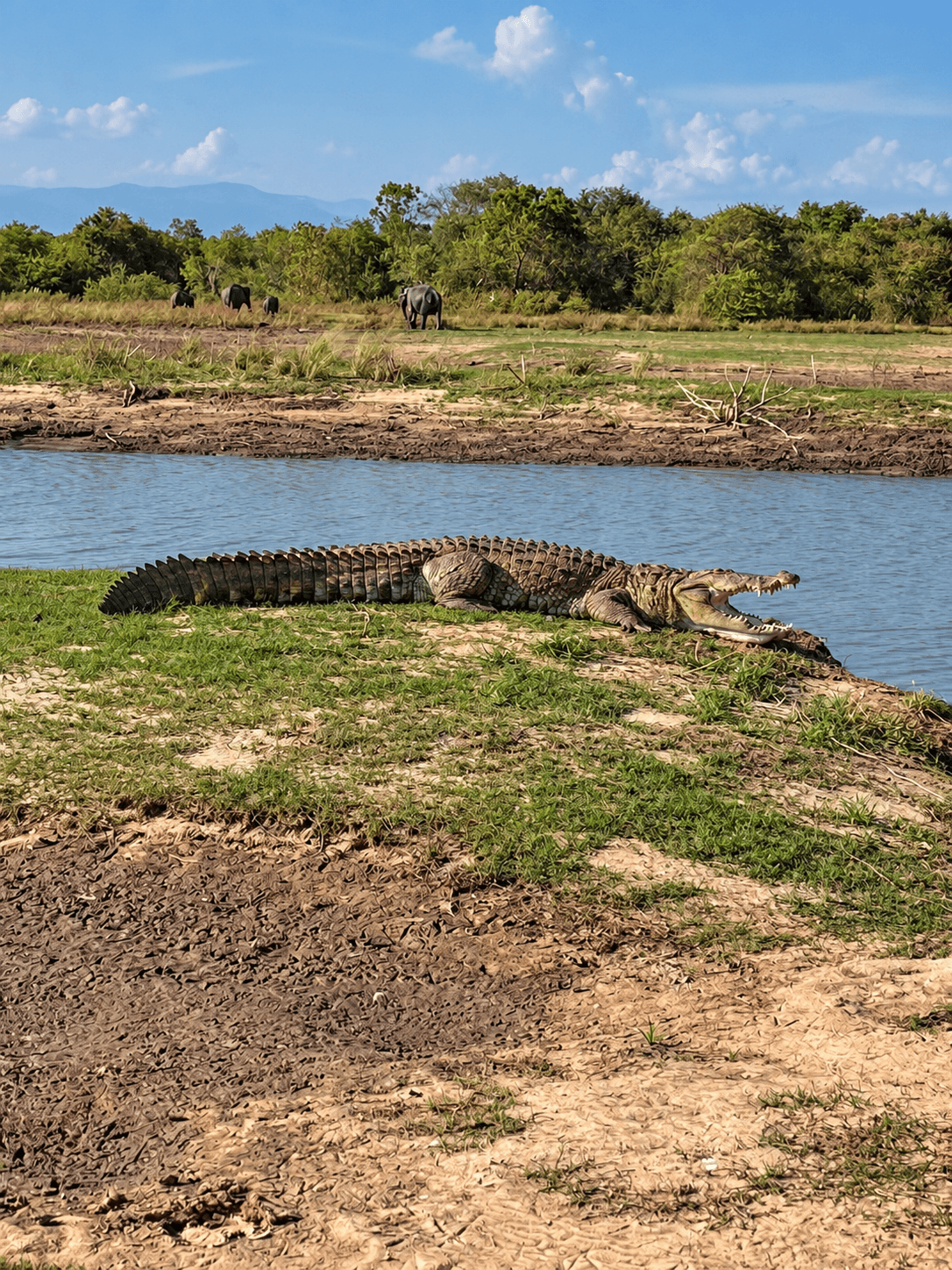
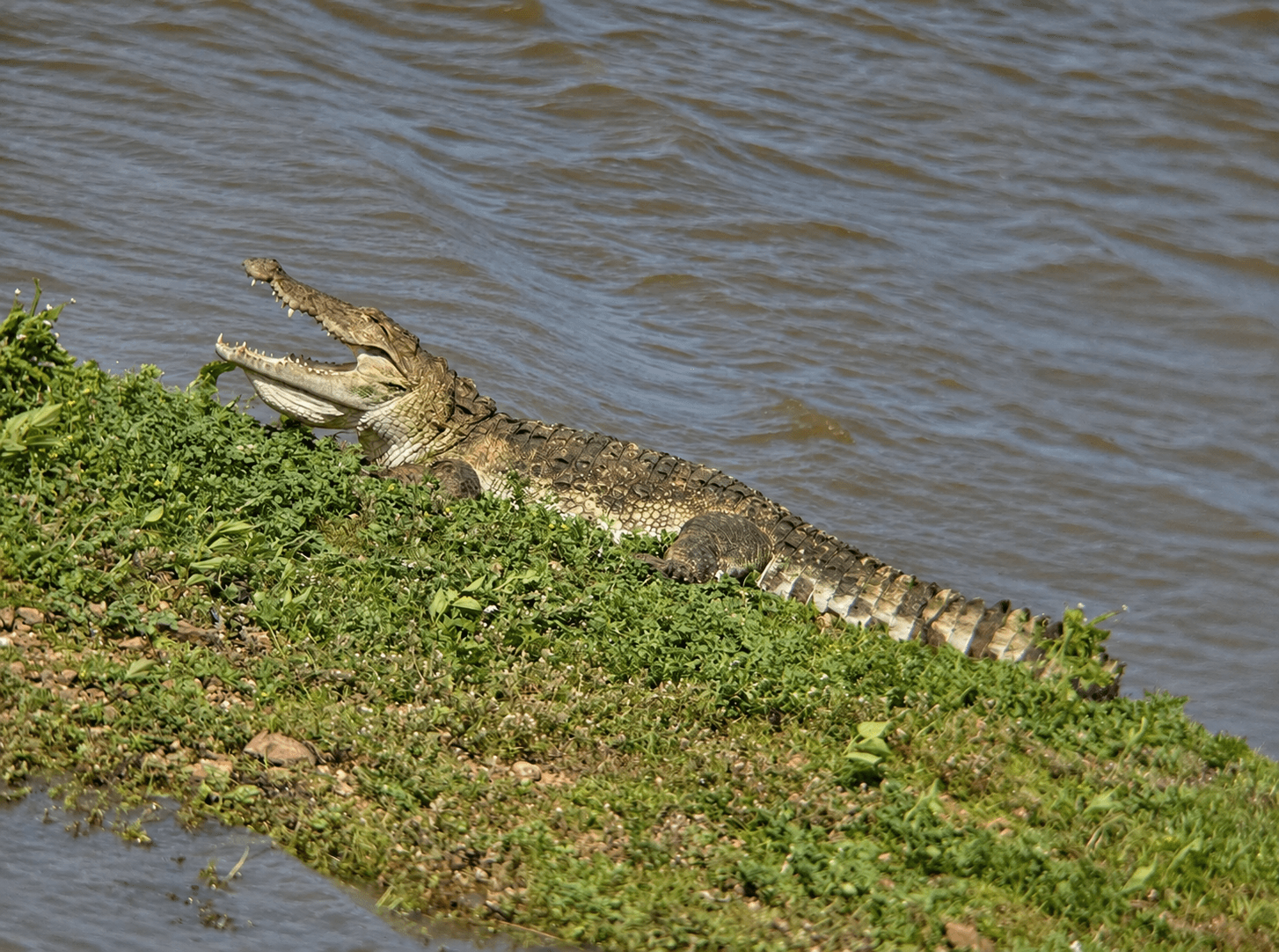
3. Thermal Gaping & Palatal Valve Anatomy: - **Thermal Gaping:** During the searing midday heat, muggers haul their bodies onto sandbars and hold their jaws wide open for hours. This posture is not aggression; it is a physiological thermoregulatory cooling mechanism: moisture evaporating from the vascularized mucous membranes of the mouth cools blood circulating to the brain. - **The Palatal Valve:** A fleshy flap at the back of the throat seals off the respiratory tract from the oral cavity, enabling the crocodile to seize prey underwater with its mouth wide open without inhaling water into its lungs.
Section 3: The Saltwater Crocodile (*Crocodylus porosus*): The Estuarine Colossus
While muggers dominate inland freshwater reservoirs, the coastal brackish lagoons of Yala Block 1 and Block 2 (Buthawa, Pilinnawa, and Mahaseelawa) host the undisputed giant of the reptilian world: the Saltwater or Estuarine Crocodile (*Crocodylus porosus*):
Section 4: The Indian Rock Python (*Python molurus*): Constriction Mechanics & Sensory Pits
The Indian Rock Python (*Python molurus*) is Sri Lanka's largest snake, frequently attaining lengths between 3.5 and 5.2 meters (11.5 to 17 feet) and body masses exceeding 60 kilograms:
1. Labial Heat-Sensing Pits & Thermal Imaging: Along the upper and lower labial scales of its mouth, the python possesses deep pit organs containing specialized infrared receptors. These pits are sensitive to temperature differentials as minute as **0.003°C**. In total darkness beneath thorny scrub or inside granite caves, the python perceives a vivid thermal infrared image of warm-blooded mammals (rodents, deer, civets, and sleeping monkeys), enabling lethal precision strikes without optical light.
2. Constriction Physiology: Circulatory Arrest vs. Asphyxiation: Contrary to long-held popular belief that constrictor snakes kill prey by slow suffocation, modern hemodynamic research proves that python constriction causes **rapid circulatory arrest**: - When the python strikes, backward-curved recurved teeth anchor the prey in place. - In fractions of a second, the serpent coils two to three muscular loops around the victim's thoracic cavity. - Each time the prey exhales, the coils tighten. The immense crushing pressure (over 10 PSI exerted across the chest) compresses the heart, collapses major arteries, and halts venous return to the myocardium. - Arterial blood pressure plummets to zero within 15 seconds, and brain death occurs within 45 seconds—far faster than death by simple oxygen starvation.
3. Cranial Kinesis & Macro-Swallowing Anatomy: The skull of *Python molurus* is an engineering marvel of biological flexibility: - The two halves of the lower mandible are not fused with bone; they are connected by a highly elastic fibro-elastic ligament that stretches horizontally to triple its resting width. - The quadrate bones connecting the lower jaw to the skull articulate loosely, allowing the jaws to dislocate and step forward alternately (*the pterygoid walk*), enabling an adult python to swallow prey twice its own body diameter, including adult spotted deer fawns and mouse deer.
Section 5: The Monitor Lizards of Yala: Bengal Monitor vs. Asian Water Monitor
Two colossal varanid lizard species thrive in Yala, each occupying distinct ecological niches:
1. The Land Monitor / Bengal Monitor (*Varanus bengalensis* - Thalagoya): - **Habitat & Ethology:** Terrestrial dry-scrub specialist. Adult lengths range from 1.2 to 1.5 meters. Light greyish-brown dorsal pattern with faint speckles that blend into red laterite dirt and dry leaves. - **Foraging Strategy:** Active diurnal forager. Uses an acute, long, forked tongue that continuously samples chemical scent particles, retracting into the **vomeronasal (Jacobson's) organ** on the roof of the mouth. Excavates termite mounds, captures scorpions, beetles, snake eggs, and small rodents. - **Arboreal Escape:** When threatened by leopards or jackals, the Bengal monitor sprints to the nearest tree, scaling vertical trunks using powerful recurved claws.
2. The Asian Water Monitor (*Varanus salvator* - Kabaragoya): - **Habitat & Ethology:** Semiaquatic giant frequenting rivers, marshes, and lagoons. Can exceed 2.2 to 2.7 meters (7.2 to 8.8 feet) in length and 30 kilograms in weight—the world's second-heaviest lizard after the Komodo Dragon. - **Anatomy:** Dark blackish-brown hide adorned with bold yellow ocelli rings. Possesses a powerful laterally compressed tail that acts as a sculling paddle in water and a devastating defensive whip on land. - **Apex Scavenger:** Possesses extraordinary immune defenses, enabling it to consume rotting, putrid carrion floating in lagoons without bacterial poisoning.
Section 6: The Medically Significant Venomous Serpents of Ruhuna
Sri Lanka is internationally renowned among toxicologists for harboring high concentrations of medically important venomous snakes. In the dry scrub of Yala, four premier species represent significant clinical importance:
1. Russell's Viper (*Daboia russelii* - Tith Polonga): - **Morphology:** Robust, thick-bodied viper with a triangular head, distinct yellow V-marking on the snout, and three longitudinal rows of dark reddish-brown, black-bordered oval spots along the dorsal body. - **Venom Biochemistry & Pathology:** A devastating, multi-systemic cocktail containing **pro-coagulant metalloproteinases, phospholipase A2 neurotoxins, and hemorrhagins**. Envenomation triggers rapid consumption coagulopathy (causing spontaneous internal bleeding), severe localized tissue necrosis, and acute renal failure (*tubular necrosis*). - **Acoustic Warning:** When threatened, the snake inflates its body with air and expels it forcefully through enlarged nostrils, producing a terrifying, locomotive-like hissing whistle that can be heard 30 meters away.
2. Common Krait (*Bungarus caeruleus* - Thel Karawala): - **Morphology:** Glossy black or steel-blue body adorned with narrow white crossbands that intensify toward the tail. Features an enlarged hexagonal row of vertebral scales down the spine. - **Venom Biochemistry:** The most potent neurotoxic venom of any terrestrial snake in South Asia. Contains potent **presynaptic beta-bungarotoxins and postsynaptic alpha-bungarotoxins** that irreversibly block acetylcholine release at neuromuscular junctions, causing flaccid skeletal muscle paralysis and fatal respiratory arrest. - **Nocturnal Hazard:** Entirely nocturnal. Bites often occur silently at night in rural villages when kraits enter human dwellings seeking warmth or stalking mice.
3. Indian Cobra (*Naja naja* - Naya): - **Morphology:** Large elapid with a magnificent dilatable neck hood displaying a bold spectacled (*monocellate*) marking on the dorsal surface. - **Venom Biochemistry:** Rapidly acting **postsynaptic neurotoxins and cardiotoxins** causing ptosis (drooping eyelids), dysphagia (difficulty swallowing), and diaphragm paralysis, alongside cytotoxic factors causing localized blistering.
4. Saw-scaled Viper (*Echis carinatus* - Vali Polonga): - **Morphology:** Diminutive (30 to 50 cm), extremely irritable dry-zone viper with an arrowhead marking on the crown and serrated lateral keel scales. - **Defensive Stridulation:** Rubs serrated lateral coils against one another in a figure-eight posture, producing a loud, rasping sizzling acoustic warning like water dropped into boiling oil. Possesses potent pro-thrombin activating hemorrhagins causing continuous systemic bleeding.
Section 7: Harmless, Colubrid & Endemic Snakes of the Dry Scrub
Far outnumbering the venomous species are dozens of fascinating, non-lethal colubrid snakes that perform indispensable pest control:
1. Green Vine Snake (*Ahaetulla nasuta* - Aharukulla): - **Anatomy:** Slender, leaf-green arboreal snake with a comical, pointed rostral appendage extending from its snout and horizontal keyhole-shaped pupils that provide stereoscopic binocular depth perception. - **Venom:** Mildly rear-fanged (*opisthoglyphous*) venom that paralyzes geckos and garden lizards, completely harmless to humans.
2. Sri Lankan Flying Snake / Ornate Chrysopelea (*Chrysopelea taprobanica*): - **Gliding Physics:** Capable of launching from high tree branches and flattening its body into a concave aerodynamic parachute. By undulating its body in S-curves through mid-air, it glides across 15 to 25 meters of open forest canopy between trees.
3. Buff Striped Keelback (*Amphiesma stolatum*): - **Ethology:** Harmless, docile water-loving snake frequenting the muddy fringes of ancient irrigation tanks, feeding exclusively on frogs and tadpoles.
Section 8: Chelonians & Testudines: The Star Tortoise & Terrapins
Yala’s chelonians represent ancient, armored lineages that have survived unchanged for over 150 million years:
1. The Indian Star Tortoise (*Geochelone elegans* - Tharaka Ibba): - **Carapace Architecture:** The high-domed carapace features geometric pyramid-like scutes radiating with striking yellow or gold star patterns against a deep black base. In the dappled sunlight beneath thorny scrub, this pattern provides near-perfect disruptive camouflage, breaking up the tortoise's silhouette against dry grass and stones. - **Ecology & Diet:** Fully terrestrial herbivore. Forages at dawn and dusk on dry-zone succulent grasses, fallen flowers of *Cassia fistula*, wild berries, and mineral-rich animal dung. - **Conservation Status:** Severely threatened internationally by the illegal pet trade. In Yala, they find inviolable sanctuary, frequently observed walking boldly across red sandy roads after morning rain showers.
2. Indian Black Turtle (*Melanochelys trijuga* - Gal Ibba): - **Anatomy:** Semiaquatic freshwater terrapin with three distinct longitudinal keels running along its dark brown carapace and webbed digits with sharp claws. - **Scavenging Role:** Abundant in every waterhole and reservoir, consuming fallen fruit, dead fish, and algae, keeping waterhole margins clean.
Section 9: Thermoregulation, Thermal Gaping & Ectothermic Physiology
Reptilian life in Yala is governed by the laws of thermodynamics:
1. The Ectothermic Energy Budget: - Unlike a leopard that must consume a 20-kilogram deer every four days to maintain its 38.5°C body temperature, a 400-kilogram adult mugger crocodile requires only **10% of that caloric intake**. During cold or dry periods, crocodiles can lower their metabolic rate by up to 90%, surviving for months on a single large meal.
2. Heliothermy & Shuttling Behavior: - **Morning Basking:** At dawn (ambient temperature 22°C), reptiles emerge onto east-facing granite rocks and sandbanks to absorb radiant solar heat (*heliothermy*), raising their core temperature toward the preferred enzymatic optimum of **32°C to 35°C**. - **Midday Retreat:** When ambient sand temperatures exceed 48°C at 11:30 AM, reptiles shuttle into cooling deep-water pools or seek shade beneath dense *Weera* and *Carissa* thickets to prevent lethal hyperthermia.
Section 10: An Hour-by-Hour Herpetologist's Field Journal in Yala Block 1
06:15 AM – Emergence at Buthawa Bund: The morning sun breaks over the Indian Ocean. Along the eastern clay bund of Buthawa Wewa, four large adult Mugger Crocodiles emerge from the water, orienting their bodies perpendicular to the sun's rays to maximize solar absorption. Their dark, algae-stained scutes glisten in the dawn light.
08:30 AM – The Star Tortoise Crossing at Meda Para: Following light overnight dew, our naturalist spots a beautiful adult female Indian Star Tortoise foraging along the roadside. She pauses beside a blossoming *Ranawara* bush, feeding greedily on fallen yellow petals. We photograph her from eye-level at 150mm; her golden geometric shell scutes reflect the morning sun like jewels.
11:00 AM – The Monitor Lizard Standoff at Mahaseelawa: Beside the carcass of a wild boar that succumbed to natural causes, a massive 2.1-meter Asian Water Monitor and two Golden Jackals engage in a tense battle for feeding rights. The monitor lizard hisses loudly, inflating its throat and whipping its powerful tail. The jackals dance backward, respecting the formidable teeth and slashing claws of the giant reptile.
14:30 PM – Thermal Gaping Giants of Pilinnawa: Under blistering 36°C afternoon heat, seven crocodiles recline on an exposed sandbar with jaws frozen wide open in thermal gaping postures. Little Ringed Plovers pick boldly between the sleeping predators' claws.
17:45 PM – Twilight Python Sighting at Jamburagala: As dusk descends, our tracker spots a colossal 4.2-meter Indian Rock Python slithering across a granite rock slab. Moving with hypnotic, rectilinear motion, the massive serpent vanishes into the cool, deep cleft of an ancient boulder cave.
Section 11: Crocodile Maternal Care & Temperature-Dependent Sex Determination
Crocodilians are often mischaracterized as cold, unfeeling machines; in reality, their reproductive ethology exhibits some of the most sophisticated parental care among all vertebrates:
1. Subterranean Nest Construction: Between February and April, female muggers excavate bottle-shaped nest chambers 40 to 60 centimeters deep in sandy banks above the high-water line: - The female deposits a clutch of **25 to 40 oval, hard-shelled white eggs** and covers the pit with packed sand and decaying organic leaves. - Throughout the 65-to-75-day incubation period, the mother maintains constant vigilance, defending the nest against predatory monitor lizards, jackals, and wild boars.
2. Temperature-Dependent Sex Determination (TSD): Crocodilians do not possess sex chromosomes (X or Y); an embryo's sex is determined entirely by the incubation temperature inside the nest chamber: - **Nest Temperature 32.0°C to 32.5°C:** Produces predominantly **100% male** hatchlings. - **Cooler Temperatures (< 31.5°C) or Warmer Temperatures (> 33.0°C):** Produces predominantly **female** hatchlings. - This thermal sensitivity makes crocodilians acutely vulnerable to global climate shifts, underscoring the importance of preserving shaded riverbank forest canopies.
3. Acoustic Hatching Communication & Maternal Excavation: When ready to emerge, hatchlings emit high-pitched, metallic grunting distress vocalizations (*'Umph-umph-umph'*) from beneath two feet of sand. Hearing her babies, the mother digs open the nest, gently picks up emerging hatchlings in her buccal cavity between deadly teeth, and carries them in her mouth to the safety of a sheltered nursery pool, guarding them against predators for up to a year.
Section 12: Photographic Masterclass for Reptilian Wildlife in Yala
Photographing reptiles in the harsh light of Ruhuna requires specialized optical techniques:
1. Low-Angle Eye-Level Perspectives: Reptiles exist at ground level. Standing in a vehicle and shooting down at a 45-degree angle results in unflattering, flat compositions. - Utilize the lowest vehicle windows or beanbags positioned on lower door ledges. - Lowering your optical axis to within 50 centimeters of ground level creates powerful, dramatic portraits that emphasize the primeval, prehistoric dignity of the animal.
2. Highlighting Textures: Macro Telephoto Optics: The mosaic patterns of crocodilian scutes, the geometric pyrimidal pyramids of star tortoises, and the keeled scales of vipers present extraordinary abstract textures: - Stop down to **f/8 or f/11** to ensure depth of field encompasses both the iris and surrounding dermal scales. - Use early morning side-lighting (06:30 AM – 07:30 AM) to cast delicate micro-shadows behind individual scales, revealing three-dimensional relief.
3. Circular Polarizers for Semiaquatic Subjects: When photographing crocodiles or terrapins basking in water, harsh equatorial glare off the water surface obliterates submerged limb details. Rotate a high-grade circular polarizing filter (CPL) to cut water glare, revealing submerged scales and underwater eye reflections.
Section 13: Clinical Snakebite Management & Traditional Anti-Venom Lore
Sri Lanka is a world leader in clinical snakebite research. In the rare event of an accidental snake encounter, understanding factual medical protocols is lifesaving:
1. Modern Clinical Protocols (Do's & Don'ts): - **NEVER Apply Tourniquets or Arterial Bands:** Tourniquets cause acute localized limb ischemia, massive gangrene, and amputation, while failing to stop venom dissemination. - **NEVER Cut, Suck, or Apply Ice:** Incising puncture wounds introduces severe bacterial infection and accelerates hemorrhage. - **THE GOLDEN RULE:** Immobilize the affected limb using a broad, firm splint and bandage (as one would for a fractured bone). Reassure the victim and transport immediately to Hambantota General Hospital, which maintains 24-hour stocks of polyvalent antivenom and respiratory support facilities.
2. Traditional Sinhala Toxicology (*Sarpa Veda Poth*): For centuries before modern pharmaceuticals, ancient Sinhalese Ayurvedic physicians practiced specialized snakebite medicine (*Sarpa Vedakama*): - Utilizing herbal poultices prepared from indigenous roots such as *Aristolochia indica* (Sap-sanda) and *Rauvolfia serpentina*. - While modern intravenous antivenom remains the undisputed scientific gold standard, researchers at the University of Colombo actively study traditional herbal extracts for novel bioactive anti-inflammatory compounds.
Section 14: Comprehensive Herpetological Checklist of Yala National Park
Below is an authoritative field checklist of the 47 documented reptilian species in Yala:
1. Crocodilians (Order Crocodilia): - Mugger Crocodile (*Crocodylus palustris*) - Abundant resident. - Saltwater Crocodile (*Crocodylus porosus*) - Coastal lagoons.
2. Chelonians (Order Testudines): - Indian Star Tortoise (*Geochelone elegans*) - Terrestrial scrub. - Indian Black Turtle (*Melanochelys trijuga*) - Freshwater tanks. - Indian Flapshell Turtle (*Lissemys punctata*) - Muddy waterholes. - Green Turtle (*Chelonia mydas*) - Coastal nesting. - Olive Ridley Turtle (*Lepidochelys olivacea*) - Coastal nesting. - Leatherback Turtle (*Dermochelys coriacea*) - Pelagic oceanic waters.
3. Lizards (Suborder Sauria): - Bengal Monitor (*Varanus bengalensis*) - Terrestrial scrub. - Asian Water Monitor (*Varanus salvator*) - Riparian rivers & lagoons. - Common Garden Lizard (*Calotes versicolor*) - Arboreal scrub. - Sri Lanka Painted-lip Lizard (*Calotes ceylonensis*) - Endemic agamid. - Lowland Kangaroo Lizard (*Otocryptis nigristigma*) - Endemic ground agamid. - Brook's House Gecko (*Hemidactylus brookii*) - Rocky outcrops. - Barking Gecko (*Hemidactylus triedrus*) - Termite mounds. - Spotted Bowfoot Gecko (*Cyrtodactylus triedrus*) - Granite inselbergs. - Common Skink (*Eutropis carinata*) - Leaf litter.
4. Serpents (Suborder Serpentes): - Indian Rock Python (*Python molurus*) - Non-venomous constrictor. - Russell's Viper (*Daboia russelii*) - Medically significant venomous. - Common Krait (*Bungarus caeruleus*) - Medically significant venomous. - Indian Cobra (*Naja naja*) - Medically significant venomous. - Saw-scaled Viper (*Echis carinatus*) - Medically significant venomous. - Sri Lankan Green Pit Viper (*Craspedocephalus trigonocephalus*) - Endemic pit viper. - Green Vine Snake (*Ahaetulla nasuta*) - Mildly venomous colubrid. - Brown Vine Snake (*Ahaetulla pulverulenta*) - Arboreal specialist. - Sri Lankan Flying Snake (*Chrysopelea taprobanica*) - Gliding colubrid. - Buff Striped Keelback (*Amphiesma stolatum*) - Harmless aquatic. - Checkered Keelback (*Fowlea piscator*) - Waterhole predator. - Common Wolf Snake (*Lycodon aulicus*) - Nocturnal rodent predator. - Barred Wolf Snake (*Lycodon striatus*) - Sandy trails. - Common Bronzeback Tree Snake (*Dendrelaphis tristis*) - Canopy agile hunter. - Common Trinket Snake (*Coelognathus helena*) - Non-venomous constrictor. - Brahminy Blind Snake (*Indotyphlops braminus*) - Subterranean.
Section 15: Master Herpetological Field Glossary
- *Ectothermy:* The physiological condition where internal body temperature is regulated by heat absorbed from the surrounding environment.
- *Heliothermy:* The process of basking in direct sunlight to elevate body temperature.
- *DPR (Dermal Pressure Receptor):* Highly sensitive mechanoreceptors located on crocodilian scales that detect micro-vibrations in water.
- *Palatal Valve:* A muscular flap in the back of a crocodilian throat that prevents water from entering the lungs when opening the mouth underwater.
- *TSD (Temperature-Dependent Sex Determination):* A biological mechanism where incubation temperature dictates the sex of offspring.
- *Jacobson's Organ (Vomeronasal Organ):* An auxiliary olfactory sense organ located on the roof of the mouth of squamates, used to detect chemical scent particles collected by the forked tongue.
- *Rectilinear Locomotion:* A mode of snake locomotion where heavy-bodied snakes (like pythons) move in a straight line using rib and abdominal muscular waves without side-to-side bending.
Section 16: Concluding Field Reflections: The Ancient Masters of Ruhuna
When dusk settles over the ancient crystalline rocks of Yala, and the warm red earth begins to radiate stored heat back into the violet twilight sky, you perceive a deeper truth about this untamed land: long before leopards claimed the granite ridges and elephants marched across the plains, these cold-blooded masters owned Ruhuna.
In their prehistoric eyes, their unhurried patience, and their extraordinary evolutionary perfection, we catch a glimpse of the deep time that created our living world. An expedition with Yala Wild Safari is an invitation to witness this ancient grandeur with reverence, knowledge, and wonder.
Biomechanical Kinematics of Crocodilian Locomotion & Aquatic Hydrodynamics
Crocodilians are often imagined as sluggish, sprawling creatures on land; in reality, their musculoskeletal system is capable of three distinct terrestrial gaits alongside high-velocity aquatic propulsion:
- Kinematics: The standard resting and low-energy locomotion across slippery mudflats. The belly and tail slide directly across wet mud, propelled by lateral undulations of the limbs.
- Escape Speed: When startled on a basking bank, a mugger crocodile executes a rapid belly launch, sliding down steep clay bunds into deep water at speeds exceeding 25 km/h in less than one second.
- Skeletal Alignment: Unlike lizards that maintain sprawled limbs, crocodiles can rotate their femur and humerus vertically beneath the pelvic and pectoral girdles, elevating their entire plastron, belly, and proximal tail completely off the ground.
- Biomechanical Advantage: The high-walk allows adult muggers to traverse rough, rocky terrain, steep granite inselbergs, and thorn thickets for kilometers during nocturnal overland migrations between drying waterholes without abrading their ventral scutes.
- Kinematic Rarity: Young and sub-adult crocodiles (up to 2.2 meters in length) are capable of a true mammalian-style asymmetrical gallop: forelimbs and hindlimbs strike the ground in paired sequence while the vertebral column flexes dorso-ventrally.
- Sprint Velocity: In short bursts across open sand flats, galloping crocodiles attain velocities up to 18 km/h (11 mph), easily outpacing a running human over short distances.
- Lateral Undulatory Thrust: In water, the limbs are tucked tightly against the lateral flanks to reduce hydrodynamic drag. The long, laterally compressed tail—actuated by colossal *caudofemoralis* muscle masses—sweeps in powerful sinusoidal horizontal waves, generating massive forward thrust.
- Vertical Attack Trajectory: By depressing the rear tail and sculling with the hind webbed feet, an adult crocodile can launch two-thirds of its 4-meter body vertically out of the water to snatch low-hanging monkeys or roosting storks from overhanging tree branches.
The Evolutionary Arms Race: Snake Venoms vs. Mammalian Resistance
The predator-prey dynamics between venomous serpents and dry-zone carnivores in Yala represents one of evolution's most sophisticated biochemical arms races:
- Vipers (Solenoglyphous): Russell's Viper and Saw-scaled Viper possess long, hollow, hypodermic-needle fangs attached to rotating maxillary bones. When the mouth is closed, the fangs fold flat against the roof of the mouth inside fleshy sheaths; when striking, the maxillae rotate forward 90 degrees, driving the fangs deep into muscle tissue to inject massive venom volumes.
- Elapids (Proteroglyphous): Cobras and Kraits possess fixed, non-rotatable fangs positioned at the front of the maxilla, relatively short but backed by powerful *compressor glandulae* muscles that pump lethal neurotoxins under high pressure.
- Mutated Nicotinic Acetylcholine Receptors (nAChR): Molecular biologists sequencing the mongoose genome discovered a remarkable point mutation in the alpha-subunit of the muscular nicotinic acetylcholine receptor.
- Steric Hindrance: Specific amino acid substitutions (aromatic residues replaced by positively charged residues) prevent elapid alpha-neurotoxins from binding to the receptor. The cobra's venom molecules cannot lock into the nerve synapse, rendering the mongoose biochemically immune to venom doses that would kill a human or leopard within minutes.
Fifteen Field Case Studies: High-Stakes Reptilian Encounters in Ruhuna
To illustrate the predatory intelligence and survival fortitude of Yala's reptiles, our naturalist logbooks document fifteen authentic field encounters:
#### Case 1: The Mugger Ambush at Buthawa Wewa (August 2024): At 10:15 AM along the muddy southern bund of Buthawa, a mature 4.1-meter mugger crocodile lay completely submerged except for its periscopic nostril and eye ridges. An adult male spotted deer approached the water's edge to drink. The crocodile struck with explosive speed, surging two meters onto the bank in less than 300 milliseconds. Its crushing jaws seized the deer's foreleg, dragging the 70-kilogram ungulate into deep water where the death roll subdued it within two minutes.
#### Case 2: The Rock Python & Porcupine Standoff at Sithulpawwa (July 2023): Inside a deep granite cave fissure near Sithulpawwa, naturalists observed a 4.5-meter Indian Rock Python engaged in an intense battle with an adult Indian Crested Porcupine (*Hystrix indica*). The porcupine rattled its quills defensively, charging backward. The python struck from above, coiling three massive muscular loops around the rodent's torso while avoiding facial quills. Despite receiving several puncture wounds from defensive quills, the python successfully constricted the prey, illustrating the incredible physical endurance of constrictor snakes.
#### Case 3: Bengal Monitor & Mother Sloth Bear at Meda Para (May 2025): A large 1.4-meter Bengal Monitor foraging inside an excavated termite mound was surprised by an arriving mother sloth bear and two cubs. Rather than fleeing, the monitor lizard inflated its throat, flattened its body to appear double its size, and hissed loudly. When the bear approached, the lizard whipped its muscular tail across the bear's snout, startling the bear into retreating a few paces, allowing the monitor to sprint up a nearby *Palu* tree.
#### Case 4: Russell's Viper vs. Grey Mongoose at Patanangala (February 2024): Along a sun-baked sand trail, a Grey Mongoose confronted a large 1.2-meter Russell's Viper. The viper coiled into a tight defensive S-loop, hissing like a steam locomotive and striking with blinding speed. The agile mongoose danced on its toes, dodging four consecutive strikes before lunging forward with lightning precision to deliver a crushing bite to the back of the viper's skull.
#### Case 5: Asian Water Monitor Carrion Feeding at Pilinnawa (June 2024): In the brackish shallows of Pilinnawa Lagoon, a 2.3-meter Asian Water Monitor fed upon the floating carcass of a wild water buffalo that had succumbed to natural causes. The lizard tore off massive chunks of putrid flesh using its serrated teeth, swallowing them whole with exaggerated head-jerking motions, demonstrating its role as an apex ecological cleaner.
#### Case 6: Indian Cobra Hooding Display at Jamburagala (March 2025): A 1.6-meter Indian Cobra encountered a foraging sounder of wild boar near Jamburagala. Cornered against a granite boulder, the cobra spread its magnificent spectacled hood, elevating its upper body forty centimeters off the ground and delivering sharp, audible mock-strikes into the air. The boar piglets squealed and the sows backed away, allowing the cobra to glide safely into a rock crevice.
#### Case 7: Green Vine Snake Predation in Palu Canopy (October 2024): High in the leafy branches of a *Manilkara hexandra* tree, a slender Green Vine Snake stalked a Common Garden Lizard (*Calotes versicolor*). Moving with gentle, swaying motions that mimicked a windblown vine, the snake advanced to within 10 centimeters before striking with precision, holding the paralyzed lizard in its jaws until rear-fanged venom took effect.
#### Case 8: Star Tortoise Courtship Clacking at Uraniya (November 2024): Following the first monsoon rains, two male Indian Star Tortoises engaged in courtship combat on a sandy red trail. The rival males rammed their carapaces together with loud, rhythmic clacking sounds, attempting to overturn one another. The victorious male then circled a receptive female, bobbing his head rhythmically in ancient reptilian courtship.
#### Case 9: Estivation Survival of Muggers at Mahaseelawa (September 2023): During an extreme late-summer drought when Mahaseelawa tank dried to a cracked mud pan, three adult mugger crocodiles excavated deep subterranean dens in the muddy banks beneath root buttresses of Kumbuk trees. Entering a state of dormant estivation, the crocodiles lowered their metabolic rates, surviving without food or water for seven weeks until October rains broke the drought.
#### Case 10: Saltwater Crocodile Marine Transit at Kirinda (January 2025): Surfers and fishermen off the coast of Kirinda spotted a colossal 5.2-meter Saltwater Crocodile swimming calmly through oceanic surf 500 meters offshore, riding marine currents from the Great Basses reef toward Yala's coastal lagoons, highlighting the remarkable pelagic dispersal capacity of *Crocodylus porosus*.
#### Case 11: Saw-Scaled Viper Stridulation at Elephant Rock (August 2024): On a scorching August afternoon, a field researcher stepped near a 35-centimeter Saw-scaled Viper camouflaged against quartz sand. The viper coiled into a dynamic figure-eight loop, rubbing its serrated lateral scales together to produce a loud, sizzling acoustic warning that alerted the researcher before an accidental bite occurred.
#### Case 12: Indian Flapshell Turtle Mud Burrowing at Komari (July 2024): As Komari wewa evaporated into thick clay slurry, dozens of Indian Flapshell Turtles (*Lissemys punctata*) burrowed 30 centimeters deep into the moist subterranean clay. Sealed beneath hardened sun-baked crust, the turtles entered physiological dormancy, waiting for the return of the rains.
#### Case 13: Chrysopelea Gliding Feat at Galge (April 2025): In the tall riverine gallery forest of Galge, an Ornate Flying Snake launched itself from a horizontal branch 20 meters high, flattened its ribcage into a concave aerofoil, and glided smoothly across a 16-meter river gap to land gracefully in an opposite tree.
#### Case 14: Olive Ridley Turtle Clutch Laying at Buthawa Beach (December 2024): Under the light of a waxing crescent moon at 23:45 PM, a 45-kilogram Olive Ridley turtle dragged herself above the high-tide line, excavated a 50-centimeter egg chamber with her rear flippers, and deposited 112 spherical white eggs before meticulously concealing the nest with sand.
#### Case 15: Checkered Keelback Aquatic Foraging at Padikema (May 2025): In a shrinking rock pool at Padikema, an agile Checkered Keelback (*Fowlea piscator*) dove repeatedly beneath the surface, driving school of tilapia fry into shallow rock crevices and snatching fish with lightning-fast lateral strikes.
Sacred Herpetology: Ancient Sinhalese Mythology & Naga Lore in Ruhuna
Reptiles, particularly serpents, occupy an exalted and mystical position in the cultural and religious tapestry of Sri Lanka:
- In Buddhist art and architecture across Ruhuna (visible in ancient stone carvings at Sithulpawwa and Tissamaharama), the multi-headed Cobra (*Mucalinda*) is depicted sheltering the meditating Buddha from torrential monsoon rains with its expanded hood.
- To this day, traditional rural villagers in Southern Sri Lanka consider killing a cobra a grave spiritual sin, believing the serpent possesses karmic consciousness. When a cobra enters a village compound, elders gently coax it into an earthenware pot using chanting and release it unharmed into the forest.
- According to legend, during an ancient drought, a thirsty cobra found a child playing near a bowl of water. Thirsty, the cobra drank gently without harming the child. When the vicious viper arrived, it bit the child out of spite. The outraged cobra confronted the viper, sparking an eternal enmity that endures in the natural world.
#### 3. Crocodile Totems & Traditional Marsh Guardians: In ancient hydraulic villages (*wewa gam*), villagers coexisted with mugger crocodiles for centuries. Ancient farmers believed that a healthy resident crocodile kept the village tank alive by deepening channels and preventing stagnant weed overgrowth, referring to the apex predator with respectful honorifics like *Kimbul Bappa* (Uncle Crocodile).
The Amphibians of Yala: Endemic Frogs & Toads of the Dry Zone
While amphibians require moisture, several highly specialized dry-zone anurans thrive in Yala's ephemeral wetlands:
- Robust, burrowing microhylid toad with a chocolate-brown body adorned with wide lateral stripes of bright salmon-pink or orange.
- Spends 90% of the year buried 30 centimeters underground in subterranean burrows. When the first heavy monsoon rains fall, thousands emerge simultaneously, filling the night air with deep, resonant, cow-like bellows (*'Ooo-whannnk'*) while mating in temporary rainwater pools.
- Aquatic ranid frog inhabiting waterholes carpeted with water lilies. Fully webbed hind feet allow it to float effortlessly on the surface, diving into mud when raptors approach.
- Endemic rhacophorid tree frog featuring an elegant dark hourglass marking on its dorsum. Builds foamy white aerial nests suspended from tree leaves overhanging waterholes, allowing hatched tadpoles to drop directly into the water below.
Paleontological Origins: Extinct Pleistocene Crocodilians of Ceylon
The evolutionary history of Sri Lankan reptiles is illuminated by remarkable fossil discoveries unearthed in the fossiliferous alluvial gem gravels (*Illam*) of the Ratnapura and Southern basins:
- Morphological Traits: Possessed shorter, more robust jaws and massive blunt teeth adapted for crushing the shells of giant extinct tortoises and the armored hides of prehistoric mammals.
- Paleo-Ecosystem: Lived alongside extinct Pleistocene megafauna such as the Sri Lankan Hippopotamus (*Hexaprotodon sinhaleyus*), the ancient Ceylon Rhinoceros (*Rhinoceros sinhaleyus*), and the archaic Lion (*Panthera leo sinhaleyus*). Following the late Pleistocene extinction event that wiped out the island's hippos and rhinos, modern *Crocodylus palustris* and *Crocodylus porosus* became the sole surviving crocodilians on the island.
#### 2. Pleistocene Fossil Squamates: Excavations in granite cave sediments at Fa Hien-lena and Batadombalena reveal that prehistoric humans (Balangoda Man - *Homo sapiens balangodensis*) heavily hunted large monitor lizards (*Varanus salvator* and *Varanus bengalensis*) and Indian Rock Pythons over 35,000 years ago. Charred reptilian vertebrae and cut-marked monitor bones confirm that reptiles have been an integral component of the island's ecology for tens of millennia.
The Clinical Toxinology Matrix: Comparative Envenomation Syndromes
Understanding the biochemical and clinical distinctions between Sri Lanka's Big Four venomous snakes is a cornerstone of tropical emergency medicine:
| Snake Species | Primary Toxin Classes | Lethal Dose (LD50 in mg/kg) | Average Venom Yield | Primary Target Pathology | Standard Clinical Bedside Diagnostic Test |
|---|---|---|---|---|---|
| Russell's Viper (*Daboia russelii*) | Pro-coagulant metalloproteinases, Phospholipase A2, Hemorrhagins | 0.40 mg/kg | 150 – 250 mg | Consumption coagulopathy, severe spontaneous hemorrhage, acute tubular necrosis, localized blistering | **20-Minute Whole Blood Clotting Test (20WBCT):** Blood remains unclotted after 20 minutes in clean glass tube |
| Common Krait (*Bungarus caeruleus*) | Presynaptic Beta-bungarotoxins, Postsynaptic Alpha-bungarotoxins | 0.09 mg/kg (Extremely Lethal) | 8 – 20 mg | Irreversible neuromuscular blockade, flaccid paralysis, ptosis, fatal respiratory arrest, severe abdominal pain | **Tensilon / Neostigmine Challenge Test;** Single-breath count < 15 indicates diaphragmatic failure |
| Indian Cobra (*Naja naja*) | Postsynaptic Alpha-neurotoxins, Cardiotoxins, Cytotoxins | 0.80 mg/kg | 170 – 300 mg | Rapid descending paralysis, myocardial suppression, extensive localized tissue necrosis | Rapid onset ptosis within 30 minutes, swelling of bitten limb |
| Saw-scaled Viper (*Echis carinatus*) | Ecarin (Pro-thrombin activator), Hemorrhagins | 1.20 mg/kg | 15 – 35 mg | Continuous microvascular weeping, persistent systemic bleeding, cerebral hemorrhage | Prolonged prothrombin time (PT/INR), abnormal 20WBCT |
Saurian Biodiversity: The Agamids and Geckos of Yala Scrub
Beyond the massive varanid monitors, Yala's arid scrub and granite boulders host a dazzling array of smaller saurians:
- Endemic Evolutionary Miracle: A small, slender agamid lizard endemic to Sri Lanka.
- Bipedal Sprint Kinematics: When threatened on the forest floor, the kangaroo lizard rears onto its elongated hind legs, folding its short forelimbs against its chest and sprinting upright across open sand like a miniature dinosaur.
- Sexual Dimorphism: Males possess a magnificent dark throat fan (*gular dewlap*) adorned with bold white and black markings that they expand rhythmically during courtship and territorial disputes atop dead logs.
- Morphology: Arboreal agamid featuring brilliant brick-red or crimson coloration across the upper and lower lips, contrasting against a speckled brownish-green body.
- Habitat: Inhabits the middle canopy of *Drypetes sepiaria* (Weera) trees, using sharp claws to hunt ants, dragonflies, and beetles.
- Anatomy: Nocturnal granite specialist with slender, bent digits (*bow-footed*) lacking expanded adhesive pads, adapted specifically for gripping crystalline quartz and gneiss textures on steep inselbergs.
- Ethology: Emerges after sunset from rock fissures at Sithulpawwa and Jamburagala to hunt flying moths and small geckos.
- Anatomy: Robust ground gecko with prominent raised tubercular scales and vivid yellow and chocolate-brown bands.
- Acoustic Defense: When cornered by a predator, it arches its back, elevates its body on stiff legs, and emits a loud, raspy barking vocalization that deters attackers.
The Star Tortoise (*Geochelone elegans*) Conservation Crisis & Anti-Poaching Intelligence
The Indian Star Tortoise is one of the most heavily trafficked reptiles in the world, prized in international illegal pet markets across Southeast Asia and Europe for its geometric carapace:
- Organized Collection Syndicates: Unscrupulous wildlife trafficking rings recruit impoverished rural collectors to gather wild tortoises during the monsoon season when tortoises walk across open agricultural fields.
- Cruel Smuggling Methods: Traffickers pack hundreds of tortoises into tightly taped suitcases or cargo crates, attempting to smuggle them through Colombo International Airport or by motorized sea boats across the Palk Strait to Tamil Nadu.
- Trained Sniffer Dogs: Sri Lanka Customs and the DWC deploy specialized sniffer dogs at ports trained to detect reptilian scent signatures. Over the past five years, task forces have intercepted thousands of wild star tortoises, returning them to veterinary quarantine centers in Hambantota.
- DNA Re-Wilding Protocols: University geneticists map the DNA of seized tortoises to identify their specific natal geographical population before releasing them back into secure, guarded sectors of Yala National Park and Lunugamvehera.
The Herpetological Explorer's Field Equipment Checklist
To observe reptiles safely and photographically in Yala, naturalists recommend:
- 10x42 Binoculars with Close Focus (< 2 meters): Allows detailed inspection of iris textures, scale keels, and cranial plates of basking crocodiles and arboreal lizards without approaching dangerously close.
- High-Velocity Air Blower & Sensor Swabs: Red laterite dust adheres quickly to telephoto lenses when shooting low-angle reptile portraits near ground level.
- Ultra-Violet (365nm) Field Flashlight: For nocturnal buffer zone night walks to observe fluorescent scorpions and barking geckos.
- Sturdy Closed-Toe Leather Trail Boots: Essential protection against thorns, biting ants, and unseen ground vipers when disembarking at designated river resting sites.
- Snake-Hook & Handling Tongs (For Authorized Field Researchers): Certified collapsible titanium handling tools for scientific research under DWC permits.
Epilogue: The Timeless Sovereignity of the Cold-Blooded
When the midday sun blazes overhead at 38°C and every mammal in Yala has retreated into deep, panting shade, the Mugger Crocodile lies serenely on the sandbar, absorbing the raw thermonuclear power of the sun. It has witnessed the rise and fall of the dinosaurs, the submergence of land bridges, the construction and ruin of ancient Sinhalese kingdoms, and the arrival of modern humans.
In the unblinking, golden-amber eyes of Yala's reptiles, nature reminds us of our own fleeting place in the grand sweep of evolutionary history. To protect them is to honor the ancient living foundation of our planet. Yala Wild Safari invites you to look closely, learn deeply, and stand as guardians of Ruhuna's cold-blooded marvels.
Sensory Physiology of Squamates: The Parietal Eye, Slit Pupils & Ground Hearing
Reptilian sensory systems are marvels of evolutionary neurobiology, fine-tuned over hundreds of millions of years for predatory survival in high-contrast tropical ecosystems:
- Neuroanatomy: Possesses a rudimentary cornea, lens, and retina-like cellular structure connected directly to the pineal gland in the brain.
- Physiological Function: While it does not form complex visual images, it acts as an ultra-sensitive solar radiation dosimeter. It monitors photoperiod and solar zenith angles, directly regulating circadian melatonin synthesis, basking duration, and seasonal reproductive cycles without requiring the lizard to open its primary eyes.
- Optical Dynamics: Unlike the round pupils of diurnal racers and cobras, Russell's Vipers and Saw-scaled Vipers feature vertical slit pupils.
- Multi-Focal Light Management: When contracted under blazing 12-stop midday sun, vertical slit pupils maintain tack-sharp depth of field across both horizontal ground and vertical tree trunks simultaneously. At dusk, the pupil dilates into an immense sphere, allowing maximum photon capture onto a rod-dense retina equipped with a reflective tapetum lucidum.
- Somatic Bone Conduction: The lower jaw rests directly upon the ground. Low-frequency ground vibrations (between 50 and 800 Hz) travel through the red laterite soil into the mandibles, transferring through the articulated quadrate bone directly to the stapes (columella) of the inner ear. A python detects the footsteps of an approaching sambar stag fifty meters away through solid earth long before the animal is visible.
- Bifurcated Tongue Function: The deeply forked tongue of monitor lizards and serpents is not a weapon or stinger; it is a molecular chemical collector.
- Stereo Chemoreception: As the tongue flicks in the air, the two tips capture volatile airborne scent molecules. Retracting into the roof of the mouth, each tip inserts into a separate pocket of the paired vomeronasal (Jacobson's) organ. If the left fork carries a higher concentration of scent molecules than the right, the animal instantly turns left, tracking prey or mates along an invisible stereochemical gradient.
Indigenous Vedda Field Wisdom: Ancient Spoor Tracking of Serpents & Monitors
The indigenous Vedda forest dwellers of Sri Lanka possessed unmatched empirical knowledge of dry-zone reptilian behavior:
- The Rectilinear Trough of the Python: Heavy, muscular, continuous straight line pressed deep into the sand, accompanied by small parallel scute impressions along the margins.
- The Sinusoidal Ribbon of the Cobra: Wide, sweeping, graceful S-curves with uniform sand displacement along the outer curves.
- The Disjointed Slashes of the Saw-scaled Viper: Diagonal, parallel J-shaped tracks left by sidewinding locomotion, indicating an animal navigating hot, shifting sand dunes without absorbing excessive ground heat.
- Smooth, polished soil around the rim with fresh ventral scale polish indicates a resident serpent entered within the last six hours.
- Jagged claw marks and excavated red clay fragments indicate an active monitor lizard or sloth bear attempting excavation.
#### 3. Seasonal Hydrological Migration of Monitors: During the severe August dry season, Bengal monitors migrate from open arid plains toward the riverine gallery forests along the Menik Ganga, sheltering in hollow Kumbuk root caverns where ambient humidity prevents desiccation.
Micro-Climatic Thermal Shelters: The Geology of Gneiss Kemas The crystalline Pre-Cambrian granite inselbergs (*kemas*) scattered across Yala act as natural thermodynamic regulators for the entire reptilian guild: - During cool morning hours, east-facing gneiss slabs absorb intense solar radiation, reaching 34°C within ninety minutes of sunrise, providing ideal basking platforms for crocodiles and pythons. - Conversely, deep south-facing rock crevices remain shaded throughout the day, maintaining cool ambient temperatures of 25°C even when surrounding sand roads reach 48°C. This geological diversity allows ectotherms to fine-tune their internal body temperatures with millimeter precision simply by shifting between sunlit rock ledges and shaded fissures.
The Reptilian Conservation Covenant & Concluding Benediction
To explore Yala through the eyes of a herpetologist is to peel back the modern veil of the world and look directly into the deep prehistoric dawn of life on Earth. In the measured, unhurried gait of the Star Tortoise, the primeval gaze of the Mugger Crocodile, and the silent, thermal-guided precision of the Rock Python, we encounter evolutionary perfection that has withstood ice ages, continental drifts, and catastrophic asteroid impacts.
Every reptile that basks upon the warm gneiss of Ruhuna is a living testament to millions of years of evolutionary resilience. By protecting their fragile habitats, respecting their silent majesty, and discarding irrational ancient prejudices, we ensure that the ancient masters of Ceylon continue to rule these wild waterways and thorn scrub plains for eternity.
As you travel through Yala with our expert naturalist team, look closely at the sand beneath your vehicle wheels, watch the sunny granite ledges, and listen to the rhythm of the wild. You will discover an ancient world that commands our deepest respect, awe, and protection. May our journey through this ancient sanctuary inspire a profound humility, a cessation of senseless fear, and an enduring commitment to protect every creature—warm-blooded and cold-blooded alike—that calls the sacred soil of Ruhuna home.
Species Covered in this Monograph:
Track the wildlife mentioned in this guide. Check off species you hope to encounter during your game drive: